French Kitchen Copper
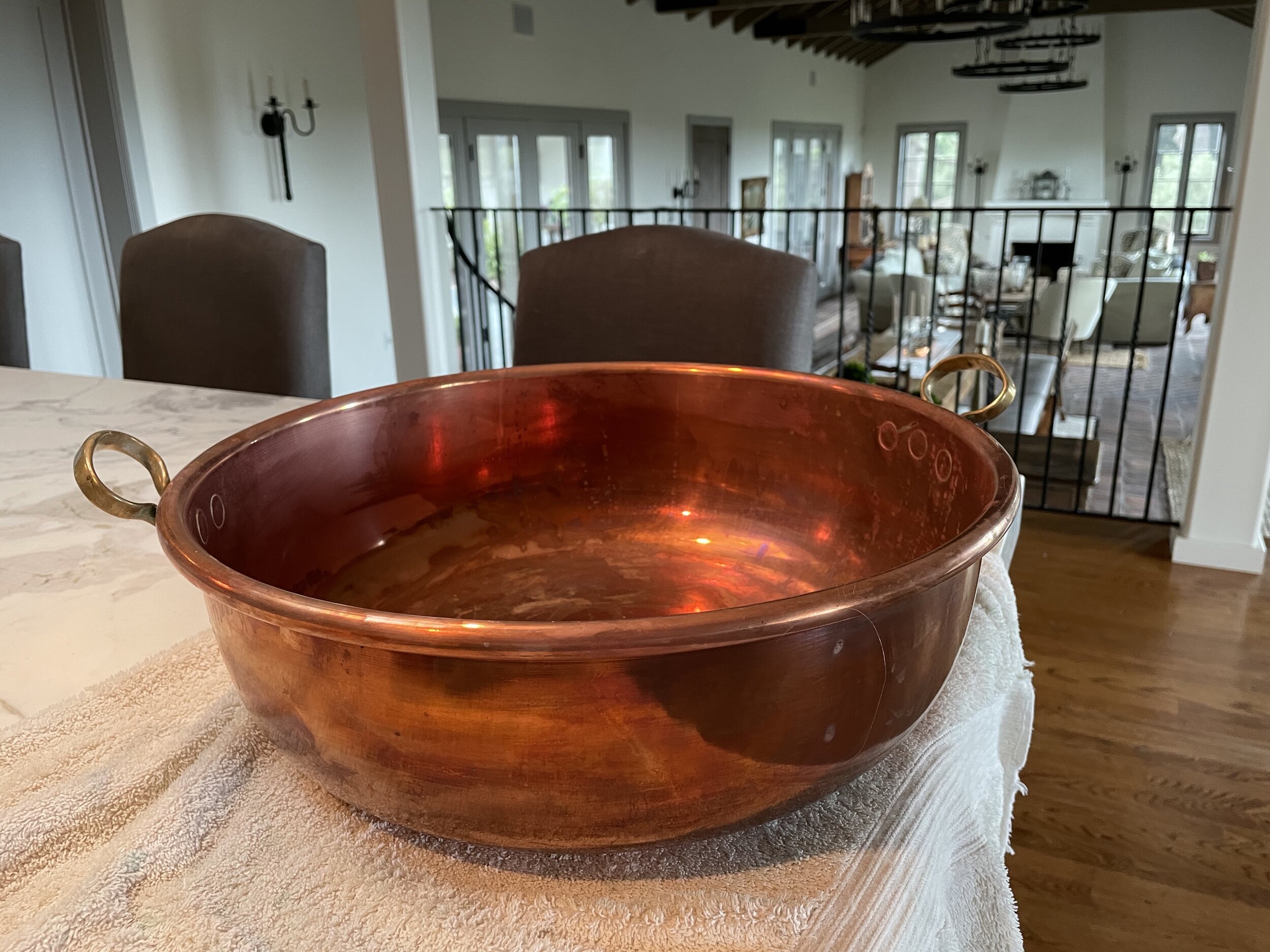
Polished and Ready Jam Copper Pot

Polished and Ready Jam Copper Pot

Copper pots and pans are one of the essentials in a French Country Kitchen, not only for their glowing beauty, but fine functionality. Copper conducts heat very well, cooks food evenly, cools quickly, and will last forever when properly cared for. Most copper pots are tin-lined, and eventually this tin lining wears out with use, and the piece should be re-tinned by a retinning specialist. Be aware that tin melts at 450 F. degrees, so cooking in tin lined copper pots should be below that temperature. Confiture or jam making copper pots don’t need to be lined, since there’s enough sugar in jam to prevent the fruit acids from reacting with the metal. Always cook your fruit and sugar together, never cook fruit alone in a copper pot. Copper mixing bowls often aren’t lined as well, especially those intended for beating egg whites.

Some people like to keep the aged copper penny patina, and others like their copper bright and polished. It is a personal preference. Wrights Copper Cream is a good commercial copper cleaner. An old standby recipe to clean copper is mix 1/4 cup salt, 1/4 cup cup flour and enough white distilled vinegar to make a thick paste, use a soft cloth to rub the paste on the surface of the copper. Buff the copper pan until it shines. Rinse with warm water and dry thoroughly. Over time your piece will begin to tarnish, and you simply repeat the process again.

You can find new pieces online easily, or if you favor the hunt, search out wonderful pieces at French flea markets. It is usually the vintage, well-worn patina pieces with a history of their own, that are the best treasures to find. I can’t tell you how many copper jam pots I passed up over the years in France. I simply didn’t have immediate needs to be able to ship it home, it was generally took bulky to carry, and I didn’t want to risk damaging a piece checked in my baggage in my cross Atlantic travels.

The universe works in wonderful ways. Recently I was helping my Mom and Dad clean and organize their downstairs kitchenette. What was tucked away in one of the cabinets, was this beauty, a huge confiture copper pot—big enough to hold all of your fruit and sugar for making jam at one time. My Mom gave it to me, and I did get it home safely in my luggage. It is special to me for sentimental reasons, coming from my Mom and her kitchen in Europe, and now passed on to me. It was like finding a diamond in the rough, and fulfilling the dream to have one and display it in my home.

Copper Jam Pot Washed and Ready to Polish

Copper Jam Pot Washed and Ready to Polish

Some Related Copper Websites:

Mauviel

Williams Sonoma

Elsie Green

The Cooks Atelier

East Coast Retinning

Nicholas Retinning, (No Website), 4641 Telegraph Road, L.A., CA 90022, (tel) (323) 263-0028, Est. 1965.

Bon Appétit et Bon Weekend….Bonnie

Delicious Roasted Tomato Soup
Home-Grown Tomatoes

Home-Grown Tomatoes

There are lots of wonderful recipes for your home-grown tomatoes, like bruschetta, tomato tart, caprese salad, or just an awesome BLT sandwich. I remembered reading recently the Roasted Tomato Soup recipe from Miss Maggie’s Kitchen cookbook, and wanted to try it. So simple, so seasonal, so divine.

Steamy Roasted and Charred Soup Ingredients

Steamy Roasted and Charred Soup Ingredients

Roasted Tomato Soup

Lovingly Adapted from Miss Maggie’s Kitchen Cookbook

Ingredients:

2-1/4 pounds assorted tomatoes

2 red onion quartered

4 cloves garlic, unpeeled

3 tablespoons extra-virgin olive oil

2 tablespoons balsamic vinegar

2 teaspoons sugar

Leaves of three sprigs of fresh thyme

Leaves of 3 sprigs fresh basil

1-1/2 cups warm vegetable broth

salt and freshly ground pepper

Directions:

1) Preheat the oven to 325 degrees F.

2) Rinse the tomatoes, cut them in half, and set on a rimmed parchment-lined baking sheet with the cut side up.

3) Place the onions on the baking sheet, then crush the garlic cloves with the flat side of a chef’s knife and scatter them around the tomatoes and onions.

4) Drizzle with the olive oil and balsamic vinegar, sprinkle with the sugar and thyme leaves, and season with salt and pepper. Roast for 50 minutes, then turn on the broiler and cook for an additional 5-10 minutes, until the tomatoes and onions are lightly charred and caramelized.

5) Remove the skin from the garlic cloves and place in a blender with the tomatoes, onions, any pan juices, and the basil. Process until smooth, adding the warm broth in two or three stages, until the soup reaches your preferred consistency. Serve warm or cold. Makes 5-6 servings.

Recipe Note: Like most soups, this soup is even more delicious the next day. I used “Fresh Basil” Temecula Olive Oil with my Early Girl and Celebrity Tomatoes.

Soup is On After Blending

Soup is On After Blending

This soup was delicious the day I made it. However, the next day I couldn’t resist enjoying it with an extra aged cheddar melted cheese sandwich with a touch of peperoncini on rustic country bread. Yum!

Good  to the Last Spoonful

Good to the Last Spoonful

Related Linked Posts:

Miss Maggie’s Kitchen, Relaxed French Entertaining

Bon Appétit et Bon Weekend….Bonnie

Home Stretch to Harvest
Happy Grape Clusters Ripening

Happy Grape Clusters Ripening

I am always amazed at the vineyard from winter to spring to summer, and now to fall and the ensuing transformation of buds to fruit clusters on the grapevines. It is almost time to harvest at Domaine de Manion. Vintages each year are just like children, and years of your life, each one is always different, and unknown to the outcome.

I am simply going to leave you with one of the most memorable quotes on wine by Galileo Galilei, “Wine is sunlight, held together by water.”

It means that wine is the perfect combination of it’s terroir, natural rainfall, and perfect amount of sunlight.

May this year’s vintage be outstanding and remarkable at Domaine de Manion! Salut!!

Bon Appétit et Bon Weekend….Bonnie

End of Summer Lunch Part Deux
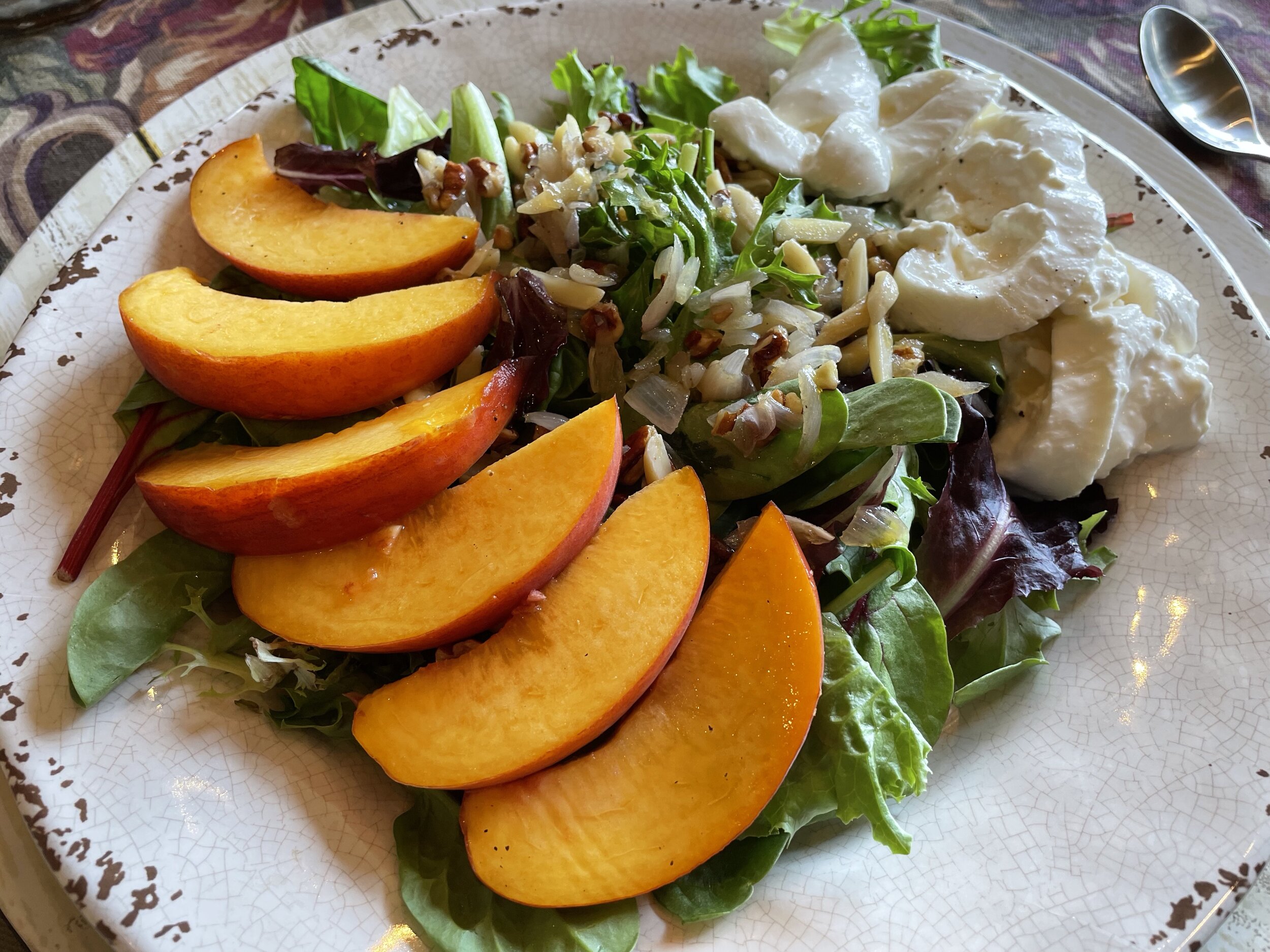
Miss Maggie’s Kitchen Salad Recipe

Miss Maggie’s Kitchen Salad Recipe

Last week I mentioned I would share the recipes from my previous blog post, End of Summer Lunch. I’ve written before about Héloïse Brion of Miss Maggie’s Kitchen, and her cookbook, and even the original winter version of this salad recipe. It is a bright composed salad that lends itself to seasonal variations easily. A composed salad is generally creating an individual salad usually in layers on each salad plate and drizzling the dressing over the top of each salad, versus creating one large salad in a bowl and tossing everything together.

Where you have pear and endive in the winter, you can have mixed summer greens and ripe peaches in late summer. The dressing is simply sauteed shallots in a little olive oil with warmed chopped pecans and almonds, placed over your bed of greens. Slice your desired seasonal fruit and place on one side, slice and place your burrata cheese on the other. Mix juice of one lemon and one tablespoon of honey, add salt and pepper and spoon over each salad. It is a simple salad with big flavor. Use the freshest and finest seasonal ingredients you can.

This salad has it all. You have your fat with the olive oil, nuts, and cheese. You have acid with your lemon juice. You have a hint of sweetness with your honey and fruit. You experience different textures throughout the salad when eating.

 
Dorie Greenspan’s Goat Cheese and Fig Quick Bread

Dorie Greenspan’s Goat Cheese and Fig Quick Bread

This is a great recipe for entertaining, and for apéro hour. It is a cinch to make like a banana bread, with no yeast, kneading, waiting, etc. It is a quick savory bread that really captures many of the essential flavors of Provence and the Mediterranean. When I first read this recipe I knew it was going to be really good! How can you go wrong with goat cheese, dried figs, honey, olive oil, fresh herbs, and even citrus zest. It gets better, Dorie Greenspan suggests that you can easily substitute ingredients such as dried tomatoes instead of figs, different neutral oils, different cheeses, basil instead of parsley, and lemon instead of orange. She also suggests serving it warm and in thick slices. Heaven!

Goat Cheese and Fig Quick Bread

Lovingly Adapted from Dorie Greenspan for New York Times Cooking

Ingredients:

butter

4 ounces very cold soft goat cheese

4-6 moist plump dried figs, such as Mission, cut 1/4-inch pieces

1/3 cup finely chopped fresh parsley

1-1/2 teaspoons finely chopped fresh rosemary

1/2 teaspoon finely chopped fresh thyme

1-3/4 cups all-purpose flour

1 tablespoon baking powder

1/2 teaspoon fine sea salt

1/2 teaspoon freshly ground pepper

3 large eggs at room temperature

1/3 cup whole milk lukewarm

1/3 cup olive oil or another neutral oil

1 tablespoon honey

1 clementine or 1/2 tangerine zest

Directions:

1) Center a rack in the oven and heat oven to 350 degrees. Coat an 8 to 9-inch loaf baking pan with butter.

2) Cut the goat cheese into 1/2-inch pieces. It can be messy, and sticky, so don’t worry. Keep in refrigerator until needed.

3) In a small bowl, toss together the figs, parsley, rosemary, and thyme; set aside.

4) In a large bowl, whisk together the flour, baking powder, salt, and pepper. Working in a different medium bowl, whisk the eggs until blended, then whisk in the milk, oil, and honey.

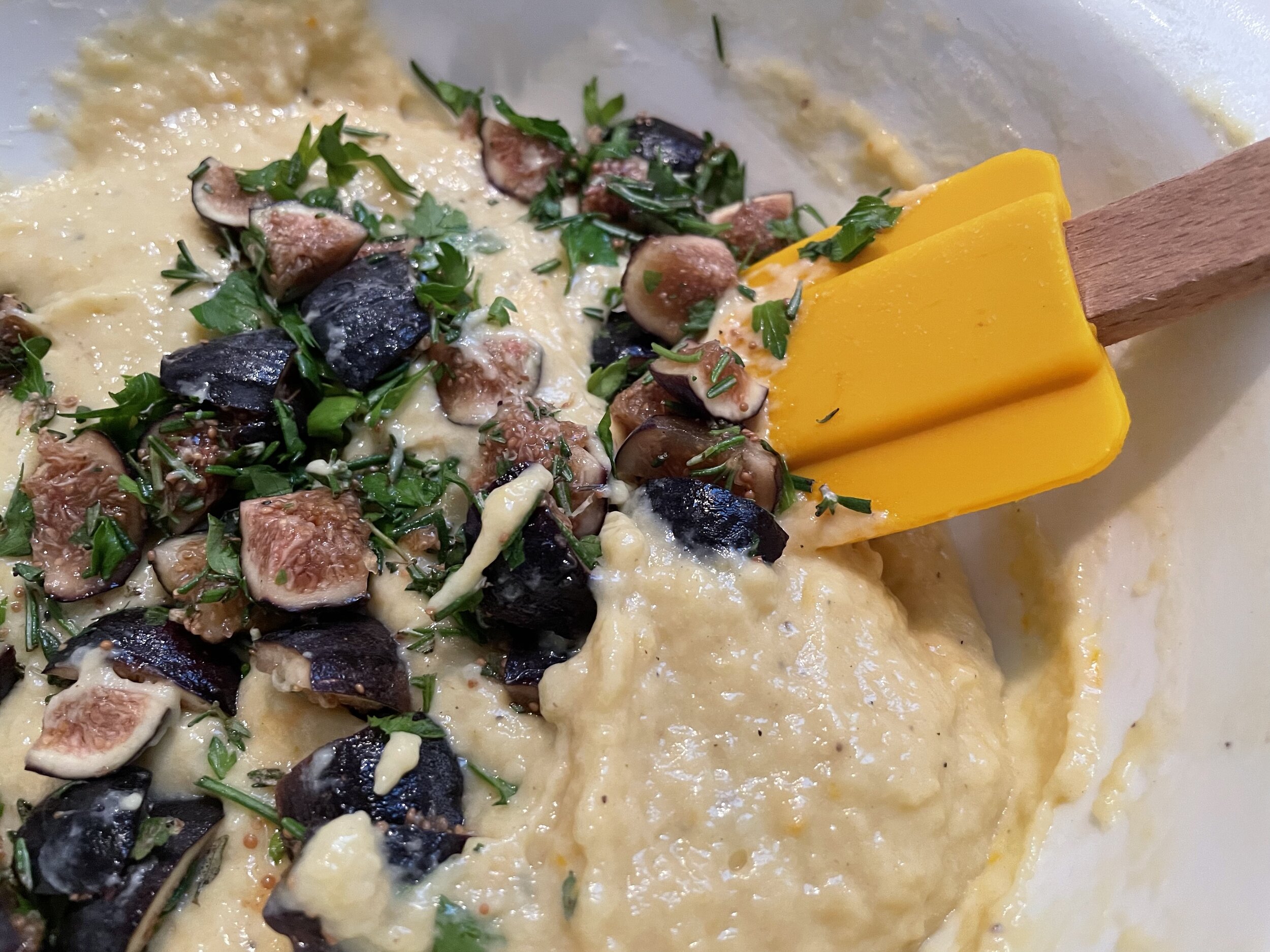
5) Pour the wet ingredients over the flour mixture, and using a sturdy spatula, stir until the dough is almost blended. You’ll still see some streaks of flour, and that is okay. Scatter the fig and herb mixture over the dough, and then cover with the chilled bits of goat cheese. Grate the zest of the clementine or tangerine over the cheese. Using as few strokes as possible, stir everything together. Once again, it might not look perfect, and once again that is fine. Scrape the dough into the baking pan, and use the spatula to poke the dough into the corners, and to even out bumpy top.

6) Bake for 34 to 38 minutes, or until the top is golden, the bread has started to pull away from the sides of the pan, and a tester or toothpick inserted into the middle of the bread comes clean. Unmold the bread onto a rack, turn it right side up and let cool. Wrapped well, the bread will keep for a day or two at room temperature. Time: 50 minutes. Yield: 8 servings.

Mixing the Fig and Herb Mixture Into the Dough Before Baking

Mixing the Fig and Herb Mixture Into the Dough Before Baking


Dessert is light with fresh seasonal berries topped with vanilla mascarpone cheese. Mascarpone is a light, slightly sweet Italian cheese that is easily spreadable for toast and bagels, and also used in desserts. To make vanilla mascarpone cheese simply combine well 8 ounces mascarpone cheese with a heaping tablespoon of sugar and 3/4 teaspoon vanilla extract. Place a dollop on top of your berries, and add a bit of Demerara sugar for glisten. Enjoy!

Fresh Seasonal Berries Dressed With Vanilla Mascarpone Cheese

Fresh Seasonal Berries Dressed With Vanilla Mascarpone Cheese

Related Post Links:

End of Summer Lunch

Miss Maggie’s Kitchen

Bon Appétit et Bon Weekend…..Bonnie

End of Summer Lunch
End of Summer Lunch Beckons Fall

End of Summer Lunch Beckons Fall

I write and speak a lot about seasonal living. You can feel it in the air, as exciting leisurely summer turns into reflective autumn. Our everyday routines begin to change and adapt to the season. Small subtle changes such as our weather transitioning, the foods we eat, the clothes we wear, our gardens changing, all tell us we are into a new season. We have a short window to embrace this fall season, and then it is gone for another nine months, and winter heralds in. Living seasonally heightens our everyday living, and in turn living in the moment.

On the cusp of summer ending, means I can use a pretty autumn tablecloth, a fall-scented tawny candle, a beautiful blooming dahlia from a friend, and a menu which uses both summer and autumn flavors. The menu was a lovingly adapted composed salad from Miss Maggie’s Table, a savory warm Goat Cheese and Fig Quick Bread by Dorie Greenspan, and a light dessert of summer berries with a dollop of vanilla mascarpone Italian cheese with a sprinkling of Demerara sugar.

I will share with you these recipes next week. In the meantime, how have you transitioned into autumn? What do you love most about autumn?

A Related Past Blog Link:

Follow the French

Bon Appétit et Bon Weekend…Bonnie

Alce 101 Kitchen & Tequileria, Solana Beach
Cortez Halibut Ceviche Appetizer

Cortez Halibut Ceviche Appetizer

From time to time I highlight “Places to Know” around San Diego County. Across from the Solana Beach train station on the Coast Highway, the restaurant Alce 101, is a great restaurant to know, especially if you are enjoying the nearby shopping Cedros Design District. Former owners and restaurant veterans of Cilantros and Epozote, opened this farm to table Southwest restaurant, Alce 101 in 2019. It is certainly a nice addition to this area with good food and drink, upbeat vibe, and lots of outdoor seating.

Alce Means Moose in Spanish

Alce Means Moose in Spanish

The restaurant is named Alce 101, alce means moose in Spanish. There is a great story about this particular moose which presides over the bar, and the restaurant owner going back decades. It is a heartwarming story, not a hunting story,

Delicious Epozote Mussels

Delicious Epozote Mussels

The menu offers an array of diverse dishes of small and large plates, such as Grilled Eggplant Steak, Beet Salad, Elk Pozole, Corn Chowder, Rack of Lamb, Coriander Pork Shank, and Peppered Ahi. I love the Halibut Ceviche appetizer, and of course, Epozote Mussels.

Hours are Tuesday through Thursday 4pm to 8pm, Friday 4pm to 10pm, Saturday 10am to 10pm, and Sunday 10am to 8pm. Closed on Mondays. Reservations are suggested.

Bon Appétit et Bon Weekend….Bonnie


Roasted Butternut Squash Salad
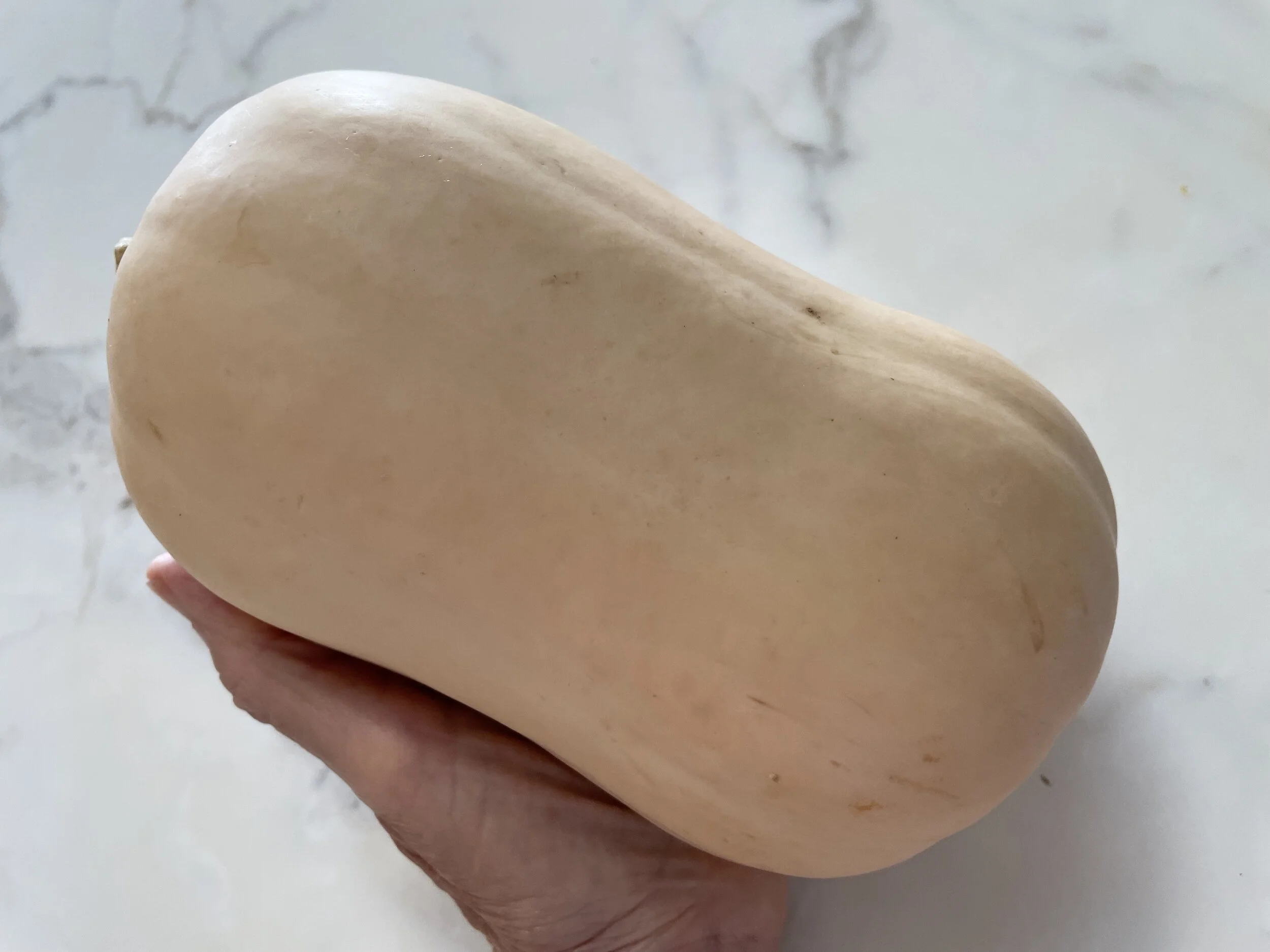
Home-Grown Butternut Squash

Home-Grown Butternut Squash

Here is a recipe to herald in fall, Roasted Butternut Squash Salad. Butternut squash is one of my favorites, and I use it a lot in the fall. I have been composting with my kitchen scraps for years, adding my finished compost to my soil and my plantings. A fringe benefit of this each year, is many happy volunteer butternut squash vines that sprout, flower, and yield tasty butternut squash for my fall menus.

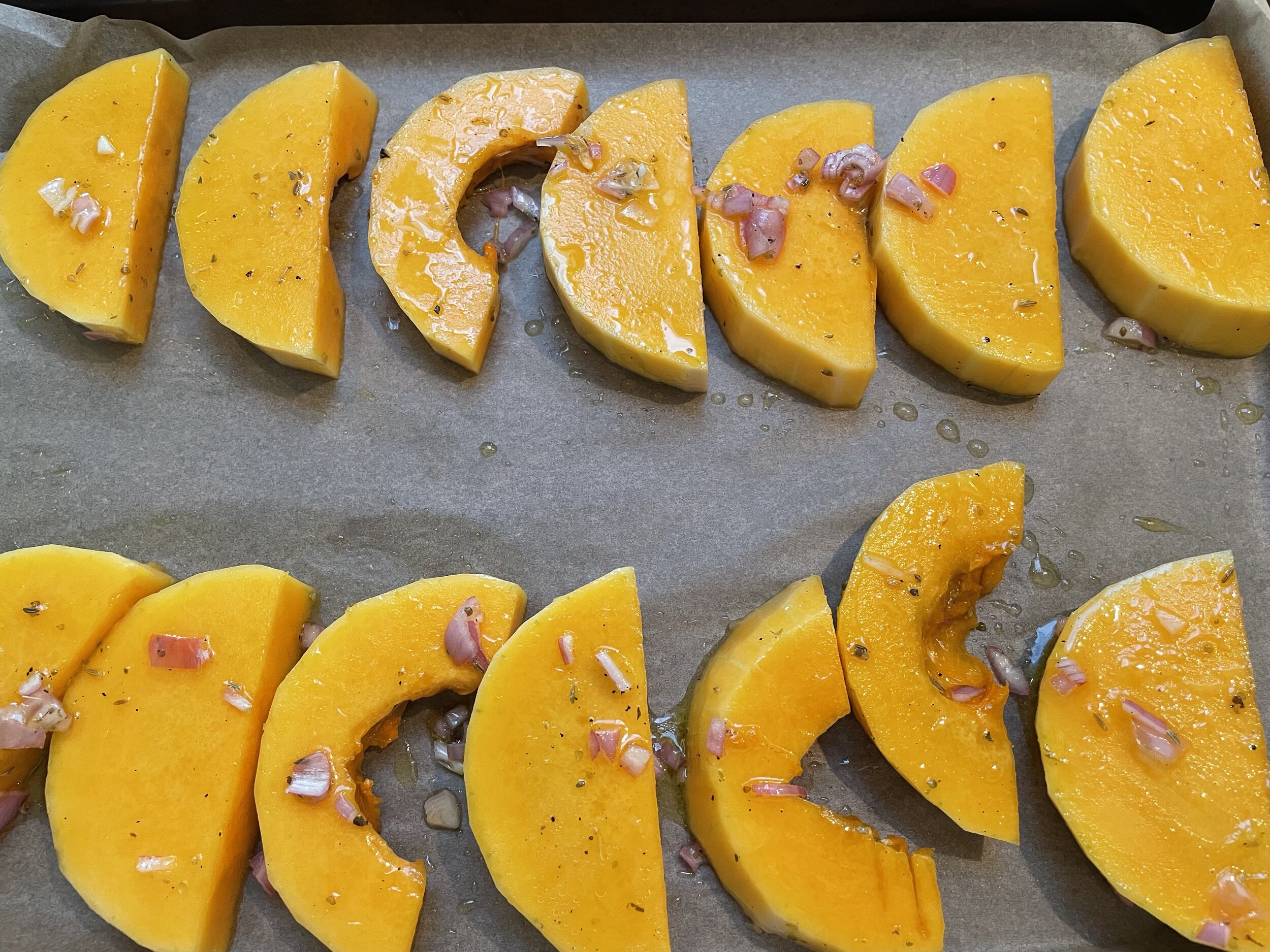
Butternut Squash Ready for the Oven

Butternut Squash Ready for the Oven

The beauty of this recipe is roasting your peeled and sliced squash with a sherry vinaigrette and finely chopped shallots until caramelized, and then tossing the remainder of your vinaigrette over your salad greens repeating the delicate flavors.

Ingredients:

1/4 cup extra virgin olive oil

1/4 cup sherry vinegar (preferably Spanish Jerez), or apple cider vinegar

1 small shallot, finely diced

2 teaspoons chopped fresh oregano, or 1 teaspoon dry oregano

1 teaspoon fennel seeds, crushed in a mortar & pestle

1 teaspoon honey

1/2 to 1 whole medium butternut squash, peeled and sliced into 1” slices, or cubed, depending on how much squash you would like to use.

12-14 ounces of fresh baby spinach, or mixed fall greens

1/2 cup crumbled French feta cheese, or more if desired

1/4 cup toasted chopped pecans (optional)

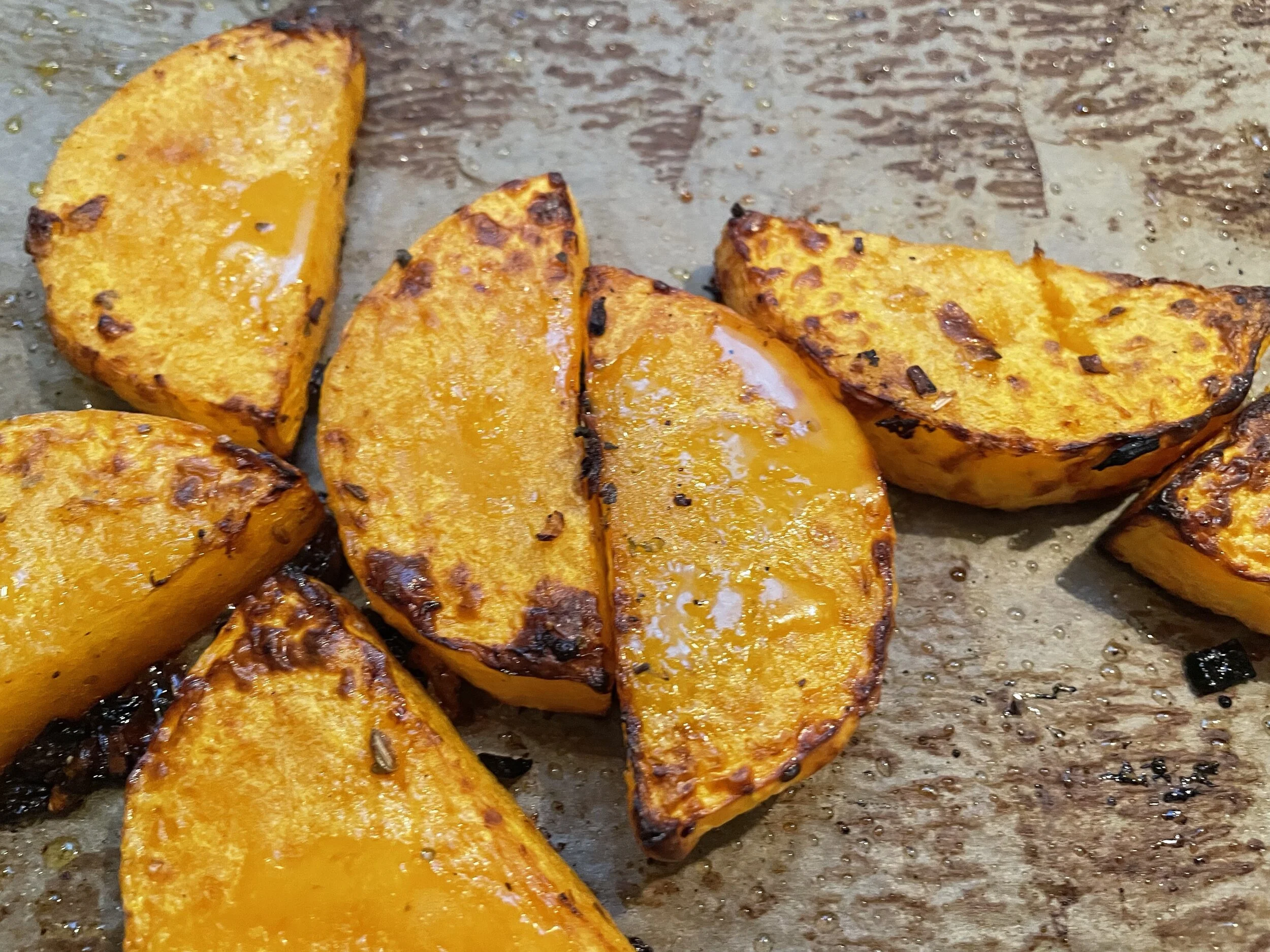
Roasted Butternut Squash from the Oven

Roasted Butternut Squash from the Oven

Directions:

1) Preheat your oven to 400 degrees F. Make vinaigrette in a small bowl whisking together olive oil, vinegar, shallot, oregano, fennel seeds, honey, 1/2 teaspoon salt, and 1/2 teaspoon freshly ground black pepper.

2) Place parchment paper on a large baking pan or tray. Toss squash in a bowl with 2-3 tablespoons vinaigrette. Bake squash uncovered, 25 to 30 minutes until it browns and begins to soften. Flip squash once or twice while baking. When finished, let cool.

3) Place spinach or greens in a large bowl. Add squash. Toss with remaining vinaigrette. Plate your salad with greens and squash. Top salads with crumbled feta cheese and toasted pecans. Makes 6 to 8 servings. Enjoy!

Composed Salad Ready for Topping with French Feta Cheese and Toasted Pecans

Composed Salad Ready for Topping with French Feta Cheese and Toasted Pecans

Please let me know if you make this salad, and how you liked it. I would love to hear from you.

Bon Appétit et Bon Weekend…..Bonnie

Alice Waters Delivers Delicious Words to Live By
Worthwhile to Read or Listen To!

Worthwhile to Read or Listen To!

I recently listened to the the audiobook, We Are What We Eat by Alice Waters. It is available in book form in stores, online, and audible apps like Libby, “the award-winning much-loved app for libraries.” Back in June 2021, there were quite a few articles written about Alice Waters and her new book, We Are What We Eat, as it was being released. With the popularity of her new book, I had to wait a few months to borrow the audiobook on Libby read by Alice Waters herself. Once I was able to borrow and listen, I breezed through the approximate six hours of her book, absorbed by her straightforward candor on the state of our food industry, agriculture, culture, food practices, climate change, and more. You may think of her as a successful restaurateur, but she is really so much more—able to speak history, science, politics, philosophies, etc. at a drop of a hat, or should I say a drop of a spoon.

If you have followed this blog for a while, you know first hand how I revere Waters and her philosophy, books, teaching, activism, and Edible Schoolyard Program. It is the same message she has preached for decades, and she doesn’t back down.

Now 77, Waters has decades of material and stories to draw from her childhood, well known Chez Panisse 50-year-old restaurant, and food experiences and events revolving around the globe. Waters wisely uses these stories to illustrate her points from chapter to chapter.

While the first part of the book focuses on explaining our fast food culture with chapters called Convenience, Uniformity, Availability, Truth in Advertising, Cheapness, and Speed. The second half of the book focuses on explaining slow food culture with chapters called Beauty, Biodiversity, Seasonality, Stewardship, Simplicity, and Interconnectedness. I particularly like how she shares her time in France, and how deeply influenced she was through their food culture, markets, and the people she met to understand these now called slow food principles.

I can relate. These are all principles I try to live and eat by, and what I talk so much about in my cooking classes and presentations. Less is really more, and within simplicity there is so much golden, so much elegance. I highly recommend reading or listening to this book.

“Tell me what you eat, and I will tell you who you are.” —French Proverb

Bon Appétit et Bon Weekend….Bonnie