Authentic Italian Pesto
Italian Pesto Basil, Renee’s Garden Seeds

Italian Pesto Basil, Renee’s Garden Seeds

This year I grew basil from seed for the first time, and had resounding success. I used great seeds from Renee’s Garden. She has many types of basil but I chose her Italian Pesto Basil seeds specifically for making my own pesto. This basil was very easy to grow, in two rows in my raised bed. The green color alone is fabulous, and as you pick the leaves or pinch the flowers the fresh basil smell is intoxicating.

 
A Partial Glimpse of Beautiful Cinque Terre

A Partial Glimpse of Beautiful Cinque Terre

My incentive for growing basil, and making my own pesto from the garden was Wine Vault & Bistro’s Italian Culinary and Wine Tour, my husband and I, and friends took two years ago. The tasty tour focused mainly around Florence and Tuscany, and paused in Cinque Terre. Cinque Terre is five separate coastal villages perched precariously high above the Mediterranean within Liguria in northwest Italy. These villages because of inaccessibility, were virtually unknown to the world until shortly after World War II. They are all now part of the Cinque Terre National Park, a UNESCO World Heritage Site.

In the fifth and furthermost village of Monterosso, our tour had a planned amazing lobster and seafood lunch along with other local delicacies at the sweet Hotel Pasquale. An extra bonus was an optional pesto making class beforehand from the restaurant’s own Nonna. Taking notes as quickly as I could, I share with you her authentic Pesto Recipe. This is the recipe I am using this summer from my garden, and share with you now.

 
Informal Pesto Making Class in Monterosso

Informal Pesto Making Class in Monterosso


Italian Basil Pesto (For Two People)

80 small Genoa basil leaves, or fresh basil leaves of your choice. One clove garlic.

One tablespoon pine nuts per person, not roasted but raw.

The best pine nuts are from Pisa, Italy. One heaping tablespoon Parmesan cheese per person.

For more people use 4 tablespoons pine nuts,

3 garlic cloves, but use same amount of Parmesan cheese and garlic proportionally.

Add into ingredients 1/2 cup good olive oil for two people, more olive oil, if making for more people.

With a mortar and pestle crush your basil leaves until they become a paste. Add other ingredients.

Add your olive oil to mixture last. Pesto should be a cream-like consistency.

Don’t normally need salt, because the cheese has salt. Use over warm linguini.

 
Becoming Authentic Italian Basil Pesto

Becoming Authentic Italian Basil Pesto


My recipe notes. You can use a food processor as an alternative to a mortar & pestle for your pesto, but know the Italians still prefer a mortar & pestle.

This pesto is made up of a few simple ingredients, so try and find the best of all of these ingredients. I use this fresh pesto over my pasta yes, but also for my

homemade pizza, and tomato tartines. Enjoy, and maybe it will take you to Italy someday, or take you back to Italy once again.

Grateful for Grapes
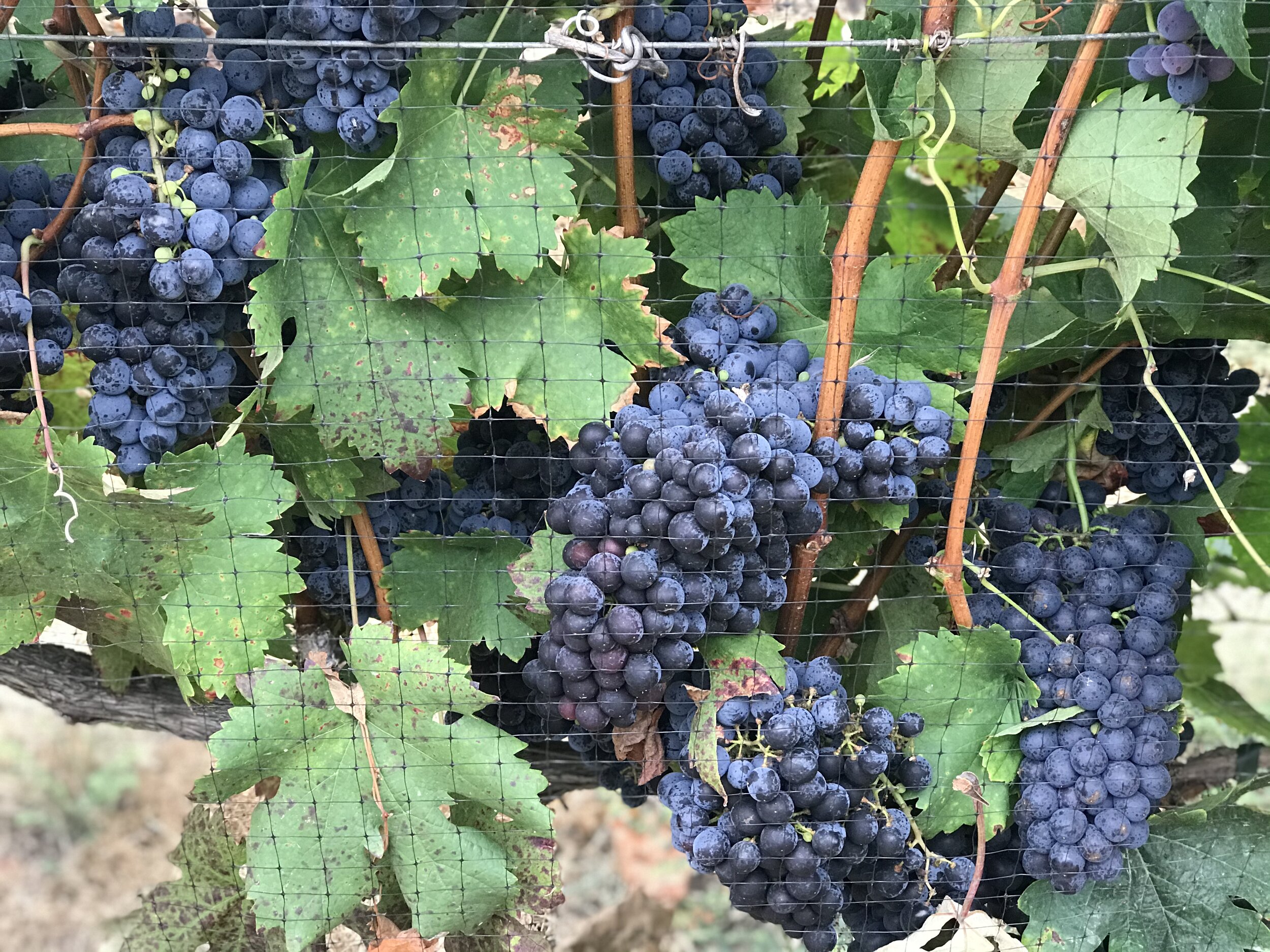
Happy Domaine de Manion Grapes

Happy Domaine de Manion Grapes

This year has certainly been a time of reflection at Domaine de Manion. It seems like while the outside world has been ever changing and experiencing unchartered territories, our vineyard has been constant and steady doing what it likes best, growing a great Syrah grape for us!

We, being my husband John and I, first planted our vineyard in 2006, dropped the fruit the first two years, so 2020 will be our twelfth harvest. It promises to be a great harvest with a high yield, and gorgeous clusters that give us reason to smile. Some of the grapevines are yielding more than 25 grape clusters per vine. It is often said that the best fertilizer for a vineyard is the vineyard manager’s footsteps, and this year we have been in the vineyard even more following shelter in place.

In the beginning it was one big experiment. Whether we had a good location for a vineyard? Could we grow a good grape? Could we find vineyard experts to help us get started? Could we learn to manage a vineyard? Could we make good wine? All unknown.

We pushed through the unknowns, being ahead of the curve as far as backyard vineyards go. Now backyard vineyards are prolific in San Diego County with all of their great attributes: 1) four-season beauty and interest, 2) drought tolerant, 3) capability to make wine, 4) becomes a wonderful lifestyle, 5) attracts great people and friends domestically and internationally.

It is a lot of work, and time consuming at times, as farming is. Some years are better than others, and we learn something new each year with our vineyard. It is a constant reminder that life is unpredictable. For now this year, our grapes and harvest promise to be an especially great one.

I encourage all of you, if you have an idea, dream, or goal, go for it! Even if you hear a few naysayers, and especially if it something that sticks in your mind. Follow it, and don’t stop at the first “no.” You never know what fruit it will bear!

Hedging Shasta Daisy
Shasta Daisies Make a Great Welcoming Entrance

Shasta Daisies Make a Great Welcoming Entrance

I want to share with you a great garden tip for an informal hedge, the perennial Shasta Daisy, Leucanthemum x superbum, Luther Burbank’s original hybrid. I struggled to find a suitable hedge or border for the entrance of my home because it is a sunny expansive area, had to look good year round, and present a warm and inviting entrance.

Why I like creating a border with Shasta Daisy:

1) I didn’t even buy the first starts, but were given to me by a dear friend. With the right happy conditions Shasta Daisy multiplies by itself, into a 2-4’ tall x 2’ wide mass. I wanted a fairly tall border in front of my Intrigue roses.

2) They bloom in July or mid summer when other parts of my garden are waning. The bright white flowers create a warm, cottage effect which put a smile on your face. Dead heading spent blooms encourages more blooming. Once all of the blooms are finished, I still have a beautiful green frilly perennial border throughout the year.

3) Shasta daisies like sun, but will fair well with some shade. They like moderate water. I have them on drip away from my home.

4) Butterflies are attracted to them, and often are fluttering around them.

5) In the spring or fall, I can divide plants to increase or reduce the width of my border.

6) Shasta Daisies glow in moonlight.

7) They are an excellent cut flower, last a long time in a vase, for your garden bouquets.

8) Shasta Daisies are easy to care for, fairly disease resistant, and respond well to a good pruning once a year.

9) Mass planting or repetition is always solid design.

Do you have this wonderful perennial in your garden now? Not only are Shasta Daisies great for a border or hedge, they do well in containers too!

Smiling Shasta Daisies Are Perfect Greeters

Smiling Shasta Daisies Are Perfect Greeters

Lavender Love
St. Francis Amongst the Provence Lavender

St. Francis Amongst the Provence Lavender

In a quiet spot in my garden accompanied by St. Francis, patron saint of animals and the environment, I have two rows of Provence lavender growing. For my lavender, it is usually the end of June, beginning of July, when the lavender spikes begin to flower and it is time to harvest for drying. I don’t harvest all the lavender, so as to save some of the lavender for the bees, butterflies, and pollination.

Lavender spikes are ready to harvest when the bottom third of the spike starts to bloom. Make sure lavender spikes are totally dry and not wet from morning dew. Gather your lavender spikes in bundles, tie together with twine, and hang upside down on a wire hanger. I use a simple paperclip to secure my lavender bunch to the hanger. For a small amount of lavender bundles, hang in a dark, dry place with air circulation, like a guest bedroom closet. Place a towel or cloth under your lavender bunches to catch any lavender that drops. Drying in a dark space or closet will preserve the color of the lavender flowers, which will dry in 8 to 10 days. Rub your dried flower heads together over a sieve to separate anything other than your prized lavender buds. Store in an airtight glass jar, either tinted or in a dark pantry. Dried lavender will keep their flavor for culinary use, for many years, but I try and harvest enough lavender buds to last me until next year.

Lavender plants need to be cut back to beautiful mound shapes each year once harvest and their bloom time is over. Cut back your lavender plants by about one half in size and just above their woody stems. This will rejuvenate your lavender plants for the following year.

Hanging Provence Lavender Ready For Drying

Hanging Provence Lavender Ready For Drying

Provence lavender is one of the preferred culinary lavenders due to its very low camphor level, and pleasing lavender flavor. So versatile, it can be used in sweet or savory recipes. Think Lavender Sugar, Honey Lavender Ice Cream, Lavender Lemonade, Raspberry Scones with Lavender Glaze, Herbs de Provence, Lavender Balsamic Vinegar, Grilled Lamb with Lavender, and more!

Harvested Dried Lavender

Harvested Dried Lavender

Provence lavender is also a very good landscape lavender known for it’s beauty and fragrance. Planted in mass, it could be a stunning focal point in your garden. Drip irrigation works best, and water in moderation.

With all of these attributes, why not add Provence lavender to your garden.

Connaisez-Vous Sharon Santoni?
VICMJ18_SSantoni_Page_1.jpg

I heard distant rumblings about Sharon Santoni from her first book, My Stylish French Girlfriends, then she was featured in the May/June 2018 Victoria Magazine, sharing with us her just-released second book, My French Country Home, and her gracious taste in French country living in Normandy, France, and I was hooked. 

Sharon Santoni grew up in England, fell in love, married a Frenchman, raised their four children in a rural dream home and cultivated garden, and embraced her French life. Soon to be an empty nester, Santoni got the idea to start a blog, My French Country Homesharing her daily life in rural France and all that it offers.

Fast forward, her blog is now read by thousands all over the world, two beautiful books under her belt, and an accidental entrepreneur with her quarterly subscription mail order Stylish French BoxFrom spark to fire, sometimes life is like that! She muses frequently  about reinventing oneself, lessons we can all learn from her.

If that is not enough, Santoni loves to troll nearby brocante flea markets for unique treasures for her home, garden, and entertaining. She is my kind of girlfriend!

 
VICMJ18_SSantoni_Page_3.jpg

Victoria Magazine, May/June 2018

Kumquat-Cardamon Tea Bread
Kumquat-Cardamon Tea Bread, Perfect for a  Gift

Kumquat-Cardamon Tea Bread, Perfect for a  Gift


If you are lucky to have a kumquat tree, you must have this recipe, Kumquat-Cardamon Tea Bread from Bon Appétit November 2005. The secret ingredient is 2 cups of kumquat puree and maybe another secret ingredient, crushed pineapple in its own juice. Wow! Such a moist and delicious tea bread. This recipe makes 2 large loaves, or several mini gift loaves. Topping each tea bread with a citrus glaze and slices of kumquat makes this a beautiful presentation! Enjoy!

Kumquats are very versatile and can be used in meat sauces, salads, and sweets. Kumquats can easily jump between sweet and savory, and beckons you to use your imagination. 

 
Kumquat Trees Can Be Grown in a Container

Kumquat Trees Can Be Grown in a Container


Digging into my archives here is my post on Knock-Out Kumquats, from November 2008, for more information about growing kumquats in your garden. Do you have a kumquat in your garden?


Climbing Eden Rose
Climbing Eden Rose In My Potager

Climbing Eden Rose In My Potager

It has taken me three years to cultivate a single bloom from my climbing Eden Rose. It is not easy to find Eden Rose in local nurseries. Search for this rose in pot and bareroot form for sale online. Heirloom Roses is one source for it in a pot.

I first planted my Eden Rose in too shady a spot where it struggled. Finally, this winter I transplanted it to my potager arch to co-mingle with my young Golden Dorsett apple trees. It is very happy now, and has exploded with happy blooms. Eden Rose is a versatile repeat bloomer with an unusual blend of pastel pinks, creams, and yellows. I simply love this rose, and it reminds me of Provence!

I saw and recognized Eden Rose while visiting the magnificent potager, Bastide des Saveurs, near the village of La Cadiere-D'Azur in the Bandol Region of Provence. Here is a link to my past post and visit with Chef René Bérard in May 2015.

Chef René Bérard told me this rose was called Pierre de Ronsard. In the back of my mind, I knew it had another name, and did some exploring. According to Wikipedia, Eden Rose, also known as Pierre de Ronsard was created by Marie-Louise Meilland in France by Meilland International in 1985, as part of the the Renaissance Collection.

Bastide des Saveurs is Chef René Bérard's potager and location for cooking classes. For a treat, visit his website for more information on his quaint family-owned hotel, restaurant, spa, and cookery school,  Bérard Hostellerie.


Provence Morning Light and Eden Rose in Chef Bérard's Potager

Provence Morning Light and Eden Rose in Chef Bérard's Potager

Climbing Eden Rose in My Potager

Climbing Eden Rose in My Potager

Follow Your Inner Urn-Ing

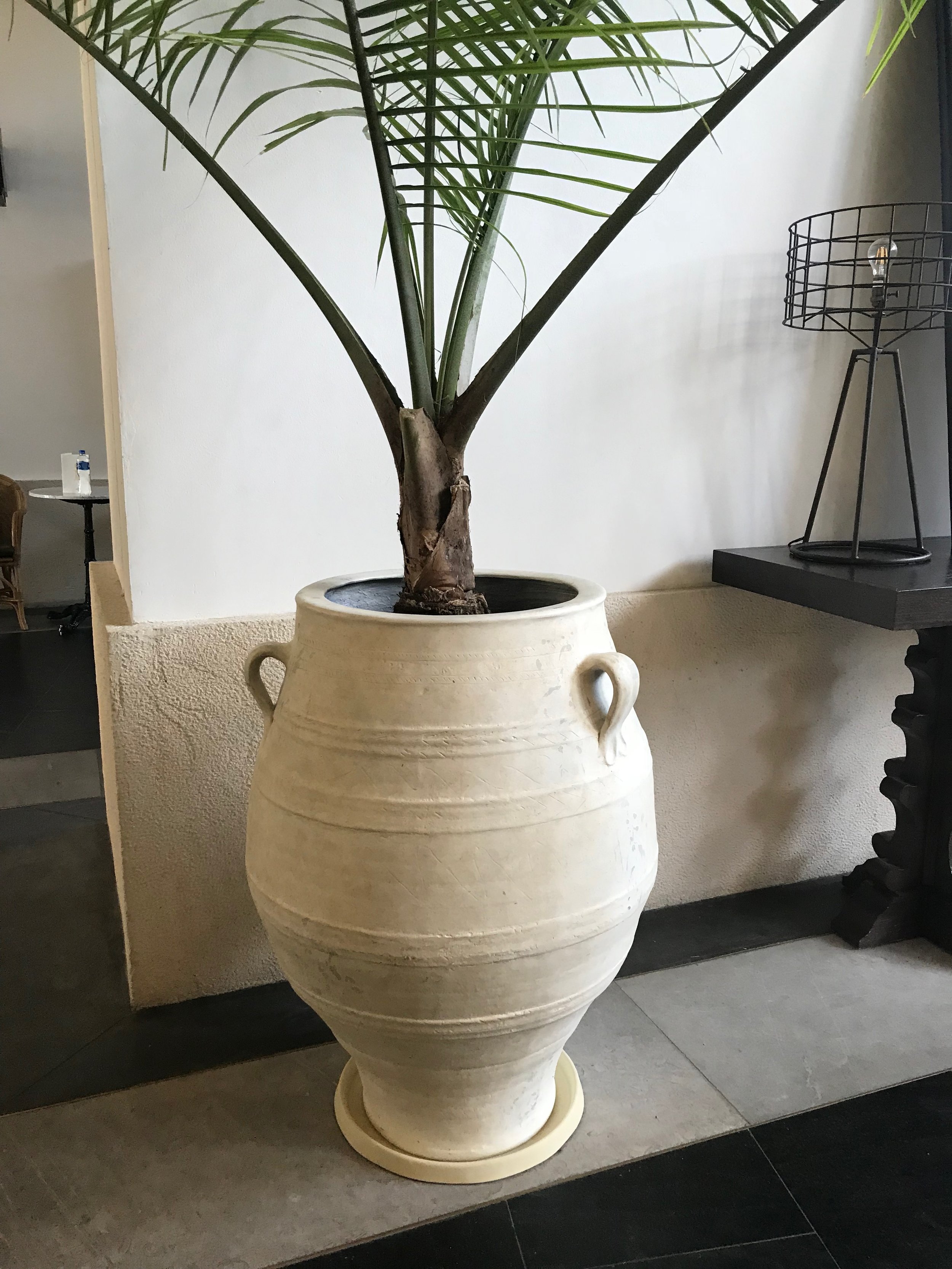
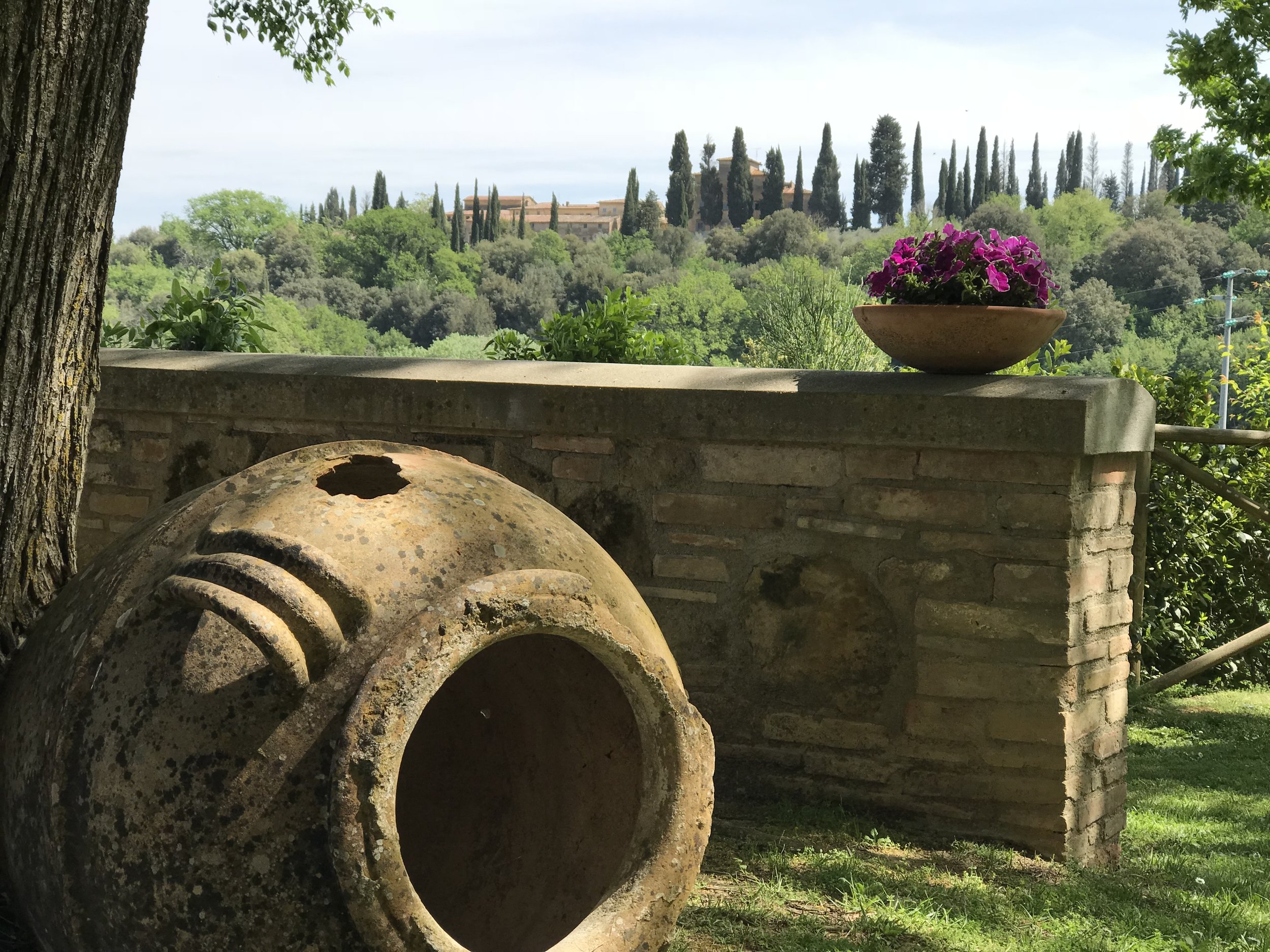
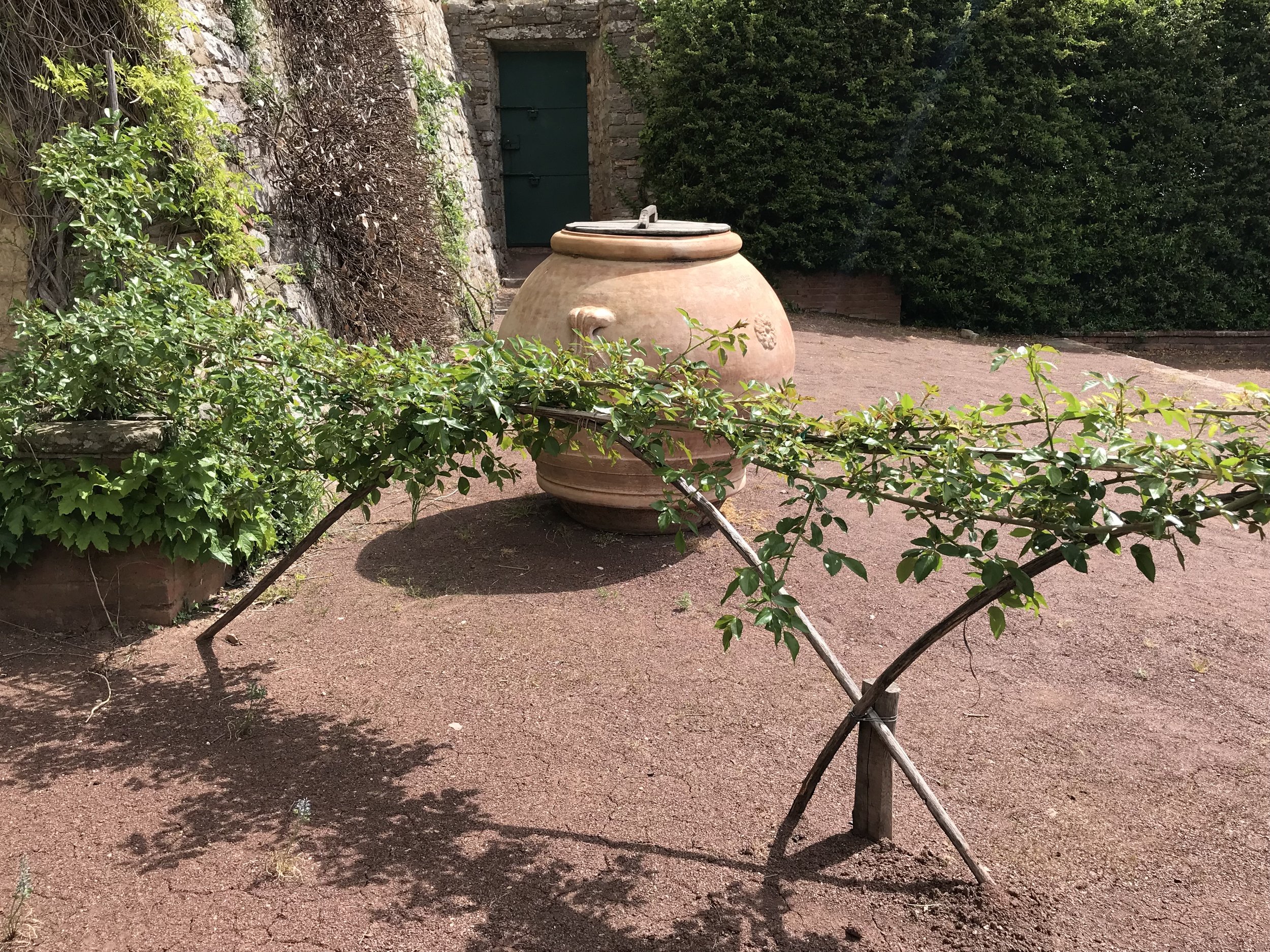
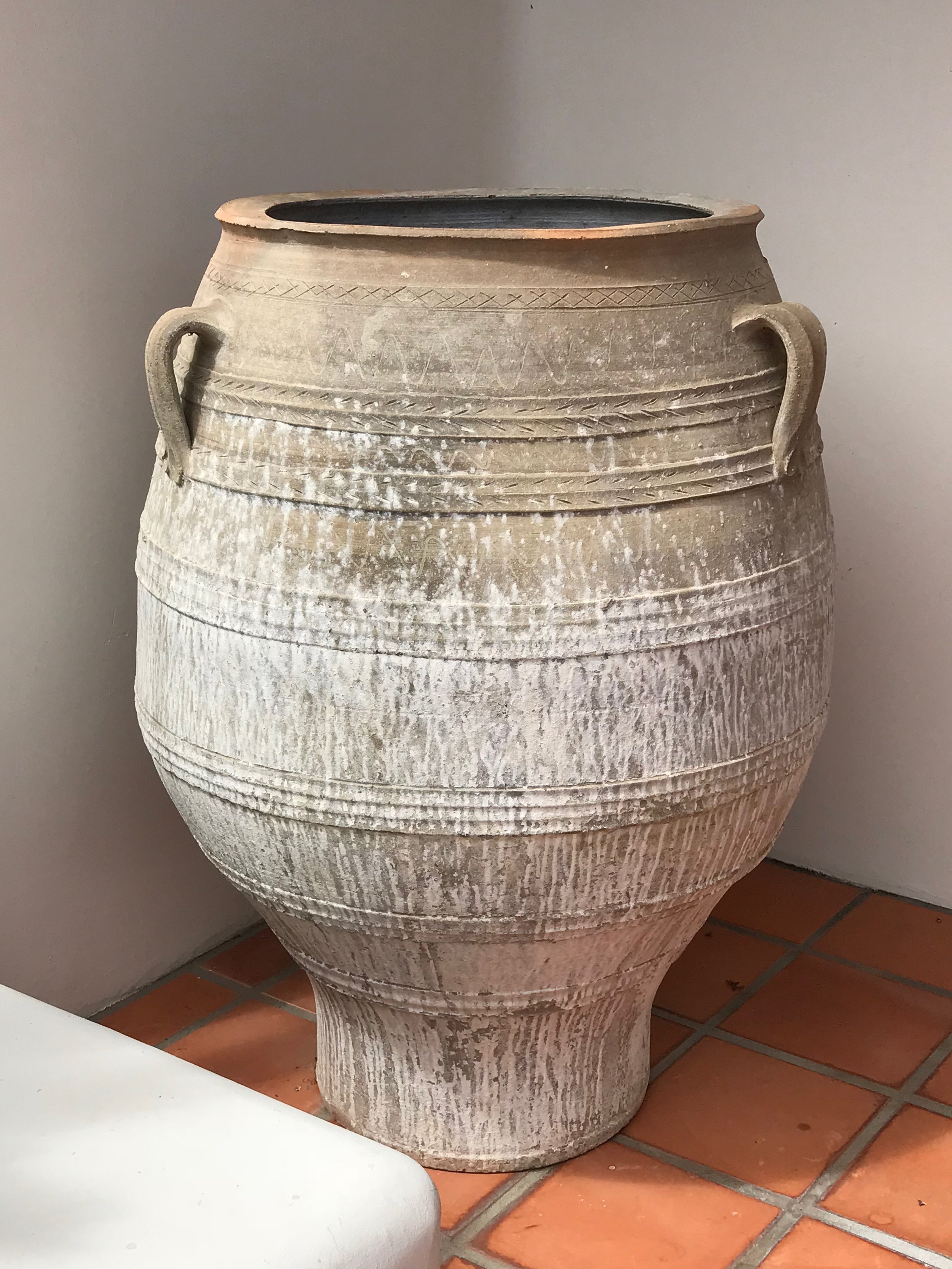
For some time I have wanted an urn in my garden, an urn that was simple but gave a nice touch to the garden. Urns are easy, as they can be planted, take the weather, moisture, and look great just where they are placed.

So in my mind, I began the hunt for the perfect white urn. Why white, because I have two existing white fountains, white is in my garden color palette, and I have a white stucco home. White is a theme. I have found white urns are a bit harder to find than other colored urns. 

So my journey began to find a white urn that would work well in my garden. In my travels and every day life, I came across fabulous urns and began to have "urn envy."

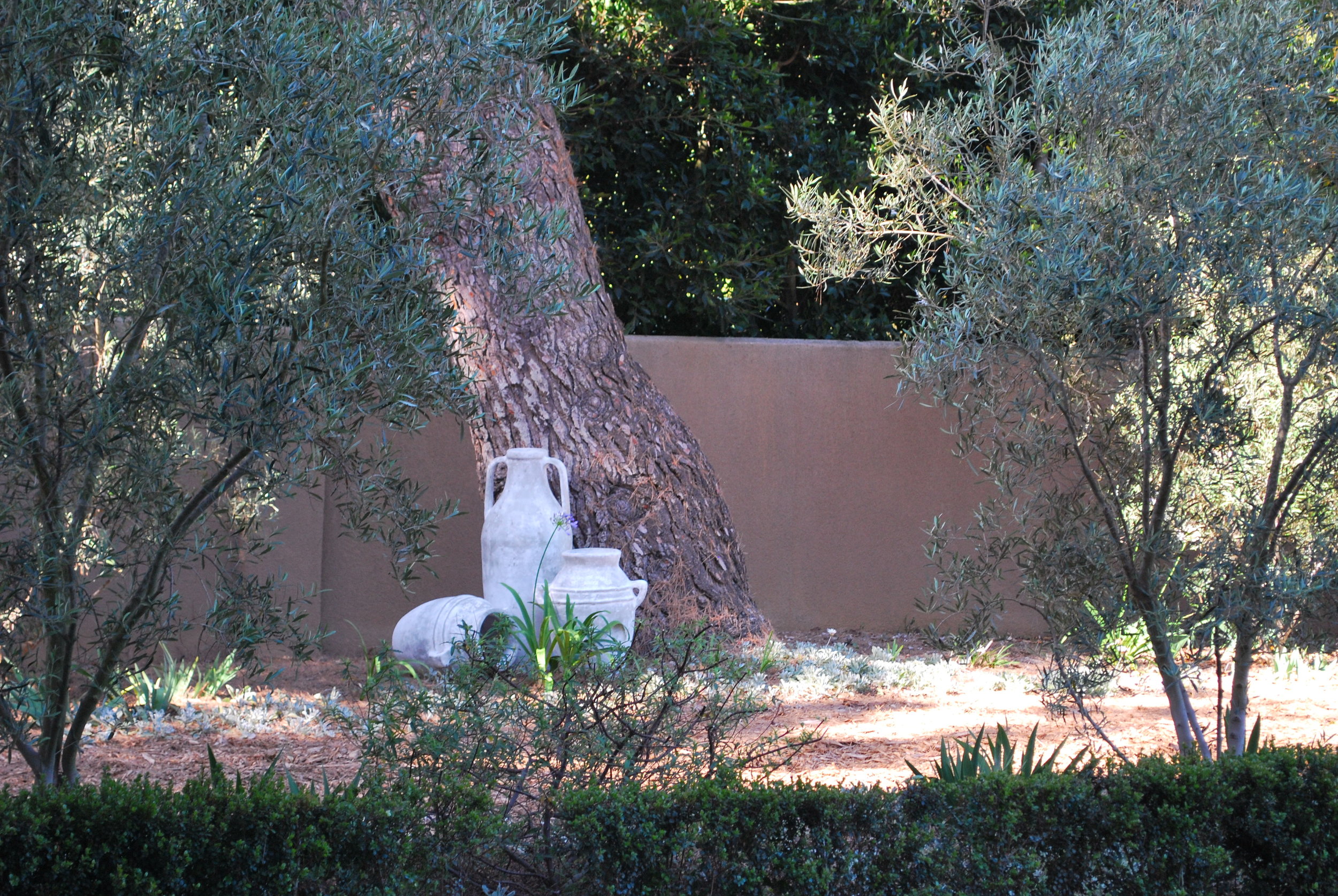
Recently, I stumbled across an urn that I thought would look great in my garden. I should say "urns" as I found three, and made a little vignette. Where did I placed these urns? In a perfect spot, the olive grove. Interestingly, these urns are almost a collage of the fabulous urns I had seen and been admiring, only better, because they seem perfect for my garden in color, form and size. Their white color draws your eye to their heavenly spot, in a most simple and natural way.

Urns in My Olive Grove

Urns in My Olive Grove

I found urns for my garden, at the most surprising place, HomeGoodsThese urns are very reasonable and beautifully handcrafted in Mexico by local artisans. Suggestions to find urns for sale are nurseries, garden shops, flea markets, and home decor stores. Know what you are looking for, and keep your eyes open!