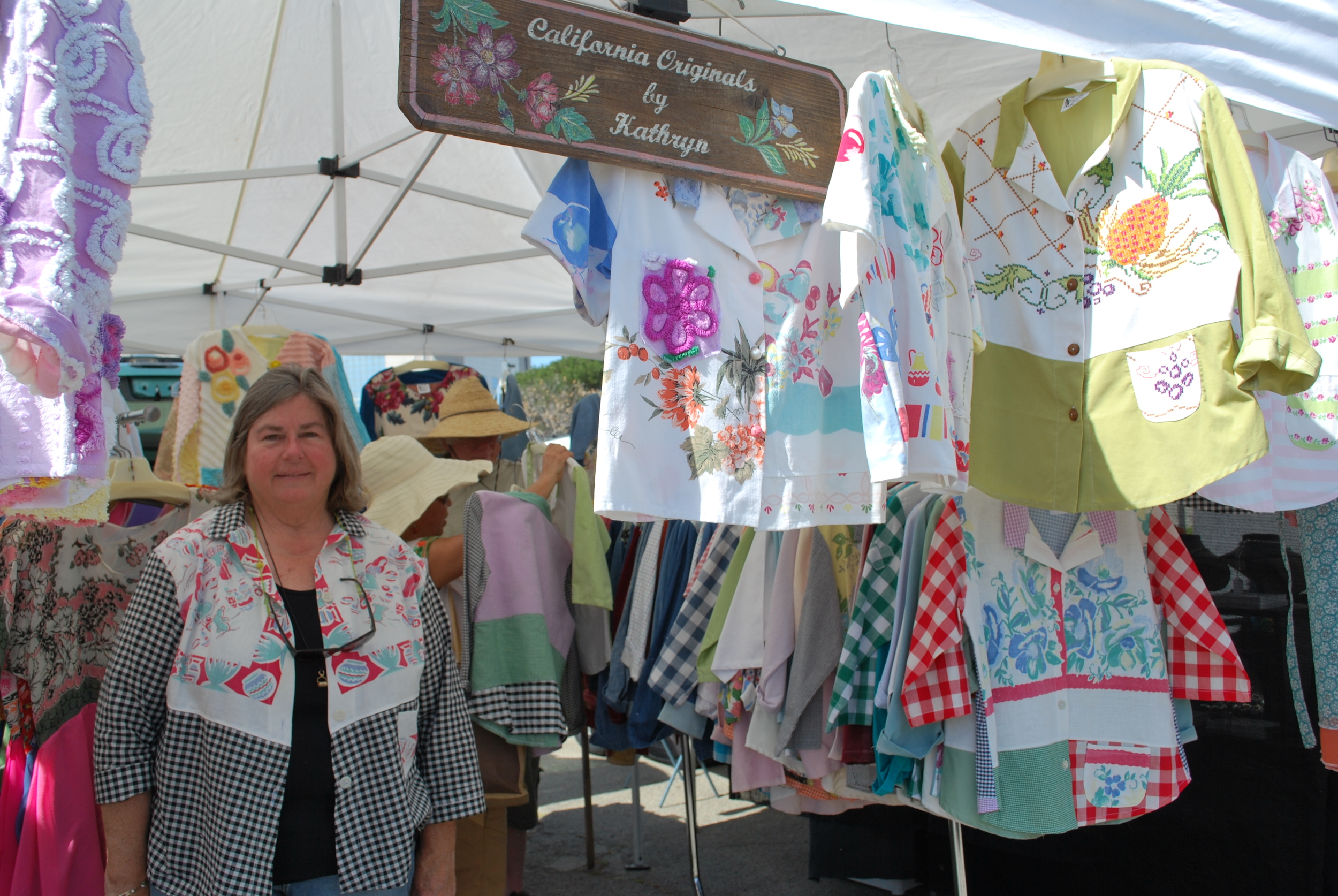
Meet Kathryn, An Extraordinary Seamstress of the Garden Kind

I want to share with you some of the exceptional places that I come across from time to time. These places are gems and not to be missed if you are in the area, or they could even be a destination. Most have a “garden thread” to them. “Places To Know” can be retail, restaurants, nurseries, and other. Whatever the place, expect the unusual.

Meet Kathryn, owner of Kathryn Originals, at the Saturday Vista Farmers Market in North San Diego County. She creates magical blouses, jackets, skirts, aprons, and more out of beautiful vintage fabrics. Original vintage fabrics that were once tablecloths, drapes, embroidered linens, and chenille bedspreads are transformed by her sewing artistry, into a beautiful piece of clothing.

Each of her pieces  are unique. She sews amazing clothing details, using thread colors, quilt-like fabric combinations, and vintage buttons. She carries all sizes, and styles. Her designs are perfect gifts for the gardeners in your life, year-round, and for the holidays.

If you can't make the Saturday morning Vista Farmers Market, Kathryn has her designs and creations available online, too, Kathryn's Originals, (tel) (760) 643-1127. Her line of original clothing made from vintage natural fabrics are all works of art in themselves. Stop by and see Kathryn, and tell her VintageGardenGal sent you.
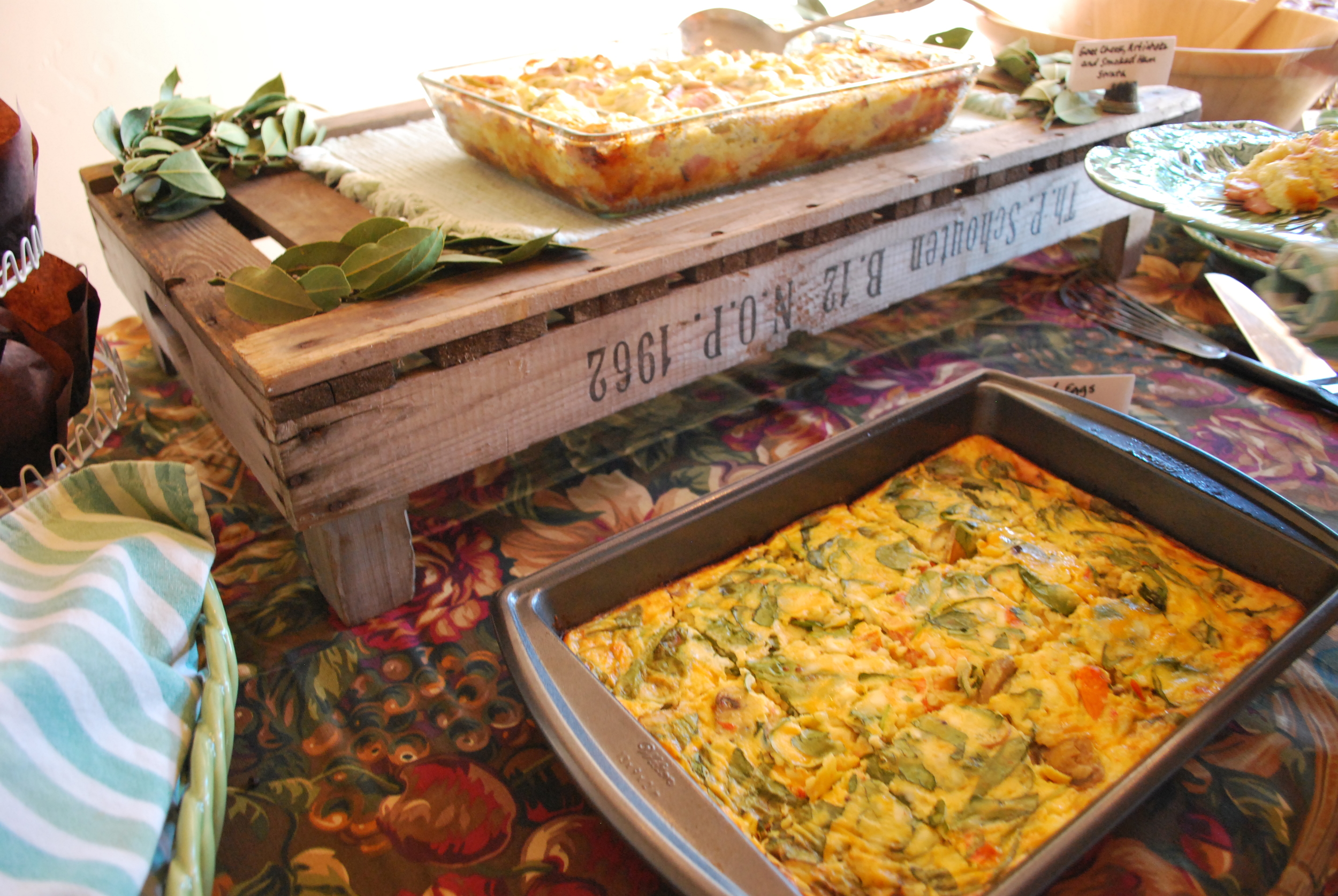
 

Garden Trug at the Buffet Table

Garden Trug Re-Purposed For Buffet Table Look  for all of your tucked away garden trugs,  and use them for entertaining, like this one re-purposed for a fall buffet.

A vintage garden trug, dated 1962, and purchased at a flea market a few years ago, adds "oohs" and "aahs" when guests start serving themselves to a little morning brunch. Turned upside down, and strategically placed on the table, this trug gives a special occasion dish added height, interest and character. Clipped branches of bay laurel leaves garnish the corners.

Garden trugs are traditionally a shallow basket usually made out of strips of wood, intended to hold cut flowers or fresh produce. They can be re-purposed for many uses, from garden to home.

Goat Cheese, Smoked Ham, and Artichoke StrataBon Appetit 1997, is the dish highlighted on the vintage trug. This recipe is supreme for any special occasion from Christmas morning to Easter Brunch. This recipe is a favorite among my garden friends, and my first introduction to it.

It requires quite a few different ingredients, and time assembling, but well worth it at the first bite. To help a hostess further,  it can be made a day ahead and chilled. For vegetarians, smoked ham can be replaced with fresh spinach.

Please share how you use your garden trugs. Please comment on your favorite trug.


VintageGardenGal Tidbit Thyme....

Timber Press has a new book out,  Concrete Garden Projects. This book offers up an inspiring array of creative projects that can be made for next to nothing. Follow the easy, step-by-step instructions to make containers of all sizes, benches and stools, ponds and birdbaths, pavers and stepping stones — and even a barbecue.

Celebrating the release of Concrete Garden Projects, Timber Press is hosting a two-week long giveaway from October 11-21, 2011, where entrants can win a copy of the book, a $25 gift certificate to Home Depot, and a set of molds. Readers can enter by submitting their email address at, Concrete Garden Projects. Good luck!


Fall Sunset Over the Vineyard

Fall is such a busy time here at Domaine de Manion with the harvest. It is a time when many related activities surrounding the vineyard and making wine seem to converge. When we have a sunset like this one, it is nice to pause, relax, and reflect over over the fall vineyard and it's beauty. Another year of grape-growing has been completed, and the new wine is in process. No, this is not Santa Barbara or Provence, it is San Diego North County.

A vineyard has four-season interest, and in the fall, the vineyard's leaves turn autumn colors of red, brown, and amber. The vines have borne their fruit. The temperature is cooling. The vines are in the process of going dormant for the winter. Soon they will drop their leaves entirely and shut down until next year's early spring . A good, long, watering of 4-6 hours through our drip irrigation will benefit the vines for the coming year.

Please share if you associate vineyards in the fall timeframe. Please comment if you have experienced a fall vineyard, and winemaking.


VintageGardenGal Tidbit Thyme....

Arlene Charest, a VintageGardenGal reader, needs someone within 100 miles of Northwest Connecticut who will "babysit" her free range family of Bantams.  She will pay for their feed -- plus a sum, plus the 4 eggs that her hens lay every day.  She has 7 chickens which includes one dear gentle rooster and two very well behaved teenagers. She needs to leave CT mid-November and will be back to pick the "chicken people" up in March.  If anyone can help Arlene out, please call 860-601-4193

And don't forget, VintageGardenGal, a garden lifestyle blog, is celebrating it's third anniversary.  Fab Sponsor, ORGIN DAY SPA (tel) (760) 635-1300, in the San Diego, California area, is offering 20% off of services for a limited time, when you mention "VintageGardenGal" at time of scheduling. It's a treat, no trick! Thank you everyone for your interest and support. See you in the garden!

Incompatible Vegetable Pairings

I saw this "Bad Bedfellows List"  in Troy-Bilt's  Great Gardens, 6th Edition, Garden Hints, Tips, and Techniques, and wanted to share it with all of you. Not all vegetables coexist well when planted side by side, in a friendly vegetable garden.

Have you ever witnessed a friend's or neighbor's "picture perfect" vegetable garden. They are probably incorporating the vegetable garden techniques of crop rotation, successive planting, inter-planting, and oh yes, compatibility likes and dislikes when growing vegetables.

Generally speaking, plants of the same "plant family" will grow and thrive together. Below, is an informal list of vegetables that are "imperfect pairings" and should not be grown in close proximity to each other.

Incompatible Pairings: Asparagus and Garlic Beans and Onions Beets and Beans Broccoli and Beans Cabbage and Strawberries Carrots and Celery Corn and Tomatoes Onions and Peas Potatoes and Tomatoes

If you are curious for more information and a source on plant compatibility, read  Carrots Love Tomatoes by Louise Riotte.

Glossary Crop Rotation. Rotating your vegetables to a different spot or bed in your vegetable garden. Avoid growing the same vegetable in the same spot each year. An example is tomatoes.

Successive Planting. Planting the same crops in timed intervals, allowing for a longer harvest of one particular crop. An example is lettuce.

Inter-planting. Planting compatible vegetables with different maturing times, space requirements. An example is the Native American Indian technique called "Three Sisters" comprised of planting corn, beans, and squash together.

Please share if you are aware of incompatible vegetable plant pairings. Please comment if you use these techniques for better vegetable growing and yield.


VintageGardenGal Tidbit Thyme....

VintageGardenGal, a garden lifestyle blog, is celebrating it's third anniversary this month! Fab Sponsor, ORGIN DAY SPA in the San Diego, California area, is offering 20% off of services for a limited time, when you mention "VintageGardenGal" at time of scheduling.

Thank you everyone for your interest and support. See you in the garden!

Chic 'N Treats

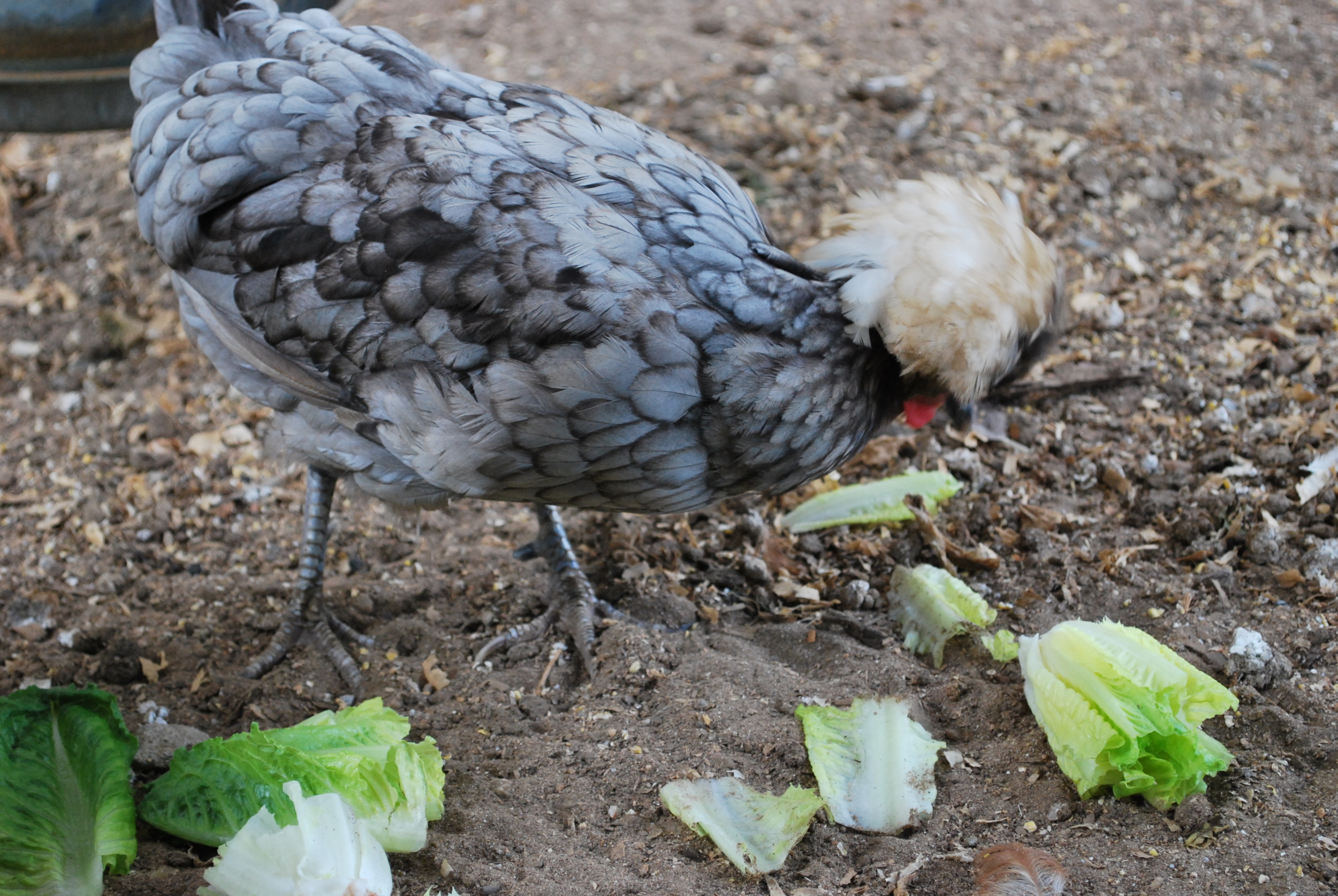
My morning ritual for my hens is complete by giving them fresh treats. Chickens love a treat, and I know my hens, Charley, a White-Crested Blue Polish hen, and Dahlia, a Silver Spangled Hamburg hen, look forward to their special treat each morning. Treats are given in addition to their endless bucket of chicken laying mash and plenty of fresh water.

Remember, what your hen eats will determine the flavor of her eggs. Avoid giving your hens anything with strong flavors such as onion and garlic greens.

Examples of great treats for chickens are fresh lettuces, sorrel, spinach, chard, corn on the cob, and cut up fruit (apples,figs, peaches, strawberries). Giving them a fresh treat is healthy, and occupies them in a good way.

You can train your hens to eat their treats out of your hand, too. It is a great way to bond with your chickens. Please share if you give your chickens special treats. Please comment on what treats you give your chickens.

VintageGardenGal Tidbit Thyme..... Recently, online design and trend magazine, Standard Magazine, Fall 2011, gave VintageGardenGal's  hens and chicken coop a few cameos. Check out their trendy article on diverse chicken coops.

Bonnie and Her Hens Say Hello What, Are You Chicken?

Beauty in Burlap

Beauty in Burlap When my husband and I remodeled a year ago, I carved out a perfect office and workshop area in a single car garage. With the addition of our new master bedroom wing, it created this small, private, very intimate garden room which I can look out and access from my office and workshop. I planted a Podocarpus hedge along the north fence on one side, a row of espaliered Silver Wave Camellias along the stucco wing on the south side, and the third side was my very old working garden shed to the west.

In the middle of this garden room, I created a pea gravel square edged with dwarf Euonymus and placed my vintage garden baby fountain smack in the middle. My garden baby fountain, see Everyone Loves a "Garden Baby"  finally had a permanent home, after years of transit traveling around my garden.

The reason I'm describing all of this in detail is because I had an unappealing open door and side of my garden shed which desperately needed some sprucing up. The answer was burlap, the reasonable landscape burlap which has incredible texture, durability, and vintage-like appeal. This is another idea for garden economizing--reasonable landscape burlap as a material. If you don't know about it, you must look for it at your garden and landscape centers. I find my burlap locally at Grangetto's. You can also be creative and re-purpose coffee burlap bags.

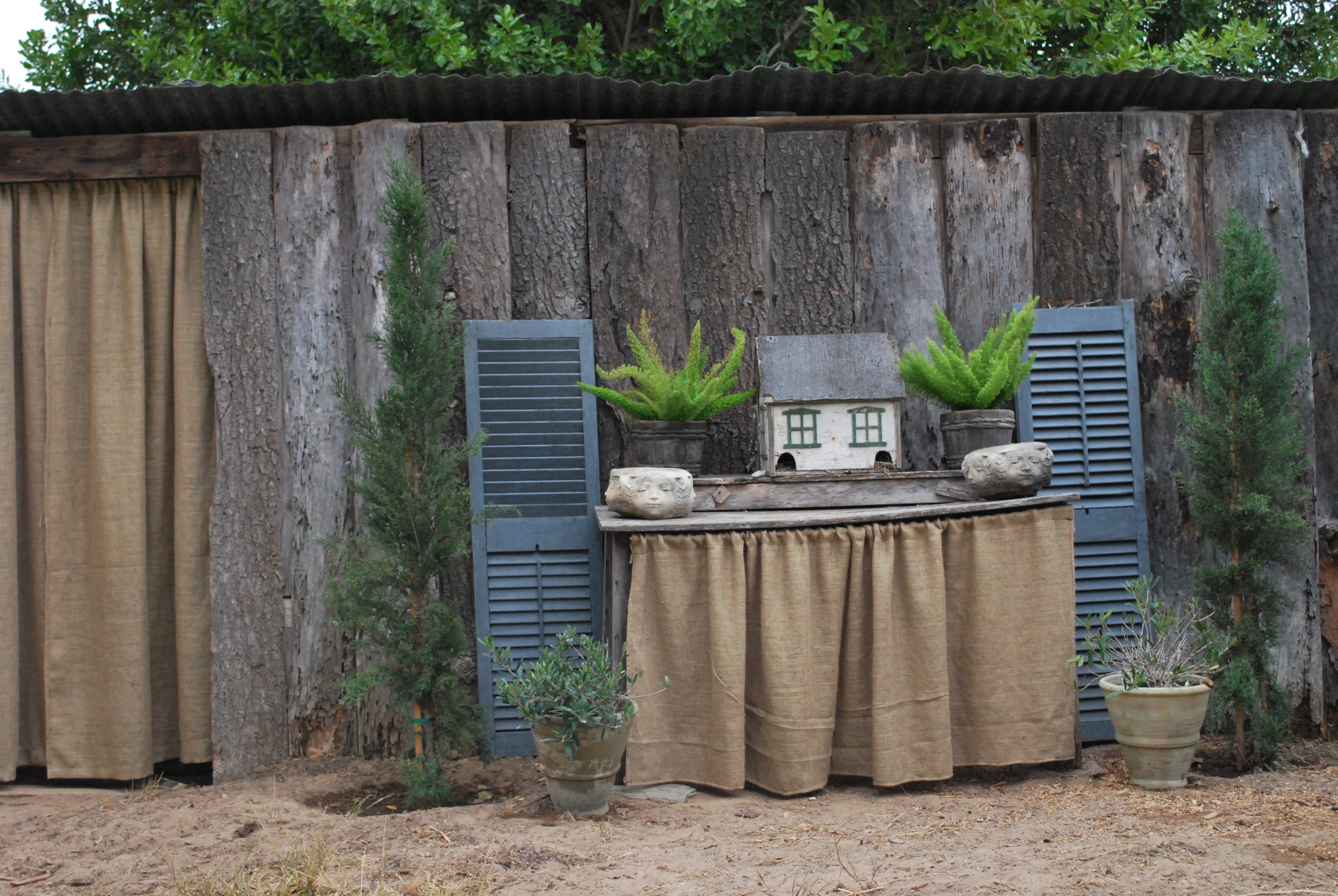
I created a small vignette with an old warped wood table, matching symmetrical pots, a pair of young cypress trees for height, and blue-gray shutters for interest and color repetition.  I pulled out my "dusty but trusty" sewing machine, and loosely measured my spaces as everything was uneven. Presto, a working burlap curtain door, and a sweet table skirt for my table. I secured hidden dowels to hang the burlap for my shed opening and table. I also dug out one of my old hooks, and placed it on the side of my shed for a quick way to hold up the burlap curtain door when I needed the large opening.

What a difference, and what beauty in this burlap. Think of this landscape burlap material when you have a project where it might conveniently lend itself. Please share if you use this burlap material already in your garden. Please comment on creative ways you have worked with this burlap.


Herb Garden a la Wine Barrels

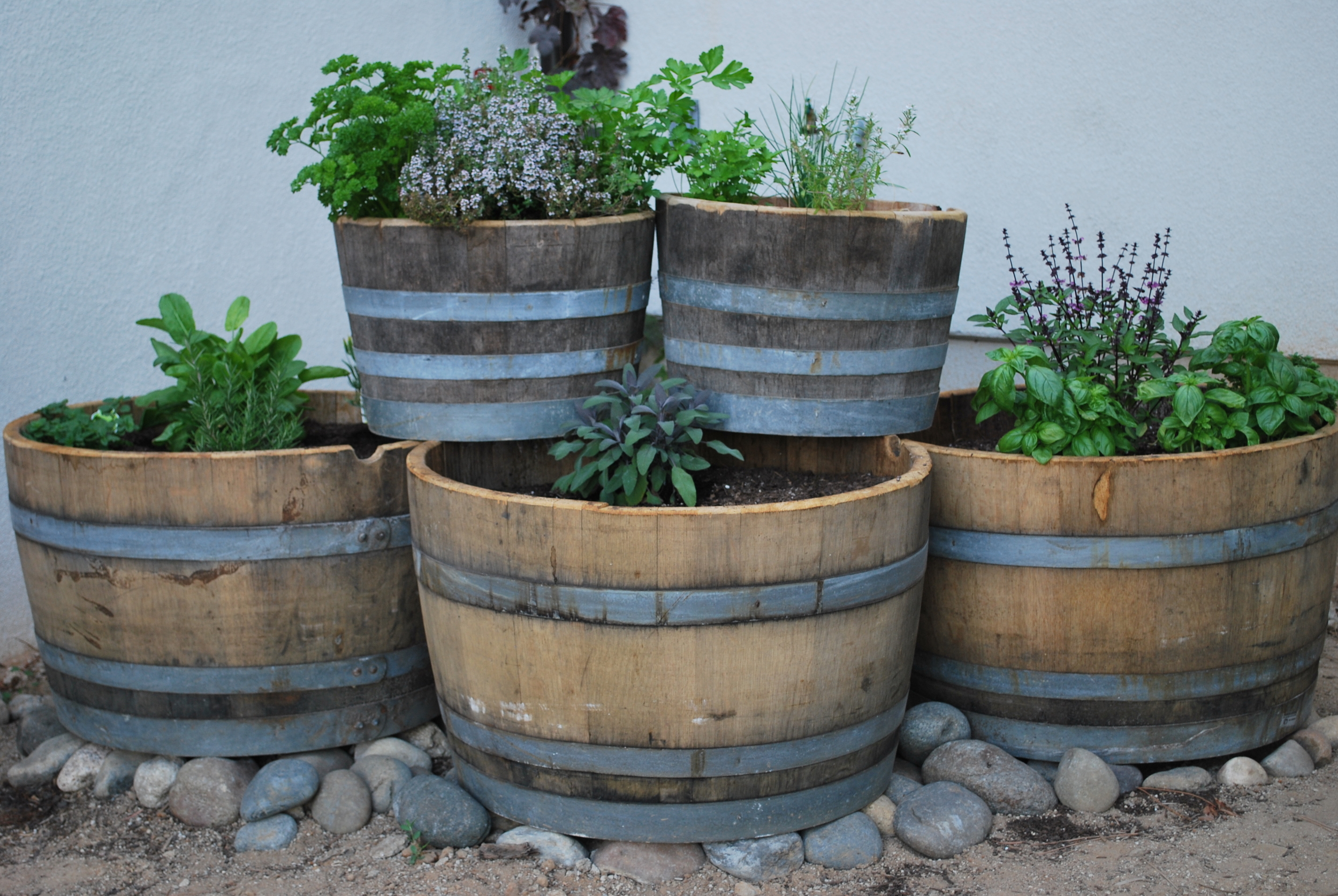
Herb Garden a la Wine Barrels This spring I created a small herb garden in a quiet, sunny, protected corner next to my barn using vintage wine barrels. I borrowed this concept, modifying it slightly, from Rosalind Creasy's, Edible Landscaping book. This is a terrific book for incorporating more edibles in your landscaping. Rosalind has a whole chapter on "Designing With Herbs."

An "herb garden a la wine barrels," was multi-dimensional for me. My husband, John, and I make wine, and have access to used wine barrels. We have a functional barn, with a trio of wine barrels already planted with blueberry bushes and strawberries on the right side, why not do something on the left with wine barrels, such as herbs. This particular spot is also close to my kitchen, a must for any herb garden.

I used a trio of half barrels from standard wine barrels, cut in half. You can find these types of barrels for sale at home improvement stores such as Home Depot and Dixieline, nurseries, and garden centers. For my second top row, I used a smaller 15 gallon wine barrel, cut in half and sanded along the edges. All wine barrels need to have spaced holes drilled for adequate drainage. I also placed my bottom wine barrels on top of carefully placed river rocks to save the barrels from rotting in the soil, and allowing further drainage.

Since the barrels are big, it is best to use a sterile filler or upside down one gallon size plastic plant containers. It will save you on filling the entire barrel with soil, mulch, etc. I simply placed my second row, and smaller wine barrels securely on the sides of the base half-barrels, using their weight to stabilize them.

Fill your barrels with clean potting soil, almost to the rim of each barrel. You can add an irrigation system if you like. I chose not to. Select your favorite herbs, and plant. I planted chives, winter savory, curly parsley, Italian parsley, tarragon, sorrel, Italian oregano, sage, cinnamon basil, and Italian basil. Choose herbs that you use frequently in your cooking, and a mixture of annual and perennial herbs. Choose some herbs that have a trailing habit, so as they grow and establish themselves, they will spill over the barrels. As time goes on, you can always switch out herbs for new ones when needed.

Add a layer of mulch on top of your soil, and around your herbs.  Newly planted herbs like to be kept moist initially, and water moderately once established.

Please share if you grow herbs to cook with. Please share how your herb garden is set up and designed.

Zucchetta Tromba D'Albenga Squash

Climbing Zucchetta Tromba D'Albenga Squash Vertical gardening is a hot trend right now, and an easy way to grow one of my favorite squashes, the climbing Zucchetta Tromba D'Albenga. No more space in your garden, try planting your seeds at the base of a fence or an arbor. It is a multifaceted squash, beautiful in it's vining fashion and prolific in it's numerous elongated squash fruit. It's squash quickly can reach 15" and longer.

This Italian heirloom beauty is a great sweet-flavored green summer squash if picked young, or keep it on the vine, and it turns into a toffee colored, slightly nutty tasting winter squash. Seeds are found in the bottom bulbous portion of the squash fruit, hence it is ideal for sautéing or stuffing. It's huge yellow squash blossoms are delicious and can be eaten, too.

I started my Zucchetta Tromba D'Albenga squash easily from seed in the spring, and then transplanted it into my garden as thriving seedlings. It takes the heat well, and seems adaptable for most climates. One of the  online  sources  for Zucchetta Tromba D'Albenga is Baker Heirloom Seeds.

I've even saved my toffee-colored Zucchetta Tromba D'Albenga squash for fall decorations amongst my pumpkins. It's shape adds a nice contrast to round pumpkins, and fall gourds.

Please share if you have grown Zucchetta Tromba D'Albenga in your garden. Please comment on your favorite squash to grow.