Garden Bloggers Gather

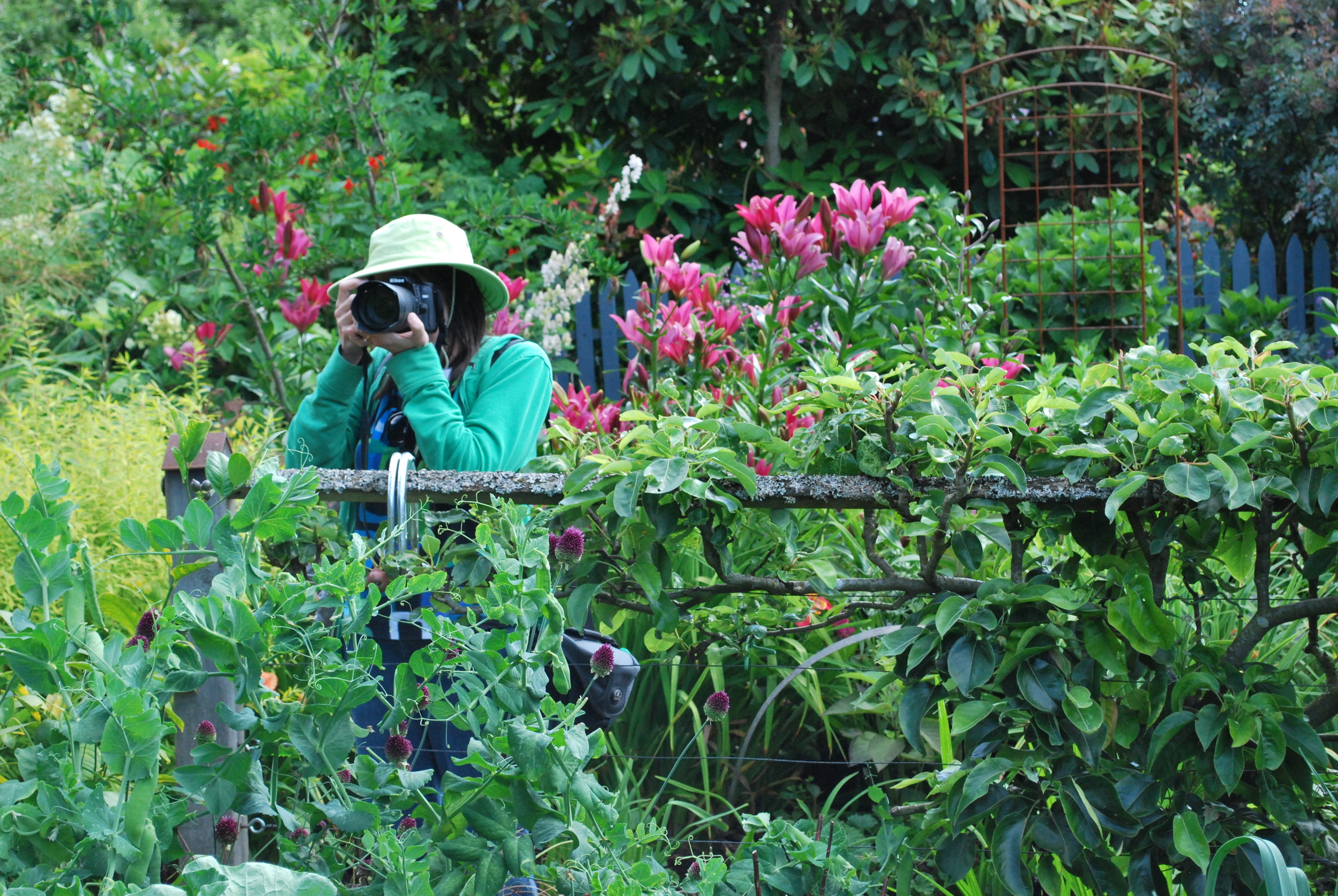
What do garden bloggers like better than writing about gardening and plants? They like gathering in verdant places like Seattle, The Emerald City, experiencing new gardens. and joining the "sisterhood of garden bloggers" across the country. Okay, there were a few fellas in the mix, too.

This year's garden blogging conference, dubbed Seattle Fling, was a compilation of nearly 80 gifted garden writers who pen their passions about all things gardening. A "Who's Who" of multi-talented voices naming off plant names like a foreign language.

It is a diverse group, not just for the climatic regions they represent, but how they hail their expertise. Some are Generation X, with soon-to-be-released garden books under their belts. Some are forefront blog sensations who can proudly say they have almost a decade of posts and writing in their arsenal. Some are veteran garden writers and speakers, well known in this country's garden circles.

This phenomenon of garden bloggers and writers gathering together magically happens once a year, usually in July. Last year it was in Buffalo, New York, serendiptously coinciding with Buffalo's Garden Walk. Next year's 2012 event is tentatively planned to be held in Asheville, North Carolina.

Garden bloggers attending this year's Seattle Fling 2011, experienced a well-planned and orchestrated itinerary of private and public gardens, retail garden shops and nurseries, a David Perry photography workshop, West Seattle's Sunday morning Farmers Market, and a spoiling by garden-related sponsors.
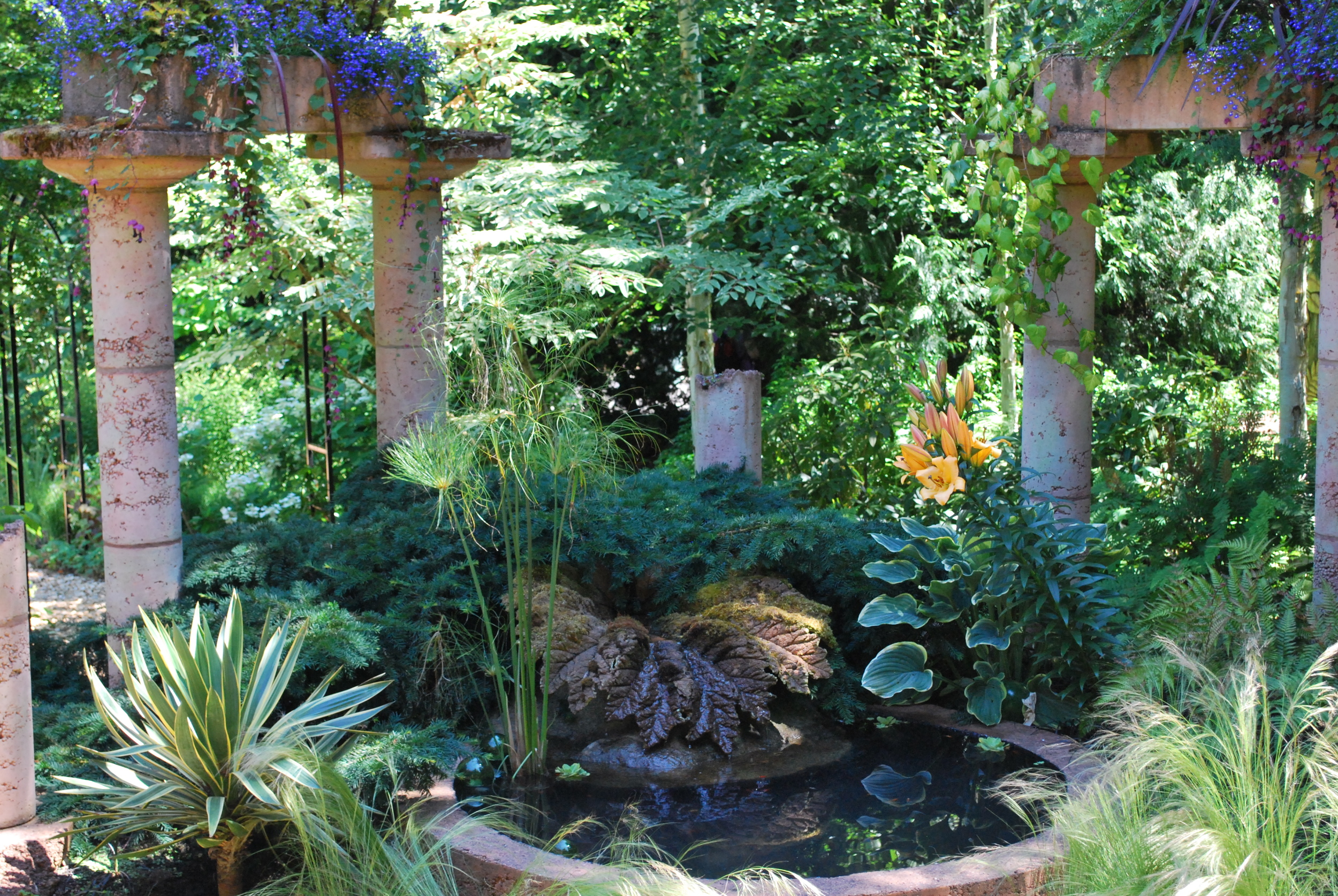
Garden bloggers were treated to this unique concrete "ruin creation" by Little and Lewis in a wooded private garden. The concrete leaf fountain now moss-aged with water and time, was originally molded from an actual Gunnera leaf.

A trip to the picturesque waterfront Olympic Sculpture Park featuring 21 works by world-renowned artists was both captivating and breathtaking, capturing the essence of Downtown Seattle on one side, and the beauty of the Olympic Mountains and Puget Sound on the other.

VintageGardenGal wishes to thank everyone involved in this year's Seattle Fling 2011, and embraces her fellow garden bloggers.

Pasta with Cherry Tomatoes and Arugula

It seems like the simplest recipes are the best, especially when it comes to tantalizing summer flavors. I recently found in my "recipe archives" a recipe I had saved from The New York Times, July 2008, by Martha Rose Shulman, Recipes for Health, Pasta with Cherry Tomatoes and Arugula. This recipe is easy, simply delicious, and healthy for you.

If you have an abundance of cherry tomatoes in your garden and fresh basil, you must try this recipe. The secret to this recipe, is combining all of these fresh ingredients-- arugula, cherry tomatoes, basil, garlic, sea salt,and olive oil in a bowl, and let them meld and infuse for 15 minutes. Make your pasta, and then toss with your tomato-arugula mixture. Add your cheese. Heaven!

Cherry tomatoes grow well in my kitchen garden, and often times as volunteers out of the compost. One of my favorites is Sun Gold Cherry Tomato, so sweet, it is like candy.

Please share your favorite cherry tomatoes you like to grow. Please comment on how you like to use your fresh tomatoes in your summer cooking.

Chicken Coop Photo Contest Winners 2011


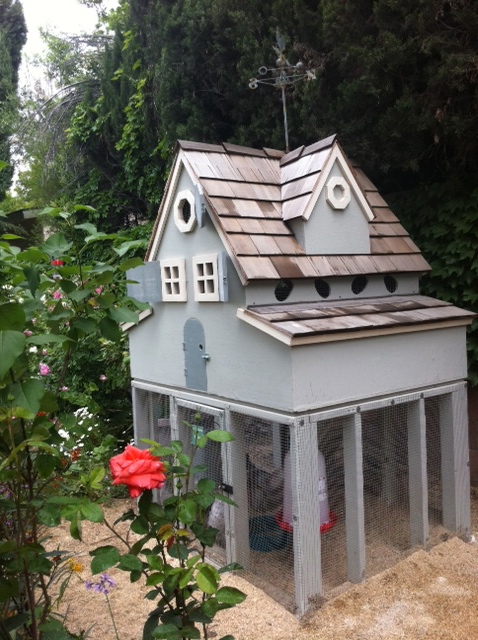
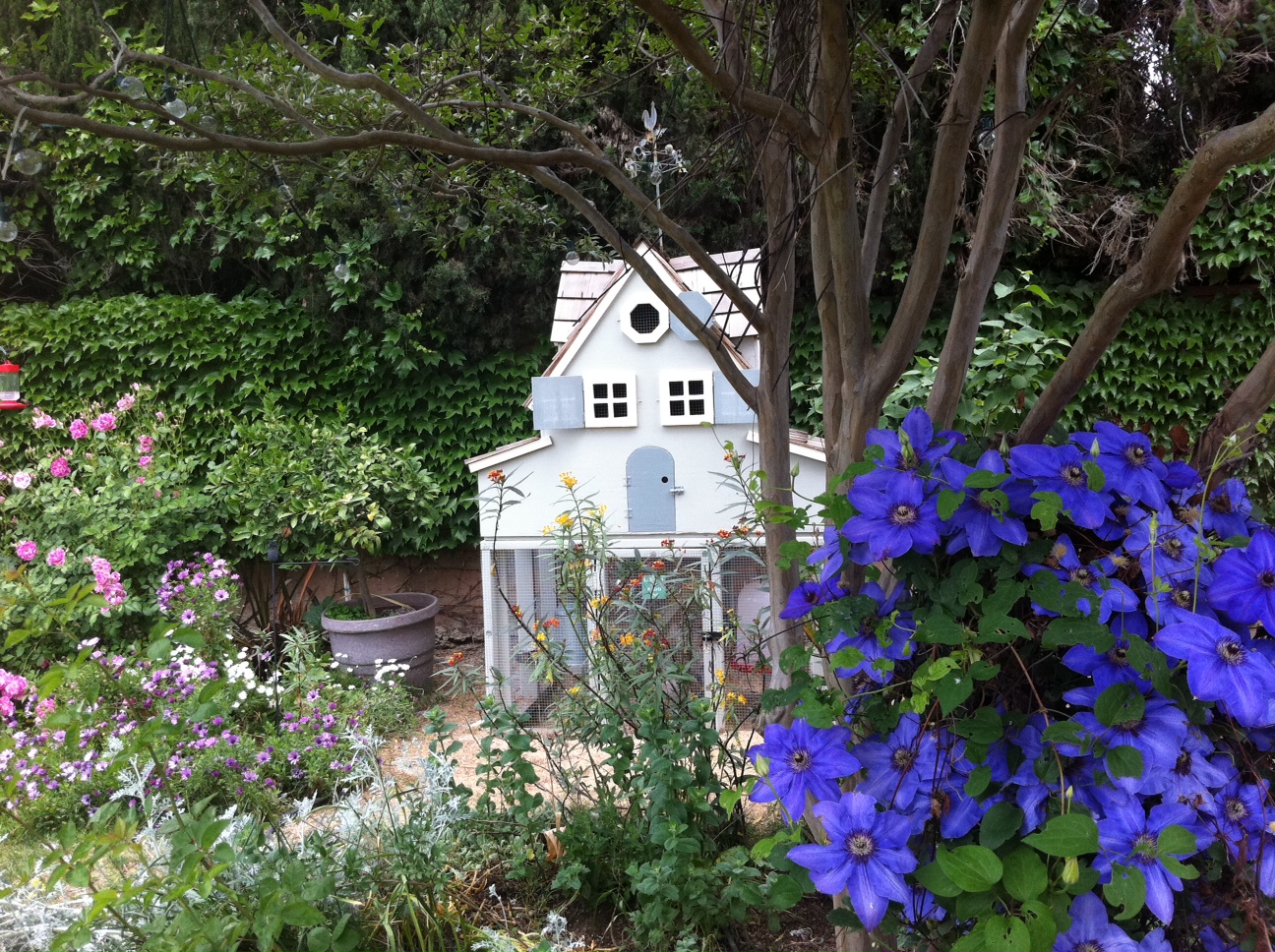
The Slater Family in Claremont, California, takes First Place in this year's VGG Chicken Coop Photo Contest. This is a classy chicken coop with darling storybook details.

Not only is this an incredibly cute chicken coop, it is well designed. You can easily see where the eggs are collected and where their hens have their enclosed outside area. This city backyard chicken coop is nestled in a quiet spot, beautifully integrated in with their garden.

The Slater's compost their chicken manure for vegetable gardening, and share their eggs with friends and neighbors. Their flock consists of Black Copper & Splash Marans, Red Laced Blue Wing Wyandotte, and a Blue Ameraucana. They have demonstrated beautifully a whimsical design in a small spot, such as a city backyard.

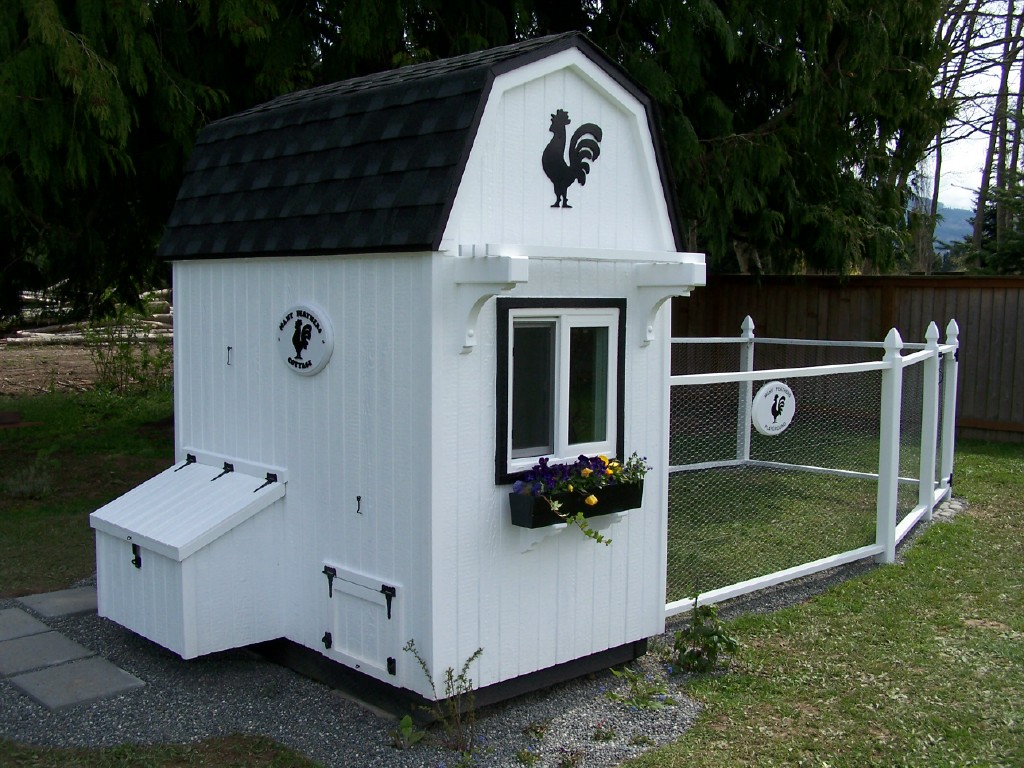
Monte & Donna Partlow on the Olympic Peninsula in Sequim, Washington, are this year's VGG Second Place Winners with their immaculate coop creation, Many Feathers Cottage. This "black and white" chicken coop beauty has been lovingly assembled for their flock of 2 Red Stars, 1 Black Star, and 1 Australop, who are happy to call this their home.

This chicken cottage is charming, but also "state of the art" with electrical wiring, insulation, vinyl flooring and base, and an installed "manure box" under a removable hardware cloth grate for easy cleaning.

It has seamless access to an outside pen, with an exterior door. An operable window and louvered vent provide proper ventilation. Note the hanging thermometer for temperature readings, green roosting bar mounted off of the floor, chain-hanging feeder and water-er, and adjustable height heat lamp. It has all of the "bells and whistles" for keeping chickens.

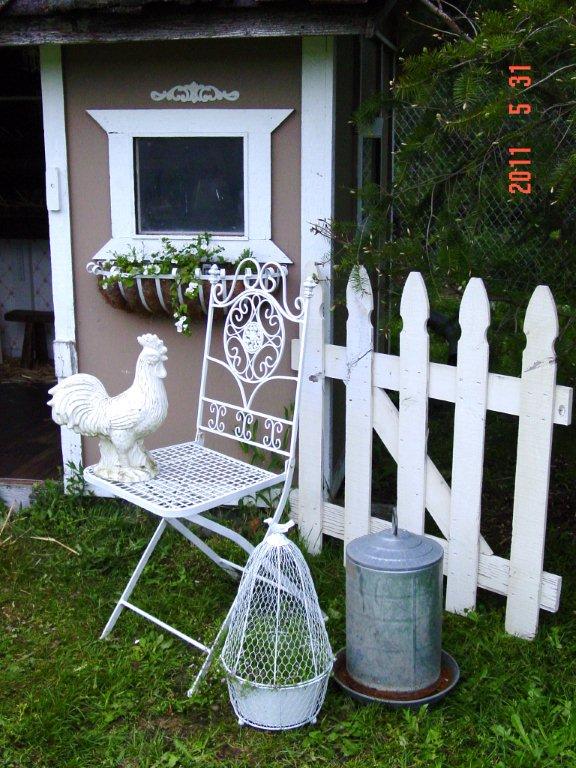
Tonita Fernandez of Enumclaw, Washington, is this year's VGG Third Place winner with her cleverly re-purposed playhouse turned into shabby chic chicken coop. Her chic coop is a fine example of starting with an existing playhouse, or building and modifying it into a chicken coop with interesting salvaged materials.

She reclaimed this row of incredible chicken nesting boxes from an old barn, which was more than a 100 years old. She decorated her coop with "cleanable" wallpaper, a crystal chandelier, and pink stenciling. A re-purposed milk can conveniently stores her organic chicken feed. By her chicken coop entrance, she has a blooming flower box and fun, chicken-related pieces.

Tonita says, "Fixing up a special little house for the hens is my way of appreciating and being thankful to them for their contribution to our food supply". Tonita has also been involved in rescuing dogs for over thirty years. Her lucky dogs, are given plenty of fresh organic eggs in their diet.

Congratulations to these winners! Your coops are fabulous. Many thanks to everyone who participated, and supported VGG in this contest. I heard from people from all over, who love their chickens.

I'm hoping you can reap ideas and inspiration from the above chicken coops for your own yard or garden. Chicken coops can be individualized, and customized for size and style. Chickens are part of the family, just like any other pets. Chicken coops become an extension of one's garden. Chicken coops can be beautiful, as well as functional and practical. Keeping chickens is wonderful.

Magnolia "Little Gem" Tree

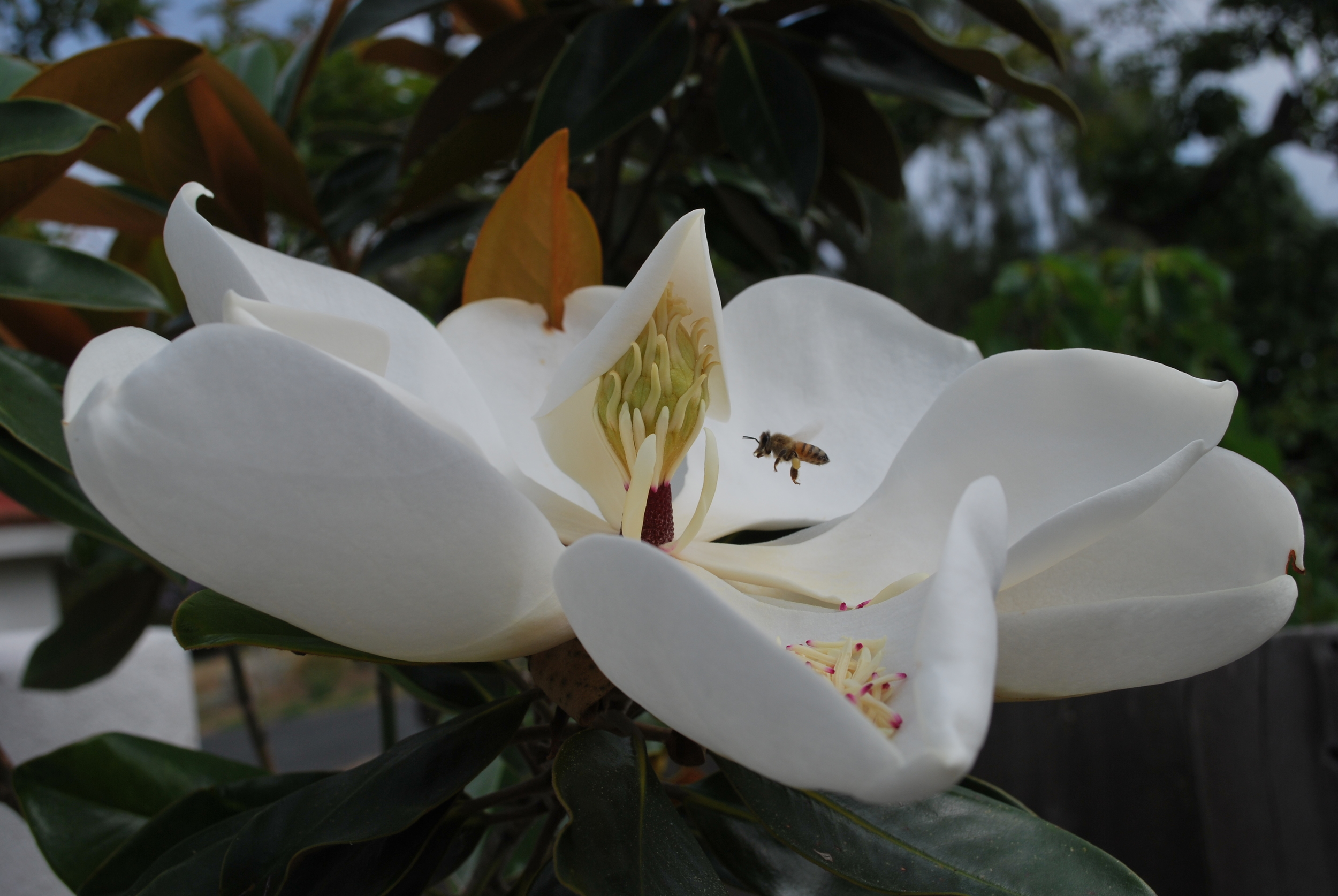
One of my favorite trees is the evergreen Magnolia grandiflora Little Gem. I love it's shiny green and brown foliage as much as it's magnificent white 5-6" blossoms. It is perfection. This bee was so happy, I could of sworn it was dancing.

The Magnolia Little Gem is a dwarf Southern Magnolia with dark green foliage and a compact upright form suitable for smaller gardens and planting areas. It can reach 20 to 25' high and 10-15' wide. These magnolia's can be espaliered and coaxed into shapes. I have two Magnolia Little Gems fan-espaliered in my front flower beds against white stucco walls, and one stand-alone growing upright with the beginnings of an arch welcoming those entering my driveway.

Magnolia Little Gem, likes full sun, moderate water, and are optimally grown in zones 7-9. Not all magnolias are evergreen, but this variety is. It is a heavy bloomer, blooming from early spring through late summer with it's magnificent billowy pure white flowers. Once the flower is spent, each flower pod continues to dry intact, adding further interest and character. These trees are relatively disease and pest resistant. A Magnolia Little Gem can be grown successfully in a container, and placed on a sunny patio or deck.

I like to decorate around the holidays with boughs of magnolia branches on front doors, holiday tables, across fireplace mantles, and along railings. It's deep green glossy leaves, paired with a rust-brown under side, bordering on copper is is a natural and eye-catching style for the holidays.

Please share if you have a Magnolia Little Gem in your garden.

Find at the Fair

Flashy Ground Cover, Rock Purslane

Strolling through this year's San Diego County Fair garden exhibits, I happened upon this ground cover perfection, Calandrinia spectabilis, or Rock Purslane. Aptly deserved, it was awarded "Noteworthy Plant" recognition.

Calandrinia spectabilis is a stunning evergreen shrub with succulent gray-green foliage. It is jaw-dropping spectacular in mass. Not only does it have a wonderful foliage and a soft look to it, it's fuschia-pink flowers on tall upright wispy stalks add even more drama. These precious vibrant flowers bloom almost year-round in Southern California gardens.

Calandrinia spectabilis can reach 2-3' tall, and up to 5' wide. It is a drought tolerant shrub, and will tolerate poor soil. It likes to be watered deeply twice a month, spring through fall, and once a month November through March. Deadheading spent flowers will encourage more blooms.

The Calandrinia spectabilis complements succulents, cacti, grasses, olive trees, and California native plants in many types of garden settings. I have a pea gravel courtyard with a centered water fountain. I planted a few Calandrinia spectabilis around my courtyard fountain to add a little color and surprise.

What a great plant find. I recommend planting this shrub ground cover in your garden or your favorite container. Look for it at your favorite local nursery, especially one that specializes in succulents or California natives. Please share if you have this shrub in your garden. Please comment on how you have used it in your garden.

VintageGardenGal Tidbit Thyme....

A fabulous facial is just as important to a "gardener gal" as her gloves, and favorite hoe. For those that live in the San Diego area, treat yourself to Orgin Day Spa. First time clients, mentioning VintageGardenGal, are entitled to 20% off a facial. I love their "Signature Facial." Treat yourself, and start your summer right!

Rhubarb Rules

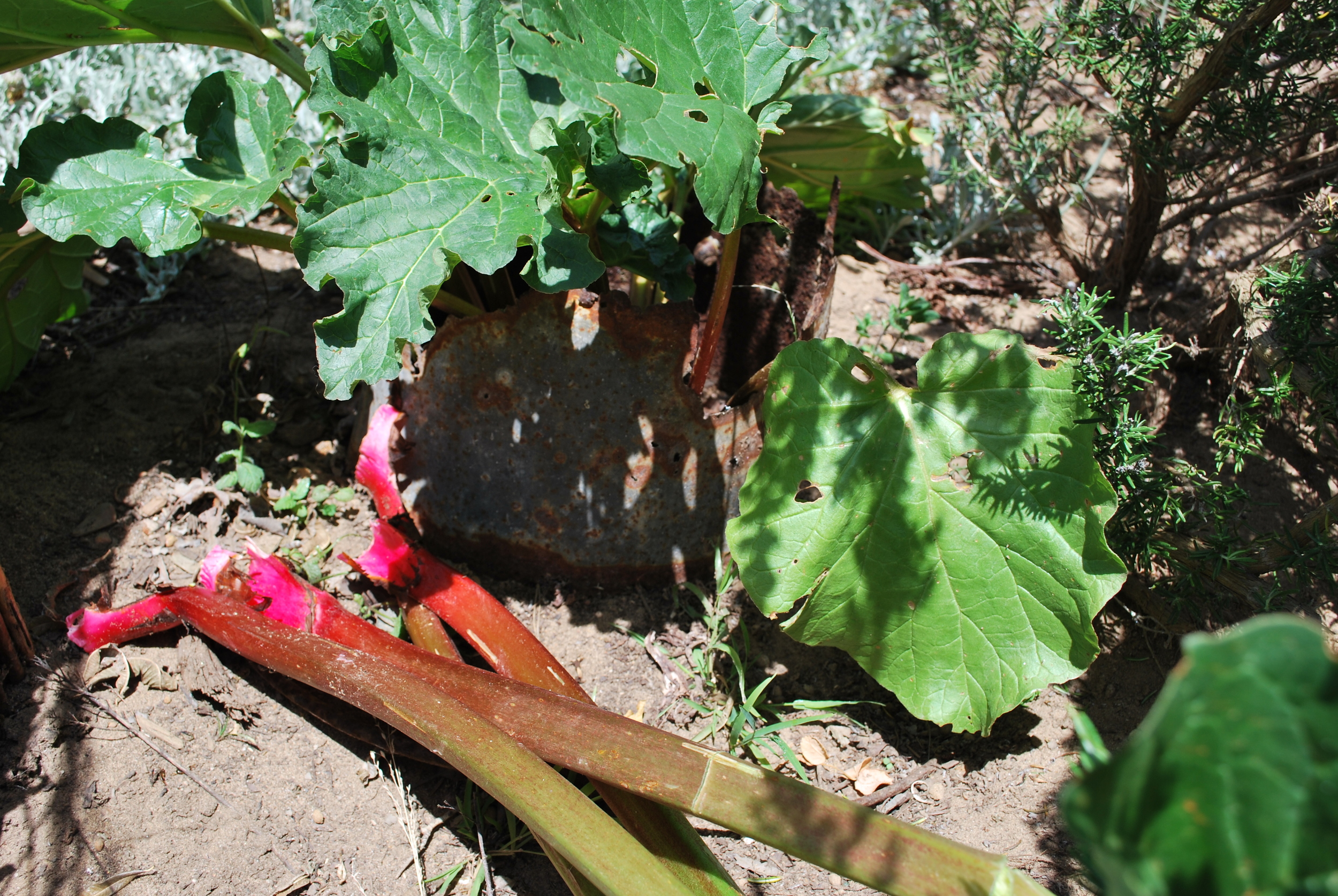
Not everyone loves rhubarb. It seems like there are two types of people in this world. Those who love rhubarb, and those who don't. I fall into the category of loving rhubarb. I look forward to baking with it in the spring, picked fresh from my garden. I keep it in a tucked away place and basically just let it be. When I initially planted my rhubarb plant two seasons ago, I put a bottomless vintage pail over it to force it's desired stalks to grow straight and long. It worked.

For those who love rhubarb, you probably know quite a bit about it. It is often found cleaned and bundled at our local stores in the produce section, and farmers markets spring time into summer. For those who love rhubarb, it is always a treat to find it fresh, as it does have a short harvest season.

If you are planning on planting a perennial rhubarb plant in your garden, keep in mind, it takes about two years for your plant to be harvest-ready. A rhubarb plant likes full sun, acidic soil, and moderate water. Mulch it well in the spring and fall. Three to four rhubarb plants will suffice for a family's needs.

In spring, choose long, crisp-looking stalks from your plant. Gently pull at the bottom of each stalk to harvest, rather then cutting it from the plant crown. Harvest stalks carefully, leaving at least 1/3 of your original plant. Rhubarb plant crowns can be carefully divided with a shovel when they become too large.

Rhubarb stalks can be kept fresh in a refrigerator, preferably unwashed for about a week, and also can be cleaned, diced, and kept frozen in your freezer. Do not eat rhubarb leaves, as they are poisonous.

I thought maybe I could "dig up" some new facts about rhubarb you might not know.

Rhubarb is a vegetable, and not a fruit.

Rhubarb is related to Sorrel.

Rhubarb is usually cooked first before adding to recipes, due to its intense tartness, and fibrous stalk structure.

Rhubarb plants are long lived, and can be productive for a life time.

Rhubarb pairs well with citrus fruits like oranges and grapefruit.

Rhubarb as a savory, pairs well with meat stews, and legumes like lentils.

Rhubarb has a highly acidic property which reacts to baking soda in a magical way, creating amazing baked goods.

Rhubarb varieties come in green, pink, and red colors.

Rhubarb comes in purely ornamental varieties, too, so look to see if your rhubarb plant is edible or ornamental.

Rhubarb is an incredible plant. Tuck it way in a quiet sunny spot, or boldly plant it as a foundation plant in your garden. It is a low maintenance plant, pest and disease-resistant.

It's tart taste easily transforms into sweets, savories, baked goods, syrups, sauces, drinks, and jams. In fact each spring, I anxiously anticipate from "cooking circles" what is this year's newly creative way to use rhubarb. Please share if you have rhubarb plants in your garden. Please comment on how you like to cook or bake with rhubarb.


VintageGardenGal Tidbit Thyme....

A fabulous facial is just as important to a "gardener gal" as her gloves, and favorite hoe. For those that live in the San Diego area, treat yourself to Orgin Day Spa. First time clients, mentioning VintageGardenGal, are entitled to 20% off a facial. I love their "Signature Facial." Treat yourself, and start your summer right!

Sally Holmes Rose Envy

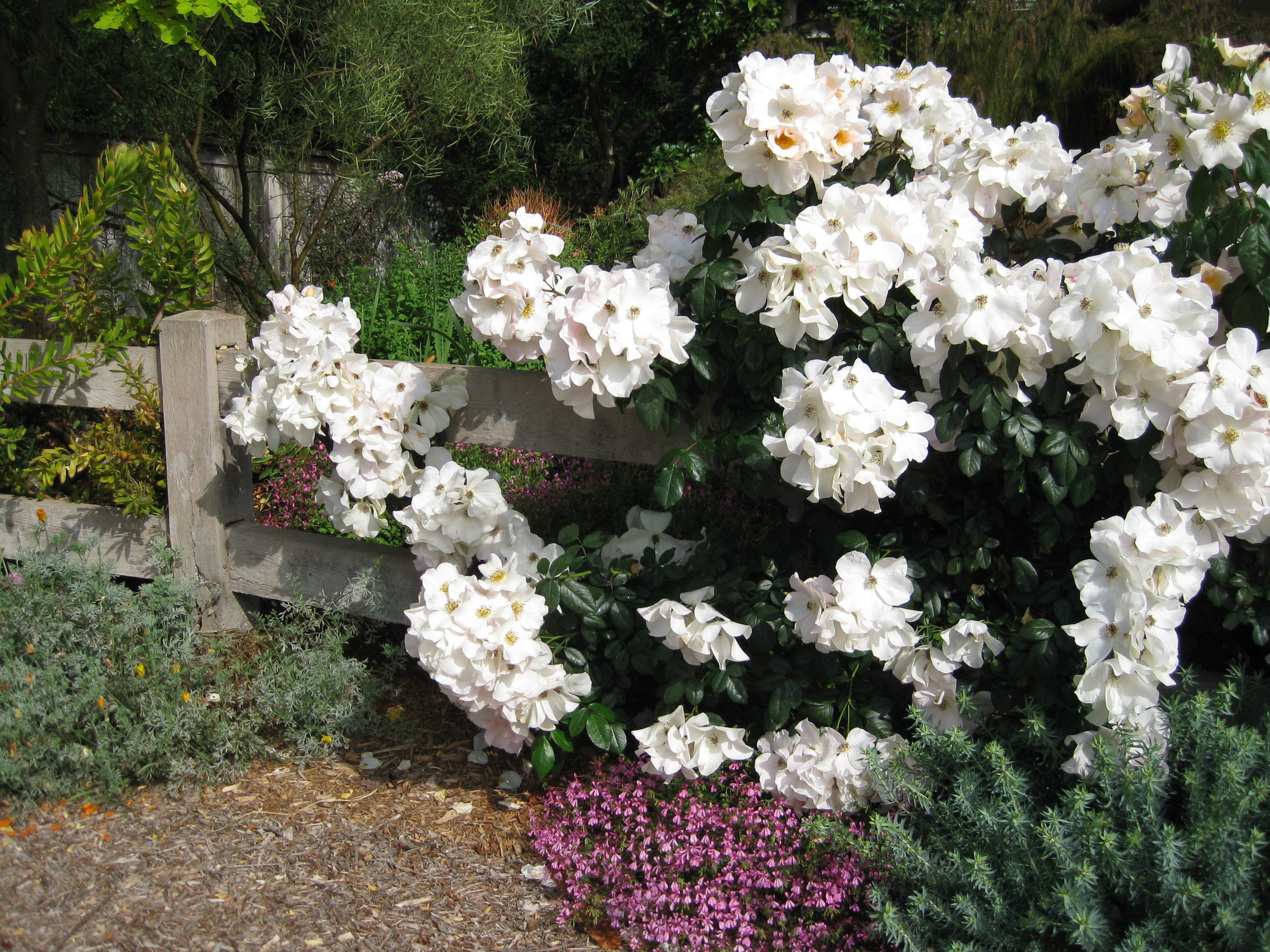
I've got "Sally Holmes" rose envy. One of my favorite roses, Sally Holmes is a great country rose charmer and it's flowers remind me of multiple bridal bouquets bursting with happiness. I have a climbing Sally Holmes rose which I adore, but I have never seen a Sally Holmes rose as happy as the one my girl friend has planted auspiciously in her front yard on a low split rail fence.

Sally Holmes rose was originally bred in England, and brought to this country in 1976. It has many attributes besides its good looks. It is prized for it's vigor, long bloom season, fragrance, and stout disease resistance. Its pale white-creamy flowers are tightly packed in clusters with deep green foliage, creating a romantic look. It is a shrub rose, but can be trained as a climber.

Sally Holmes roses do well in Zones 5-9. They like full sun. The average size of this rose is 6-8' high by 4-6' wide.

This delightful rose works well in the garden with planted companions such as hydrangea, viburnums, junipers, ornamental grasses, and generally most perennials. Wherever you plant a Sally Holmes rose, I'm sure you will be delighted.

Please share if you have a Sally Holmes rose in your garden. Please comment on how you have planted your Sally Holmes rose in your garden.

VintageGardenGal Tidbit Thyme...

Attention Chicken Lovers! Spruce up your chicken coop for VintageGardenGal's Annual Chicken Coop Photo Contest. Send in your photos this month to bonnie@vintagegardengal.com

This Frog Doesn't Ribbit

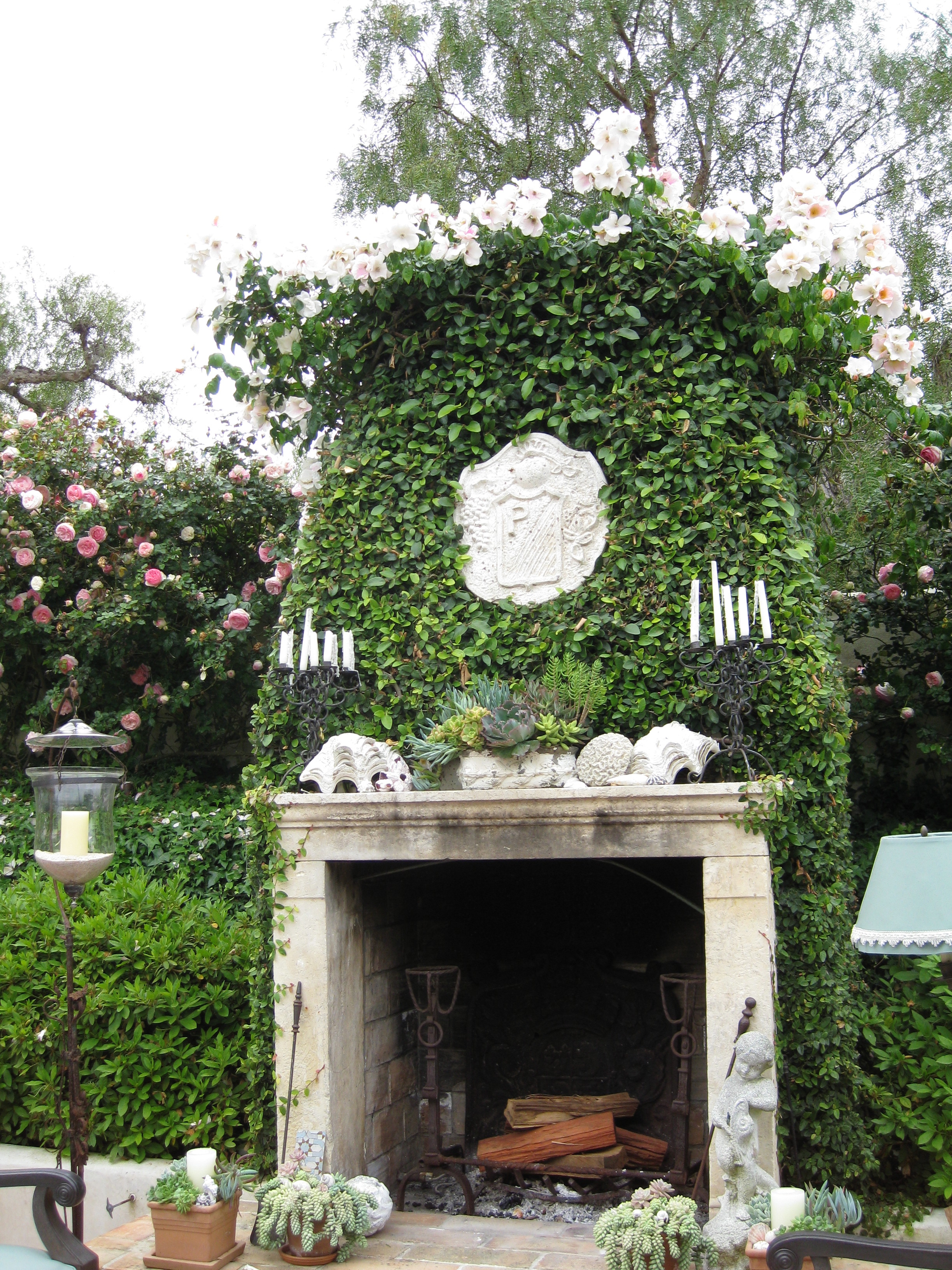
Last weekend, I experienced this year's  Secret Garden Tour of La Jolla, and was thrilled at the homes and gardens showcased on the tour. Each home had an Artist in the Garden, Designer in the Garden, and Musicians in the Garden, which elevated the garden settings to poetry.

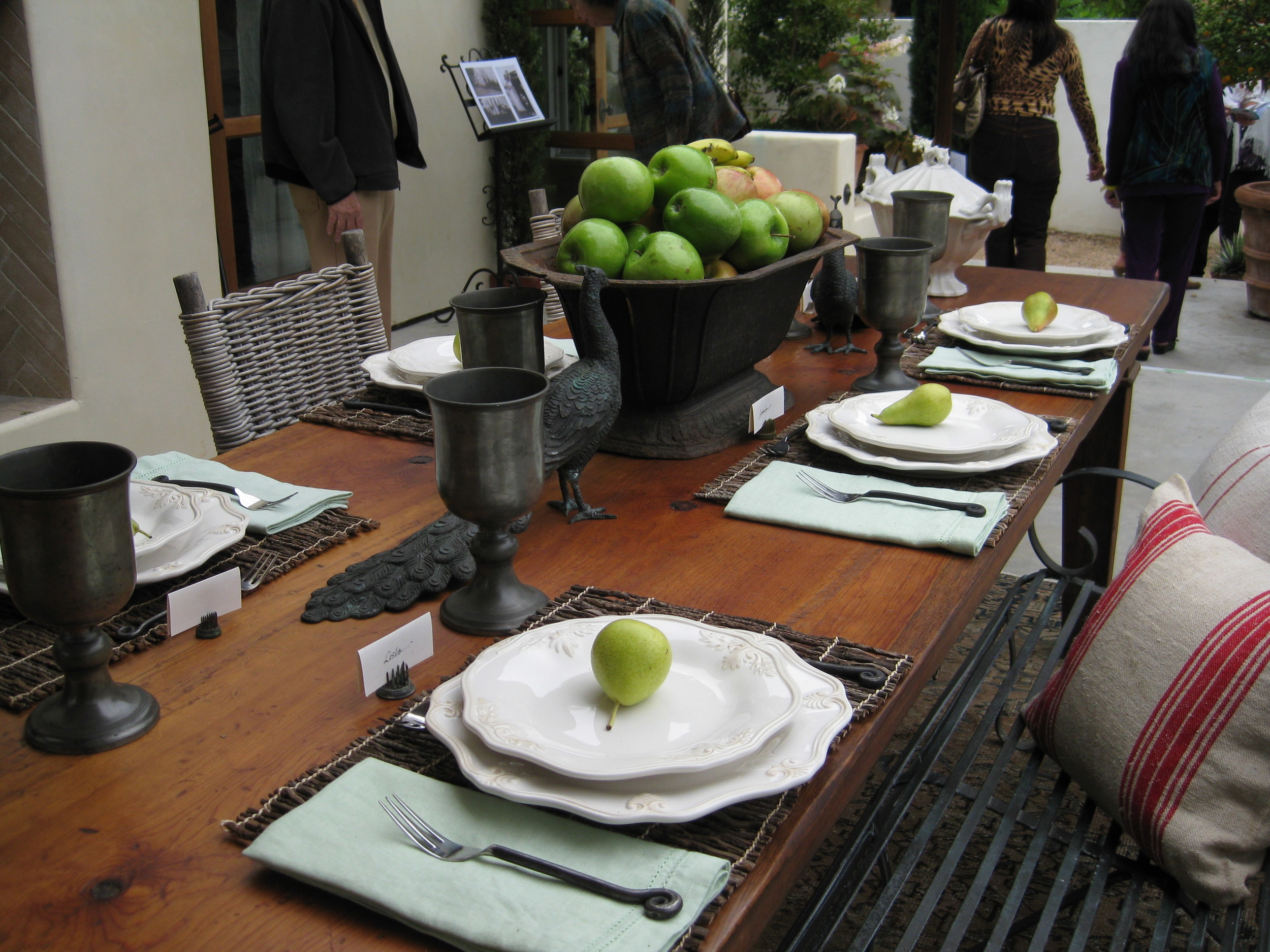
At one of my favorite homes on the tour, this historic 1925 home was decorated in tasteful architectural salvage. The table display, and Designers in the Garden, were Etceteras in La Jolla. I loved their entire table vignette, but was absolutely smitten by their vintage frog place card holders. I had never seen them so small and dainty. A perfect anchor for a name card.

The entire place setting with the pewter cups, peacocks, fruit, woven  twig place mats all  worked  together to create a warm and inviting table.

Vintage flower frogs are fun to collect, and can re-purposed for holding table place setting, cherished photos, bills, business cards, and even their original purpose--flowers. Vintage flower frogs can be found at shops like Etceteras, fleas markets, garage sales, and online.

VintageGardenGal Tidbit Thyme...

Attention Chicken Lovers! Spruce up your chicken coop for VintageGardenGal's Annual Chicken Coop Photo Contest. Send in your photos this month to bonnie@vintagegardengal.com