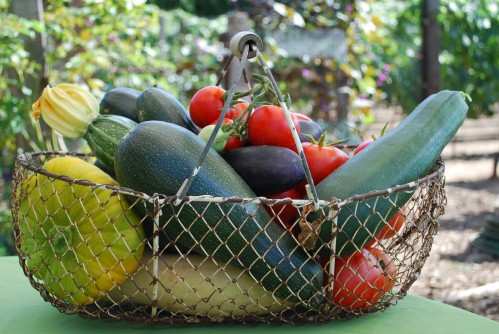
 Imagine, it is August, and summer vegetables are at their peak. You are reaping all the benefits of your time invested, and steps taken to ensure a bountiful vegetable harvest. It gives me so much satisfaction to harvest these beautiful and flavorful vegetables.
If you have never had a vegetable garden before, or would like to review what it takes to have a successful vegetable garden, please follow these simple basic steps.
1) Make your plan first on paper, what you are going to plant, where your vegetables will be planted in your garden plot, and when to expect harvest for each. Read and follow seed packet directions or seedling instructions, for planting, spacing, and thinning.
2) Plant the vegetables that you and your loved ones like to eat the most. If you're not interested in a certain type of vegetable, than don't grow it. I always plant an assortment of heirloom tomatoes and squash each year. For fun, I always try and plant one or two new vegetables that I have never grown before. Don't be afraid to experiment with some of the exciting heirloom vegetable seeds available.
3) Pick a nice sunny, level, location away from trees and shrubs that might shade, and compete for water and nutrients. Make sure this location has a convenient water source. Starting out, don't make your garden too big. A 10' x 10" plot will feed a family easily, with lots of vegetables to share. Plant your tallest vegetables to the north, so they don't shade the shorter ones, and continue on down your plot with your shortest plants on your south side. Generally, it is wise to surround your vegetable plot with a fence to keep out critters like Peter Rabbit.
4) Work your soil first before planting. Ideally, you want loose, rich, well-drained soil for a vegetable garden. If you have finished compost, or the ability to add nutrient-rich amendments, add to your soil, turn over well, and mix in. Level your ready-soil before planting.
5) Mark off your vegetable plot in "one foot segments" using two stakes tied with string the width of your desired vegetable plot, to provide a straight line for planting. Some of your seeds might require rounded mounds, allow room for them. Adhere to the types of vegetables that are planted in the spring, summer, fall, and even winter.
6) Regular weeding and hoeing is a must. This keeps your soil loose for water penetration and air. Weeds if left unchecked, can rob nutrients from your growing vegetables. Water requirements vary according to your particular soil type and zone. Plants generally need 2" of water per week. Some plants have specific deep watering requirements, like tomatoes. If possible, water your vegetable garden in the morning.
7) Know when and how to harvest your vegetables for optimum flavor and harvest. This will help your vegetables retain their maximum vitamin content and flavor. Mark it on your calendar beforehand, the approximate time frame your specific vegetables should be harvested, and observe your vegetables closely approaching this time.
Add your thoughts, do you have other tips you have used for successful vegetable gardening. Do you plan on continuing your vegetable gardening into the fall, and throughout the year. Do you have a favorite heirloom vegetable you planted this year to share.

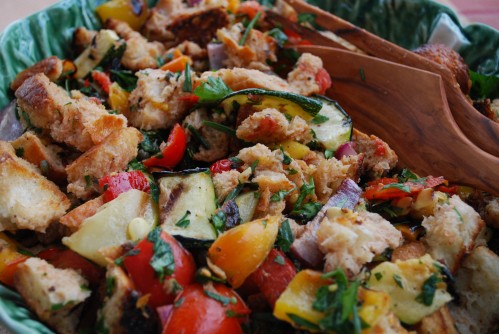 This classic Italian summer panzanella salad oozes with fresh flavors of summer, and takes advantage of your ability to jump in the garden and harvest bell peppers, heirloom tomatoes, fresh assorted herbs, and the last of your summer squash. I usually see panzanella salad with tomatoes, crusty bread, and mozzarella cheese, but like the twist of these added grilled summer vegetables.
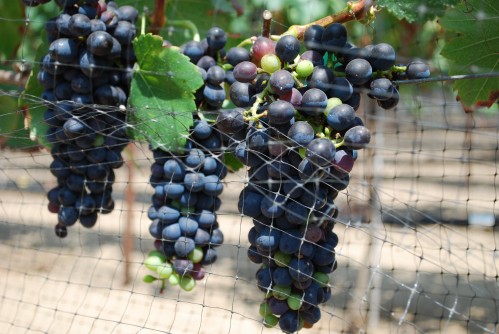 Here at Domaine de Manion, our backyard syrah vineyard, it is late summer and our syrah grapes are showing their true color. Our syrah grapevines have a full vegetative leaf canopy, perfectly formed grape clusters dangle from their shoots, and now the veraison process begins. Veraison is the phenomenon of grapes transitioning in their development from hard to soft in touch, and their color transitions from green to their harvest color, depending on the grape varietal. Syrah, our vineyard grape varietal, is a very dark, inky black color when ripe and at harvest time. In the above photo you can see the color transition happening among the individual grapes.
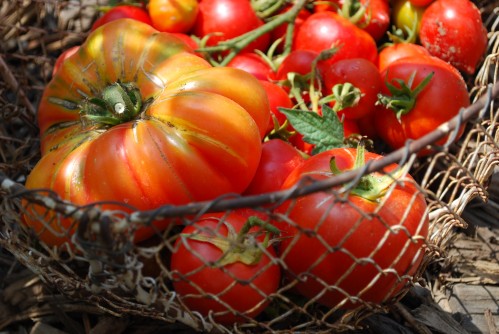 For me, the prize out of our kitchen garden each summer is always heirloom tomatoes. In the spring I plant as many different types as I can, and baby them along through August. I seek out tomato plants I have read about, tomato plants that have funny names, tomato plants that bear certain tomato colors, and even tomato plants with a story behind them.
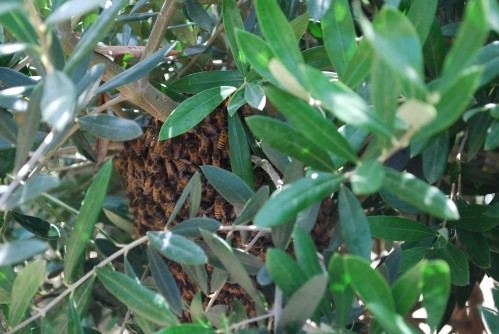 I know that nothing is a coincidence. Just last week I experienced my second honey bee swarming. The first one was in a friend's backyard a few years ago, and the second one was last week, close to our vineyard by the "Little Ollie" olive trees. At first I noticed a tiny dense dark cloud moving above our vineyard, with motion and fervor. Following this sight with my eyes for a while, it dawned on me that it was a swarm of honey bees. Upon further investigation and with the mission to water our "Little Ollie" olive trees, I spotted the swarm, quiet and resting under one of the branches. I wasn't afraid of them, and knew that they would be soon travelling on.
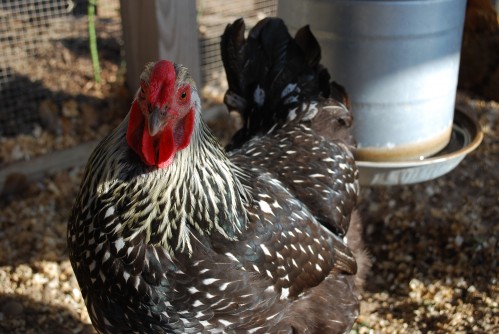 Chickens and backyard chicken coops have got to be one of the hottest trends happening today in the garden, right up there with growing your own vegetables. In case you missed it this week, there was an interesting article in the New York Times about backyard chickens,
 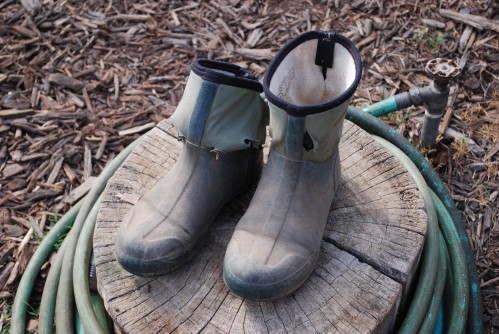 I've been looking for a new pair of garden clogs, shoes, or boots, for sometime now. I haven't really found a desirable new replacement pair, as of yet. So, I thought I would simply ask all of you. This has been the impetus for VintageGardenGal's Gardenin' Survey today. I want to hear from you, your feedback. Please answer and comment on any, or all of these questions.
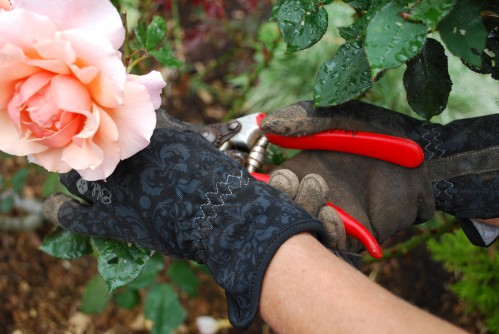 The creative folks at Ethel Gloves approached me, and asked if I might want to review their gloves, and ultimately share my thoughts with you. Upon accepting their offer, I was sent a complimentary pair of Ethel Gloves. It is my intention to present a fair, unbiased, and informative review for you.