Discovering The French Marans Chicken Breed

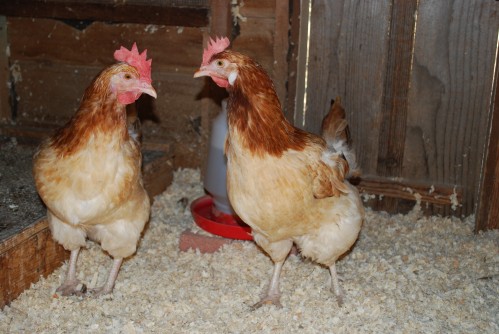
Meet Our New French Hens, Fanny and CoCo Originally, I found an advertisement for French Wheaten Marans chicks at my local feed store's bulletin board, and decided to order some chicks from the breeder. I was unfamiliar with this chicken breed, but was captivated by them. What makes this breed so unique is their dark chocolate colored eggs. By unusual circumstances, and many twists and turns, I was actually given the breeder's two "1-year old" hens last week. I promptly and appropriately named our new two French Wheaten Marans hens, Fanny and CoCo.

The Marans chicken breed originates from western France, around the actual town of Marans, and near La Rochelle. The Marans rooster is very striking, multi-colored, and is often depicted in French paintings and farm scenes. The hens look totally different from the rooster. Within this Marans breed there are actually eight or more colors or varieties. Our Wheaten Marans hens are one of the varieties, being light buff in body, with darker buff feathers around their neck, shoulder, and tail feathers. For a little drama, their tail feathers have a striking black tip on the ends. The most well known varieties within the Marans breed are the Cuckoo and Black Copper.

Marans chickens are generally characterized as a large attractive hardy breed. They are very active chickens, and do well in a homestead setting. They have a friendly docile temperament. They have a single red comb. and can come in feathered or clean-leg varieties. They were originally bred for their very dark brown egg production, and meat value.

It is the dark chocolate colored laid egg, which attracts most people to the bred, and which sets them apart from all other chicken breeds. The Marans egg receives its deep brown color right before laying. A deep chocolate brown pigment is deposited and tinted over the finished egg by way of mucus glands within the last 10 centimeters of the hen's oviduct before laying. Immediately after laying, this layer of tint dries quickly and the shell retains its beautiful dark chocolate color. Remember, the egg's flavor is determined by what the hen eats, therefore these eggs will not taste like chocolate. It is all about the "wow factor" in the visual appeal of the egg.

This differs from your usual farm-fresh brown eggs, most generally laid by heavy-weight chicken breeds, where the tan pigment is built into the shell calcium as the egg travels down the hen's oviduct, and not tinted in the last moments of being laid. Similarly, the popular blue-green egg laid by the Ameraucana breed is tinted throughout the thickness of the shell. With your normal brown eggs, and blue-green eggs, the color cannot be removed. However, the deep chocolate brown color on a Marans egg can be washed off with water, if you attempt it.

All of you who have been following this blog by now know we have our other beloved chickens, our "Hollywood Girls". With the introduction of Fanny and CoCo, there is an adjustment period, a "get to know you" period, and a creation of a new pecking order. While I'm watching this all unfold, I'd love to hear from you. Especially if you are familiar with the Marans chicken breed. What do you like most about the breed? What do you like most about the eggs? Do you have a Maran rooster, too? What variety do you have?
Tips On Keeping A Clean Chicken Coop

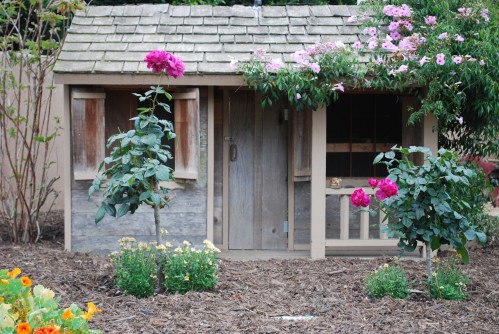
Coop de Manion If you have chickens, do yourself a favor as well as your chickens, by keeping their coop and outside pen clean. In a clean environment, your chickens will be healthy, happy, and flourish for many years. On the flip side, if your chicken coop and outside pen is always dirty, you are courting disease, stress, flies, rancid food, rodents, dirty eggs, and more. Your flock will not be able to live an optimum healthy happy life.
We all live in different parts of the country and the world with different climates, and most likely have some sort of unique chicken coop set up. So the formula is, what ever works for you, as long as your chickens are in a clean environment. Do you have tips for keeping your chicken coop clean, that you would like to share?

I have mentioned previously in the post, "Backyard Chicken Coop", Roosting Bar & Manure Box, I clean my manure box under my hen roosting bar every morning, skimming it and putting it into the compost. I rotate my chicken coop bedding on a regular basis, starting with fresh bedding in the nesting boxes, rotating the bedding to the chicken coop floor and then to the manure box, and finally to the compost bin. This method of cleaning has worked quite well for me.

My hens always have plenty of fresh water and quality laying mash. I supplement with greens, fruits, and vegetables every day for treats. Any uneaten treats also go into the compost bin. Chickens love their protein, as much as their grain. Do not be alarmed if your chickens eat a mouse, small lizard, grasshopper, snail, worm...these are also perfectly natural foods for chickens.

Every month, or more frequently if needed, I thoroughly clean my chicken waterers by soaking them in a tub of "food safe dish soap" and and a few tablespoons of bleach for a half an hour or so. The bleach acts as a sterilizing agent. There are "environmentally safe" bleaches available on the market now. Never mix any soaps or cleaners with your chicken waterers that may be toxic, and leave a residue. With a toothbrush, I scrub the chicken waterer lip and basin. Here in Southern California, in the summer heat, sometimes I get a green scum build up, so I clean my chicken waterers more frequently. Make sure to rinse your waterers well before filling with water and returning them to your chickens. When cleaning your waterers, make sure your chickens have an alternative source of water to drink from.

Protect your feed from rodents, mice, squirrels, moths, moisture, etc. by keeping it in a dry, air-tight container like a new plastic or metal garbage can with a tight lid on it. Ideally, you should have a special place to keep your feed safe in a shed, garage, or enclosed area protected from weather elements. Rodents can transfer mites, and diseases to your chickens if left unchecked. Please note that rodents are pretty determined, and can chew through plastic garbage cans and wood feed bins, too. If you have rodent evidence, take steps to eradicate them.

Incorporating a daily maintenance routine for your chickens will keep your chicken coop, and outside pen clean on a daily basis. Once a quarter, or about every three months, I also do a thorough chicken coop and outside pen cleaning. First, I move my chickens to another area, or let them out in our yard with a watchful eye. I open up all the doors and windows, remove all of the bedding and check for dry rot, termites, rodent holes, etc. With a broom, I brush off my protective wire screens for dust and any cobwebs. I take my manure box out of the chicken coop, empty, hose down, and brush the wire top clean. I then let it dry in the sun throughly. I level the soil in my outside pen with a rake, and add a layer of fresh new sand or soil. I add new walking mulch around my chicken coop. I do a thorough "tending to" of my plants, vines, roses, and vegetation I have planted around my chicken coop. I never let weeds grow or trash of any kind, linger near my chicken coop.

In other words, I do a thorough quarterly cleaning of my chicken coop, and outside pen. I have a small flock of hens, if you have a large flock you might have to do extensive cleaning more often. When it comes to chickens, I can not stress enough that preventive cleaning and daily maintenance is your best philosophy to follow.

The Rewards of Growing Your Own Food

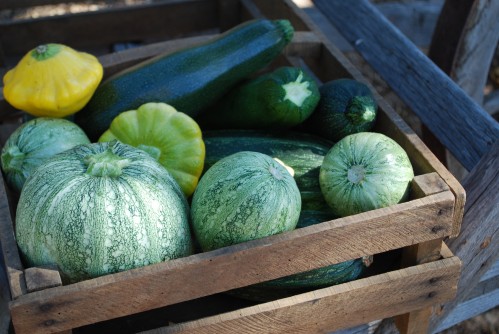
Squash Bonanza From The Garden It's a national phenomenon happening from the White House to local schools to your own backyard. It's one of the hottest food trends happening now in our country. I'm speaking of the "interest spike" in growing your own vegetables. There are several reasons for this mass appeal of vegetable gardening and growing your own food:
One, the current economic landscape has many people with extra time on their hands and looking for ways to save money.

Two, we are looking for green ways to improve our lives and environment.

Three, it is very rewarding to be outside, in touch with mother nature growing something great.

Four, you have control over how your food is grown, picked, and raised before you ever take a single bite.

Five, food from your backyard is simply as fresh as you can get it. You can pick it at its optimum ripeness, when you like. It doesn't have to travel by states and countries to reach you.

Six, home-grown food, cultivated and tended by you tastes like no other. Flavors are incredible, and scream "delicious".

Seven, chances are you will be eating and cooking healthier.

Eight, growing your own food sets you up for eating seasonally, which further creates many other wonderful ripple effects.

Nine, growing your own food will enhance your entertaining, cooking, baking, and dining experiences-- taking them all to another level.

Ten, did I forget to mention it is just "plain fun".

If you have children, gardening and vegetable gardening in particular, is an especially great way to teach them many of life's lessons. You must first "plant the seeds", be patient, and watch your dedicated efforts grow into fruition. Sometimes "less is more" when it comes to thinning your seedlings. Never be surprised if your best efforts far exceed your wildest imagination. Even your best efforts may be a failure sometimes, but look for the "something positive" that will come from it. Some of the best things in life are "free". Many hands lighten a load. Sharing with others is a beautiful thing. Mother Nature is awe-inspiring and incredibly unpredictable. Want to engage your children with enthusiasm. Instead of buying pumpkins this October, why not plant pumpkin seeds now of several different varieties and watch them evolve.

The rewards of growing your own food are many. It is certainly an important part of my life and lifestyle. Many of you are probably veteran vegetable gardeners, if so, what got you started? What was your motivation? If you have space constraints, don't let that stop you, think containers. This mass appeal of vegetable growing is fueling wonderful and very creative ways of vegetable gardening, like going vertical, hanging tomato containers, use of buildings and their accoutrements. The sky is the limit.

Blue Ribbon At The Fair

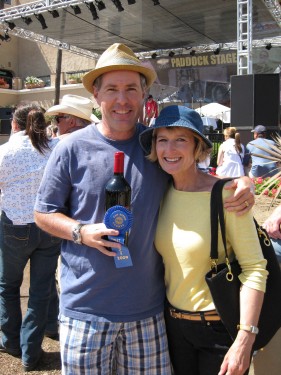
I would encourage all of you to visit your local, regional, or state fair this summer. Fairs are a slice of Americana, a part of our American culture. School is out, and the summer lifestyle has switched into gear. If you have a passion for something, like our wine-making, enter it in the fair, you might be surprised.
There is judging on flowers, garden displays, woodworking, artwork, chickens, cows, pigs, sheep, baked goods, jams, you name it. It is a great way to connect with others in your community with the same passion, and also to stay in touch with what others are doing in your particular area in the community.

Our local fair is the San Diego County Fair, always mid-June through the Fourth of July. There are rides, outrageous fair food, exhibits, judging of all kinds of categories, concerts, in other words something for everyone.

The wine judging contest at the San Diego County Fair is popular, and has a wide range of categories from Cabernet Sauvignon to Fruit Wines. There is also judging on wine labels, and the coveted "Best of Show".

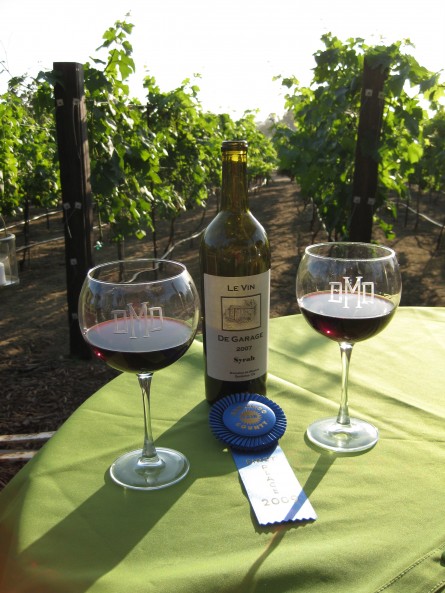
This year we entered three wines in three different categories. We won a "Blue Ribbon" First Prize, for our "Le Vin de Garage" Syrah 2007, in the "Syrah Category", on Sunday, June 21, 2009, Father's Day. It was a total surprise, and a little surreal when our names were announced. Needless to say, it was a special treat for our dads.

These grapes are not from our own syrah vineyard quite yet, but grapes that we purchased from the pristine Guadalupe Valley in Baja, Mexico to practice making wine, until our vineyard was three years old. Many thanks to our friends and family who helped us bottle this wine last fall, and for your ongoing enthusiasm.

Sunset Celebration In Our Vineyard, Domaine de Manion

Do you have a wonderful summer fair near you? Do you have a "Blue Ribbon" story to share? What are you passionate about that you could enter in the fair next year?

Provence: Special Restaurants

Salut Provence!  Outdoor Terrace at Les Abeilles I've been lost in writing about Provence for nearly a month. If that is not proof enough of how special Provence is to me. I have so many more postcards to send you from Provence, but my own garden, in my own Mediterranean climate is beckoning me home.
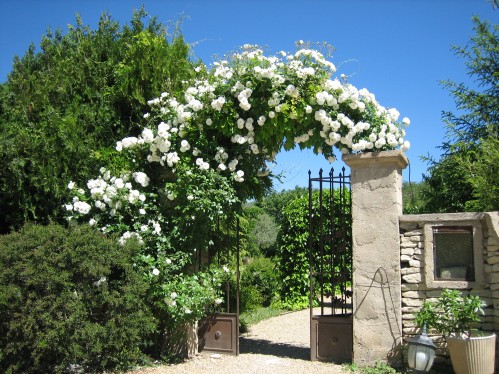
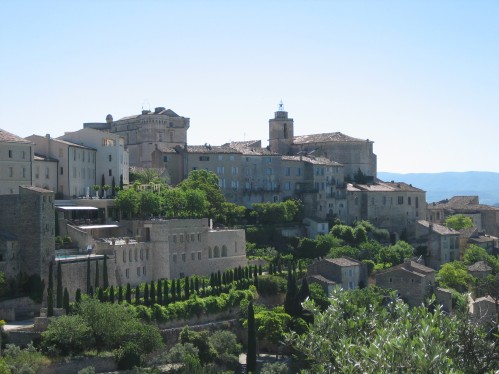
I'm going to end "Postcards from Provence" mentioning two very special restaurants in Provence that completed our visit. It is hard not to get a truly delicious meal any where in Provence. All of the bistros and restaurants are just divine. You can't go wrong. The menu and ambience's of Les Abeilles restaurant in Sablet, and Le Mas de Tourteron restaurant outside of Gordes, are however, special dining experiences.

Les Abeilles Les Abeilles in Sablet, centrally located to many places of interest like the famous village of Gigondas and its hearty Rhone wine, as well as Mount Ventoux, one of the highest peaks in the area, and famed as a route often on the cycling Tour de France. Les Abeilles is also a small hotel, restaurant, and bar. We stumbled upon this gem towards the end of our visit, and couldn't ask for a better dining experience. Chef Johanes and his wife Marlies, make sure everyone has a wonderful dining experience and visit.

Our dinner at Les Abeilles was something like being in the midst of an ongoing "three-act play". I have never had that dining experience before. Each table in the tiny restaurant had its cast of characters and drama. Although my husband and I were into our own dinner and dining experience, we couldn't help but observe the other tables and their perspective dramas unfolding. Maybe there is a play to write, about this dining experience in my future.

Besides having a wonderful dinner, we happened to meet a new lifetime friend that night, just part of the ambiance of the evening. A young German doctor, who is also a serious bike rider, and enthusiastically rides Mount Ventoux, whenever his vacation time permits. Restaurant Les Abeilles, 4, rue de Vasion, 844110 Sablet, (tel) (0)4.9012.38.96, Les Abeillles.

Entrance to Le Mas de Tourteron, Gordes

Le Mas de Tourteron Le Mas de Tourteron, like the Bistro du Paradou, was also a restaurant we had tried to dine at on our first trip to Provence, and eventually succeeded in having a Sunday lunch there, our second visit.

Le Mas de Tourteron is a very unique and romantic restaurant, owned by self-taught chef, Elizabeth Bourgeois, and her sommelier husband. It is a lovingly restored centuries-old mas, (farmhouse), which also use to be the site of an old silk cocoon farm.

Elizabeth is near legendary for her farm recipes, and has a large kitchen garden. Le Mas de Tourteron has its own garden setting, and just exudes romance. My husband and I were celebrating an early anniversary Sunday lunch, but I could imagine someone's very special evening, and "being proposed to" here.

Inside the restaurant, Elizabeth's antique and vintage bird cage collection hung throughout on its stone walls, woos diners with charm. Le Mas de Tourteron is very special, and very pricey. I suggest reservations, as days and hours vary slightly throughout the year. For a treat, dine at Le Mas de Tourteron, chemin de St.-Blaise, Gordes, (tel) (0)4-90-72-00-16, Le Mas de Tourteron.

Salut Provence! Your magic, beauty, and charm simply astounds me! I hope to return, once again, as soon as I can.

Provence: Rural Countryside & Villages

Lower Rhone Valley and Town of Sablet

Provence is so large and diverse, it really is hard to describe it all. When traveling by car, one is often fooled by the distance and time it takes to get around. Although there are some highways, a lot of the roads, are secondary roads which meander and wind through the small villages, towns, and countryside. In fact, "the mode" of getting around Provence seems to support the relaxed tempo of life here.

Approaching the Medieval Village of Gordes

In the Luberon region of Provence, the large regional Luberon Park protects the countryside from random development and preserves its wonderful valley floors and rising Luberon foothill views.

The wind can be a factor in Provence. There are actually several winds which occur in this region. The mistral, probably the best known, originates in Siberia and barrels towards Provence through the Cote du Rhone valley, sometimes with violent force and sometimes for days. During a mistral wind, everyone has a favorite legendary "mistral story" to tell.

Overlooking The Village of Bonnieux

Many of the hillside villages are from medieval times, and some started as Roman beginnings, when that was the best way to defend yourself from invaders. Often well-preserved, and with commanding views, these villages have wonderful bistros, weekly markets, honey-stone churches to explore, village tradition, artisan crafts, and lively local culture to take in.

Provence is soothing and peaceful visually. How can you not be moved looking out at its verdant quilted patchwork countryside, gentle rising foothills, valley floors, and vast blue horizon, seemingly untouched for centuries. Incredibly, you can still experience fields of happy sunflowers, acres of scented lavender, flocks of sheep migrating, producing olive groves, and noteworthy vineyards, as part of normal everyday Provencal life.

Springtime in Provence, when these photos were taken, show how simply beautiful the countryside is. Much of the landscape in spring consists of budding vineyards, gnarled mature olive trees, towering cypress, blossoming fruit trees, climbing roses, blooming wisteria, and the dramatic red poppy in mass.

Have you been to Provence in the spring? What is your favorite memory?

Provence: Beautiful Plane Trees

Plane Trees In Cucuron

One does not travel and explore Provence, especially if you are a gardener, without noticing its beautiful and awed plane trees. Plane trees are found everywhere in Provence. They line its country roads, often approaching and leaving a town or village. They are a focal point in many a family's courtyard, providing umbrella-like shade, and a spot to place an inviting outdoor table. They are often strategically planted in village centers and town squares. They can create a majestic and impressive grand boulevard style in their maturity and beautiful foliage.

Plane trees are the type of tree, in maturity, that create their own environment. They can reach 100 feet tall or more. Plane trees can be shaped and groomed into a variety of shapes, and provide welcome shade, especially in the warmer months of the year. Plane trees were planted prolifically, because they were a durable tree to population pollution, grew quickly, provided excellent shade, looked beautiful, required little water, and could be planted in poor soil.

Provence plane trees are a hybrid of the Asian and American sycamore trees. They were created, quite by accident out of Oxford, England in the 16th century. In the 19th century, plane trees were imported to Southern France, and planted extensively. Napoleon was responsible for extensive planting of plane trees throughout Southern France, for the purpose of keeping his marching army cool, under their great green canopies.

Tops of Plane Trees In Gigondas

Wouldn't it be wonderful to live in a region, like Provence, where plane trees are so prolific, so enduring, and so much a part of the charming character of the countryside. Plane trees are yet another reason, why the Provence countryside is so endearing.

Provence: Karma or Coincidence

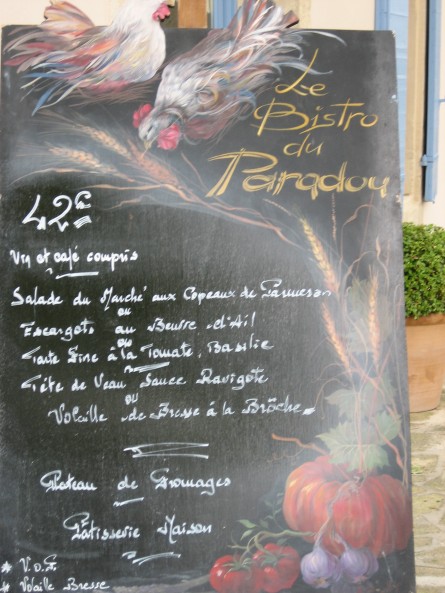
Menu Board Outside Le Bistro du Paradou "Some spots are the cradle of genius, Provence is one." --Lawrence Durrell. Locals have always known it. Provence's magic, like a magnet, draws many types of people to its charming countryside and ensuing lifestyle. There amongst the markets, cobblestone roads, bistros, shops, and restaurants, look closely and be observant. You might see your favorite author, fashion czar, cookbook writer, painter, actor, director, Michelin-star chef, celebrity, winemaker, photographer, and the list goes on.

Sandwiched Between Princess Caroline's Cars

"A Royal Encounter" When we visited Provence our first year we had tried to eat at Le Bistro du Paradou, a wonderful country bistro full of Provencal charm, however, we were too late for lunch and too early for dinner. Mireille and Jean-Louis Pons' country bistro is one of famed restaurant critic and cookbook writer, Patricia Wells' favorites in Provence. Well, it was worth a second try on our second trip, and we were successful in experiencing an incredible lunch. Everyone shares the same house table menu, choice of house wines, and gracious service.

After lunch, I pulled Jean-Louis Pons aside, and asked him a few questions, and thanked him for such a lovely lunch. He proceeded to tell me, "That it is afternoons like this, when Princess Caroline of Monaco and her husband come, I am especially pleased. She comes every spring, and is sitting there now at the table under the window." Can a jaw drop to your knees? Mine did. She was facing me across the room, surrounded by an entourage of people at her table who had floated into the bistro unnoticed. I looked at her for a long time, so I might forever keep her vision that day in my memory.

Wait, there is more. Once out in the parking lot, we notice our rental car entirely blocked. My husband asks me to go back to the bistro and find out whose car it is. Fate beckons us, and it is none other than Princess Caroline's pristine 1959 Deux Cheveux. Mon Dieu! First comes the waiter to help move the car, second comes someone from her table, and third comes Princess Caroline herself, speaking in perfect English, and apologizing profusely.

As we slowly left Le Bistro du Paradou moving on with our afternoon, I thought to myself, "Wow, this magic of Provence is intoxicating!" Le Bistro du Paradou, 57 avenue de la Vallee-des-Baux. Le Pradou. (tel) and (fax) (0)4-90-54-32-70. Closed Sunday. I recommend calling for hours, menu of the day, and reservations.

"Meeting My Heroine" After playing bumper cars with Princess Caroline of Monaco, we didn't think our visit in Provence could get any better. Little did we know that there was much more excitement to come. I first saw her book in the travel section of a bookstore about three or four years ago. Her book is, Words in a French Life: Lessons in Love and Language from the South of France. I was not familiar with Kristin Espinasse before or her writing, but immediately enjoyed her wonderful and endearing stories, woven with humor about her husband, children, cultures, and antics of Provencal every day life, and not so every day life.

Kristin's book actually morphed from her popular "thrice-weekly" blog, www.french-word-a-day.typepad.com/ . Kristin's blog is wildly amusing, and a fun way to stay in touch with your "inner French language", and Provencal fix. Kristin is my heroine, because she lives and breathes the authentic Provencal life every day, and gladly shares it with all of us through her wonderful words and stories.

Kristin is an American, and as she pens it, "a former desert rat from Arizona", who meets her husband to be in Provence during a foreign language exchange program. She falls in love with this handsome Frenchman Jean-Marc, marries, and has two adorable children. They live in Provence, and have followed one more of their dreams, owning a farm house, vineyards, and making award-winning wines in the Lower Rhone Valley.

Once again by incredible luck and unusual circumstances, my husband and I are enjoying a private tour of some of the local wine producers in the lower Rhone Valley, by one of the leading wine consultants in the area. Half way up the long gravel driveway of Jean-Marc and Kristin Espinasse, I realize we are visiting Domaine Rouge-Bleu, their winery and vineyard. I'm pinching myself thinking I can't take any more of these surprises. A quick introduction and visit with Jean-Marc and Kristin, a quick tour of their winery, a taste of their wine, results in a lifetime of memories.

Kristin is just as warm and friendly in person, as she is in her writing. She encouraged me to start a blog. I am so grateful and thankful for her kindness. Sometimes you meet people along the journey of life that touch your lives in so many ways, and they might not ever know. Thank you Jean-Marc and Kristin for touching our lives. We hope our paths will cross once again.