Posts in Kitchen Garden
Kitchen Garden Inspiration
The Kitchen Garden at Allt-y-bela in Wales, Garden Design 2012 Magazine

The Kitchen Garden at Allt-y-bela in Wales, Garden Design 2012 Magazine

From my post last week, Down The Garden Path, followers were asking me where I got my willow fencing. I thought it might be fun to revisit the original post and my original kitchen garden inspiration from photos and the Garden Design article. I hunted “high’ and “low” to find willow products, and finally found them at Master Garden Products in the Pacific Northwest. I actually called them as I had several questions and needed more information to make my order. Master Garden Products couldn’t have been more helpful and so friendly. I highly recommend the company and their products.

Now is a great time to get your gardens plans in place, make an order, and enjoy the beauty of willow!

Bon Appétit et Bon Weekend…Bonnie

The inspiration for my kitchen garden, or potager, came from a Garden Design, Winter 2012 magazine article, Simplicity Rules, on well-known garden designer, Arne Maynard’s rustic and historic late medieval farm, Allt-y-bella. Located in Wales, much of the rustic gardens and garden structure remind me of Provence. I envisioned borrowing a lot of the main elements featured in the article and photos, creating the look of a rustic kitchen garden. Some of these elements that caught my interest were the wattle hazel fencing, arching fruit trees with a centered bench, raised beds for vegetables, obelisks for climbing vegetables, easy pathways around the raised beds, and select spots for larger perennial plants like rhubarb and artichokes.
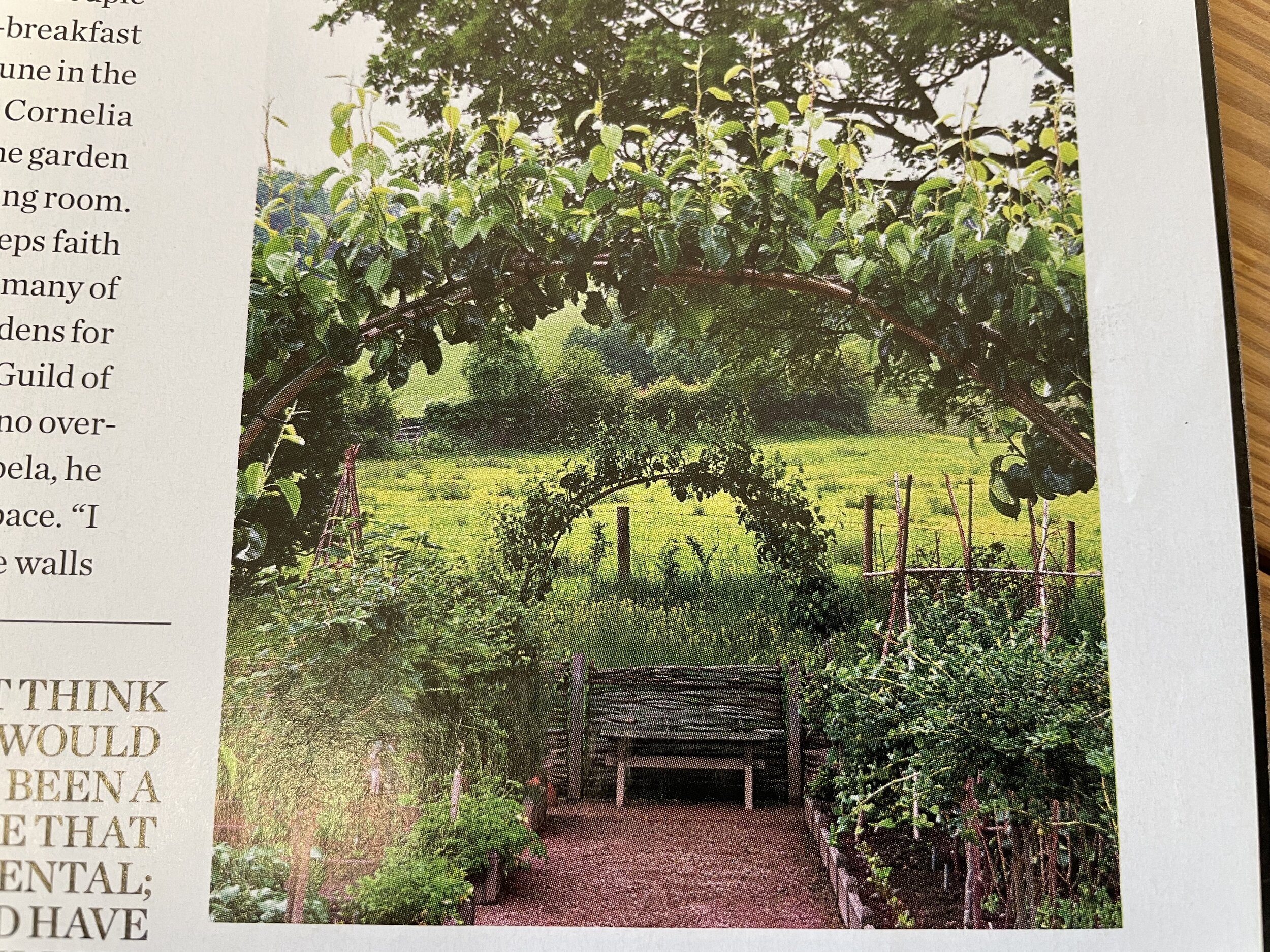
Allt-y-bela Kitchen Garden Pathway, Arching Fruit Trees, and Bench, Garden Design 2012

Allt-y-bela Kitchen Garden Pathway, Arching Fruit Trees, and Bench, Garden Design 2012

In 2015, I started creating a kitchen garden space to the north of our vineyard, with 4’ x 8’ raised bed kits. I looked high and low for hazel or willow wattle fencing for enclosing the kitchen garden similar to Allt-y-bella. I couldn’t find any source at the time. I needed about 75’ total. However, I happened to find a large amount of rolled willow fencing at Rogers Gardens at 50% off in an obscure sale corner. My intention for fencing the perimeter was to keep our chickens out of the kitchen garden as well as any random critters.

Up until 2020, my kitchen garden was good, and a work in progress. Over time, with sun exposure and high winter winds the willow fencing began to come apart and break down. This is common. I started looking for what I call wattle or willow fencing again.

My Kitchen Garden, June 2020

My Kitchen Garden, June 2020

Last month I found willow fence panels online at Master Garden Products. They offer a nice selection and sizes of willow fencing, panels, borders, obelisks, etc. They are out of the Seattle area, and will freight orders to you. I purchased 6’ L x 3’ H woven panels for my entire perimeter, and used the same anchoring rebar and metal stakes that were already in place. I am really pleased with the look, and the material overall. I also purchased three obelisks for climbing beans. The willow panels are stronger and sturdier than the rolled fencing, but will eventually break down over time.

My Kitchen Garden, May 2021

My Kitchen Garden, May 2021

Fine tuning the willow fence, I will put put larger rocks around the bottom of the fencing, to discourage critters from burrowing under the fence.

Starting an Outside Row of Perennial Artichokes

Starting an Outside Row of Perennial Artichokes

For more information and musing on how I create garden rooms from garden magazines, photos, and design ideas, please go to my previous post, The Making of a Garden Room.

French Fabulous! On Netflix, there is a new French subtitled drama series, Lupin. It is like a modern day “Houdini” Thriller series. Lots of twists and turns. Not only does it keep you on the edge, it is filmed mainly in beautiful Paris. Once you watch an episode or two, it draws you like a magnet. With two series completed, I see there is a third one coming.

Bon Appétit and Bon Weekend….Bonnie


Mediterranean Fava Bean Hummus
Fava Beans in the Potager

Fava Beans in the Potager


Fava Beans are a great spring vegetable, also called a Broad Bean, and somewhat like a Lima Bean. I grow my fava beans from seed each year, because you usually don’t see them in the market. It is best to start them in the fall, and come March or so, you are rewarded with these beautiful bean pods.

Fava beans are great in a spring pasta with lemon zest, spring soups, and even as a puree. I share with you one of my favorite ways to use fava beans in this Moroccan-style appetizer, Warm Fava Bean Hummus recipe, from Bon Appétit.


Warm Fava Bean Hummus

Lovingly Adapted from Chef Rafih Benjelloun

Makes about 5 cups

Ingredients:

1 pound shelled fresh fava beans

3-1/2 cups water

7 tablespoons olive oil, divided

6 large garlic cloves, peeled

5 teaspoons ground cumin, divided

1 teaspoon (or more salt)

2 teaspoons Hungarian sweet paprika

1 tablespoon fresh lemon juice

Warm naan or pita breads for serving

Directions:

Add 3-1/2 cups water, 4 tablespoons oil, garlic, and 3 teaspoons cumin. Bring to a boil over high heat. Reduce heat to medium-low. Simmer uncovered 20 minutes. Mix in 1 teaspoon salt. Continue to simmer until beans are tender and soft, stirring occasionally, about 50 minutes longer. Drain and puree in a food processor until it becomes a smooth hummus texture. Season with more salt and pepper, if desired.

Spoon puree into a shallow serving bowl. Mix paprika and two teaspoons cumin in a small dish; sprinkle over puree mixture. Drizzle with lemon juice, then remaining 3 tablespoons oil, if desired. Serve puree with warm naan or pita breads.

Recipe Notes: Puree can be made 1 day ahead. Transfer to microwave-safe bowl. Cool, cover, and chill. Rewarm in 2 minute intervals in microwave, stirring often, before serving.


More Related Posts from My Blog:

Fab Fava Beans

Do You Grow Fava Beans

Sensational Sorrel

Garden Sorrel in My Potager

Garden Sorrel in My Potager

Sandwiched between my sage plant on the left and flourishing fava beans on the right is my bright green perennial sorrel plant in my potager. Sorrel is an herb that adds lemony flavor to salads, soups, and sauces. There are two types of sorrel: garden sorrel, Rumex acetosa, which I grow, and French sorrel, Rumex scutatus (or buckler sorrel). The two types are very different in appearance, but similar in flavor. Garden sorrel has large sword-like leaves and French sorrel has leaves almost shaped like that of an oak leaf and only reaches about 6'“ in height. If you have the room, try growing a patch in your garden. You can find sorrel in some specialty grocery stores and markets in the spring, but if you grow it in your garden in Southern California, it will thrive year-round.

 
Patricia Wells 1996 Cookbook with Sorrel Soup Recipe

Patricia Wells 1996 Cookbook with Sorrel Soup Recipe

Sorrel is such a sensational flavor, but there are two things to be aware of. When you cook, steam, or sauté sorrel leaves, it is like spinach, in that a huge amount of fresh leaves becomes a small wilted amount—so you need to use more initially than you might realize. Sorrel leaves when fresh are a bright happy green color, but can turn a sort of muddy green darker color when heated.

Patricia Wells has a great sorrel soup recipe below, where she shares a secret for retaining bright green sorrel color, from her friend, Chef Dieter Müller. Blend your pureed sorrel with room temperature butter first, and add it to the soup at the end of your cooking time. The soup retains its desirable green color. This elegant soup can be served hot or cold, and can be made with fresh watercress leaves as a nice substitute.


Amazing Sorrel Soup

Lovingly Adapted from Patricia Wells at Home in Provence

Ingredients:

3 ounces (90 grams) fresh sorrel leaves, stemmed, thoroughly washed, and dried

3 Tablespoons unsalted butter, at room temperature

2 Tablespoons extra-virgin olive oil

1/2 small onion, peeled and sliced into thin rounds

6 ounces (180 grams) starchy potatoes, peeled and diced

1 quart homemade Chicken or Vegetable Stock, or store bought

1 cup heavy cream

Sea salt and freshly ground white pepper to taste.


Directions:

1) In a food processor, puree the sorrel, pulsing on and off for 30 to 45 seconds. Add the butter and puree. Transfer to a small bowl, cover, and set aside in a cool area of the kitchen. Do not refrigerate, or the sorrel butter is likely to be too cold to add to the soup at the end.

2) In a large saucepan, heat the oil until it is hot but not smoking. Add the onion and sweat them over low heat until soft, 3 to 4 minutes. Add the potatoes and cook over low heat until golden, 10 to 15 minutes. Remember not to cook over too high a heat, or they will burn instead of coloring a beautiful golden brown.

3) Add the stock and simmer for about 20 minutes or until the potatoes are fully cooked. Stir in the heavy cream. Using an immersion mixer, puree the soup directly in the stock pot. A food processor can also be used. Return the soup to the stockpot if using a food processor. The potatoes will give thickness and body to the soup without detracting from the sorrel. Taste for seasoning. Just before serving, whisk the sorrel butter into the hot soup, taking care to mix thoroughly and quickly. Makes 4-6 servings.


If you like this blog, and want to share it with your friends. Sign up with your email for my blog posts, newsletters, and Instagram at www.bonniejomanion.com

Fab Fava Beans
Fava Beans Started From Seed

Fava Beans Started From Seed

Fava beans are a great addition to a fall potager. In fact, I usually start my fava beans about the same time I plant my sweet pea seeds, both are mature about the same time in the spring. Fava bean plants are beautiful in your potager with their striking black and white flowers, and added bonus is they give back, adding nitrogen to your soil.

Fava Beans are symbolic of spring in the potager, part of eating seasonally. They have a short season like white asparagus, if you can find them at the farmers markets. That is all the more reason to sow them in your potager, and enjoy their nutty flavor in the spring. You can make soups, salads, and even appetizers with them, and will share with you some recipes this spring.

 
Soak Beans First Over Night Before Planting

Soak Beans First Over Night Before Planting


I have enjoyed fava beans for a long time, here is another post on fava beans from my archive. Enjoy!

Do You Grow Fava Beans?


24 Carrot Gold
Carrots Hot Off the Grill

Carrots Hot Off the Grill

I am more of a “recipe seeker” than a recipe developer, maybe that will be change in the future. On the other hand, Tieghan Gerard of Half Baked Harvest is a natural recipe genius with her flavor and ingredient artistry and food styling bordering on culinary masterpieces. A Colorado twenty-something with already two cookbooks under her belt, and 1.9 million Instagram followers and counting, she has the ability to create a new mouth-watering recipe everyday. She is simply amazing and fresh in the culinary world. Check her out!

I seek out certain recipes for my culinary repertoire, hunting them down from cookbooks, friends, the internet, magazines, and saved recipe files. You know the ones, like Alice Waters’ Mulberry Ice Cream, Martha Stewart’s Lemon Bars, Patricia Wells Sorrel Soup, Ina Garten’s Spinach Gratin, Dorie Greenspan’s Gougères, and Sheila Lukin’s (Silver Palate days), Corn and Lobster Chowder, see below.

In the Bon Appétit, June/July 2020 magazine issue there is a terrific recipe I want to share with you, Grilled Carrots with Avocado and Mint. This is a “24 carrot gold” recipe. I had never grilled carrots before, roast them in the oven with a few other root vegetables, olive oil and a little salt and pepper. Yes and yum!

Grilling the carrots in this recipe caramelizes them, and the cumin-forward dressing is a perfect dressing companion. This is such a simple and well-rounded recipe. It has big flavor, acid, heat, spice and texture. The combination of avocado, toasted cumin, fresh ginger, mint, and serrano chile are divine!

In San Diego, California, we are lucky that we can grow carrots all year long, and now there are so many heirloom and rainbow colors to grow besides the beautiful orange through seed companies and buy at our farmer markets.

Bon Appétit, June/July 2020 Issue

Bon Appétit, June/July 2020 Issue


Bonus Recipe from My Recipe Archive

Shelia Lukin was at one time a Food Contributor for Parade Magazine, dates unknown. This chowder is special and elegant enough for a Christmas Eve or New Year’s Eve Dinner, or a very special occasion. Enjoy!

Shelia Lukin’s Elegant Corn and Lobster Chowder

Shelia Lukin’s Elegant Corn and Lobster Chowder

I enjoy hearing from you all, your kind words, suggestions, and comments. They all come to me, and I try to respond back. If you want to comment on my actual blog you will have to click on the tab, “click on original post” at the bottom of this blog post, which will direct you back to my original post location on my blog and website. Either way I see your comments!

Merci Mille Fois!


Tomato Touché
San Marzano Tomatoes

San Marzano Tomatoes

Last February a dear friend gave me San Marzano tomato seeds from Italian Franchi Seeds to grow. Fast forward to August, and it was time to harvest. San Marzano tomatoes make a beautiful sauce, but I wanted to dehydrate them, a first for me. I have a setting on my oven, and used that method over night.

 
Dehydrated San Marzano Tomatoes

Dehydrated San Marzano Tomatoes

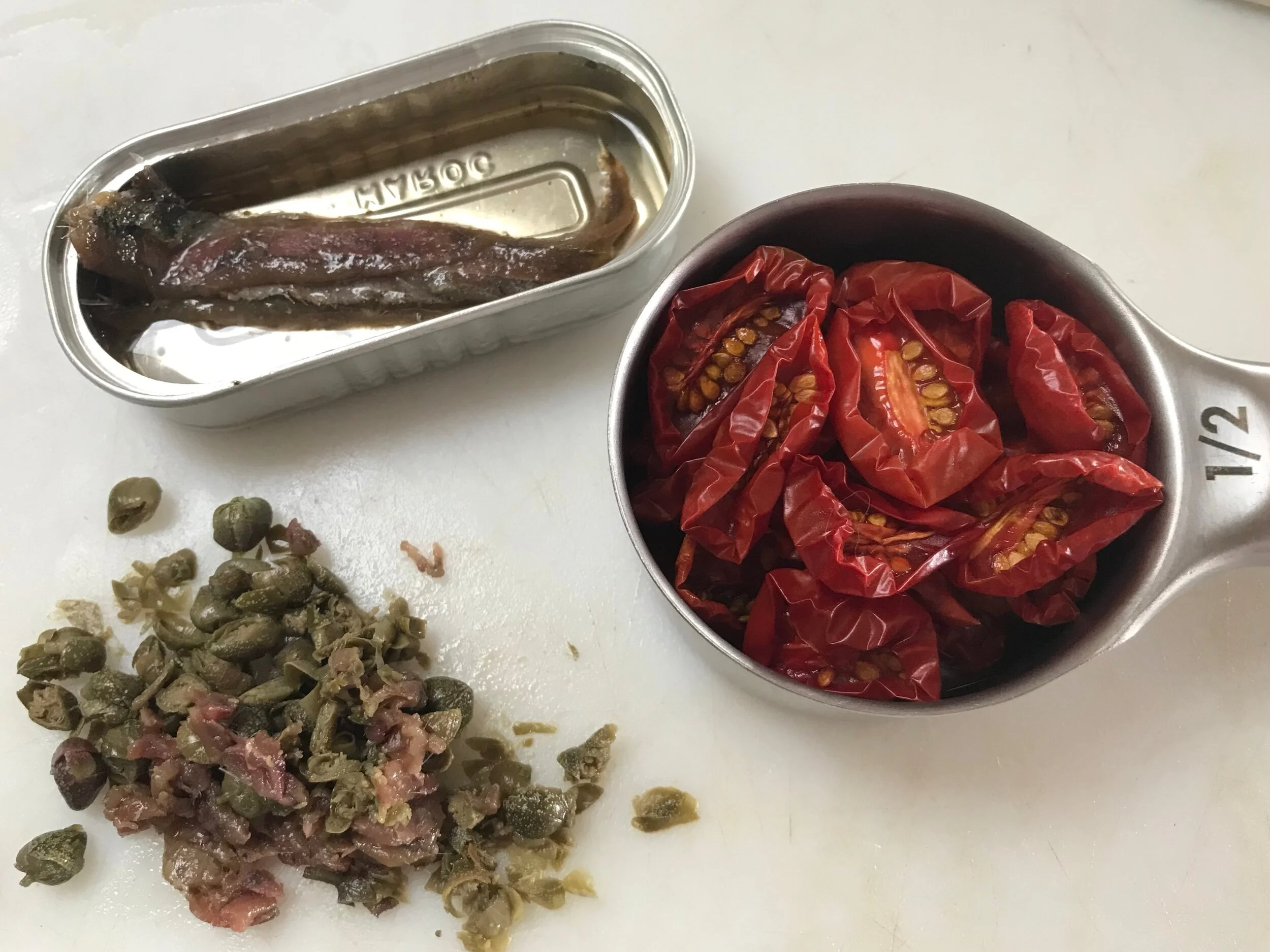
Beautiful crimson color matched with a flavorful tomato intensity, I wished I had grown more of these tomatoes. Remembering a quick recipe from Alice Waters, The Art of Simple Food II, I made her Crostini with Dried Roma Tomatoes, Anchovies, and Capers. This recipe is made with simple but ingredients you most likely have in your pantry, and with the star addition of dried Roma Tomatoes.

 
Anchovies, Capers, Olive Oil and Dried Roma Tomatoes

Anchovies, Capers, Olive Oil and Dried Roma Tomatoes

 
Dried Roma Tomatoes, Anchovies, and Caper Mixture Ready for Crusty Bread

Dried Roma Tomatoes, Anchovies, and Caper Mixture Ready for Crusty Bread

 
Lovingly Adapted from Alice Waters, The Art of Simple Food II

Lovingly Adapted from Alice Waters, The Art of Simple Food II

Waters likes to add fresh chopped parsley or marjoram to each crostini for a touch of green, punch, and texture.

Please share if you dehydrate tomatoes or other foods you grow. Please share if you have a great Roma tomato recipe.

Authentic Italian Pesto
Italian Pesto Basil, Renee’s Garden Seeds

Italian Pesto Basil, Renee’s Garden Seeds

This year I grew basil from seed for the first time, and had resounding success. I used great seeds from Renee’s Garden. She has many types of basil but I chose her Italian Pesto Basil seeds specifically for making my own pesto. This basil was very easy to grow, in two rows in my raised bed. The green color alone is fabulous, and as you pick the leaves or pinch the flowers the fresh basil smell is intoxicating.

 
A Partial Glimpse of Beautiful Cinque Terre

A Partial Glimpse of Beautiful Cinque Terre

My incentive for growing basil, and making my own pesto from the garden was Wine Vault & Bistro’s Italian Culinary and Wine Tour, my husband and I, and friends took two years ago. The tasty tour focused mainly around Florence and Tuscany, and paused in Cinque Terre. Cinque Terre is five separate coastal villages perched precariously high above the Mediterranean within Liguria in northwest Italy. These villages because of inaccessibility, were virtually unknown to the world until shortly after World War II. They are all now part of the Cinque Terre National Park, a UNESCO World Heritage Site.

In the fifth and furthermost village of Monterosso, our tour had a planned amazing lobster and seafood lunch along with other local delicacies at the sweet Hotel Pasquale. An extra bonus was an optional pesto making class beforehand from the restaurant’s own Nonna. Taking notes as quickly as I could, I share with you her authentic Pesto Recipe. This is the recipe I am using this summer from my garden, and share with you now.

 
Informal Pesto Making Class in Monterosso

Informal Pesto Making Class in Monterosso


Italian Basil Pesto (For Two People)

80 small Genoa basil leaves, or fresh basil leaves of your choice. One clove garlic.

One tablespoon pine nuts per person, not roasted but raw.

The best pine nuts are from Pisa, Italy. One heaping tablespoon Parmesan cheese per person.

For more people use 4 tablespoons pine nuts,

3 garlic cloves, but use same amount of Parmesan cheese and garlic proportionally.

Add into ingredients 1/2 cup good olive oil for two people, more olive oil, if making for more people.

With a mortar and pestle crush your basil leaves until they become a paste. Add other ingredients.

Add your olive oil to mixture last. Pesto should be a cream-like consistency.

Don’t normally need salt, because the cheese has salt. Use over warm linguini.

 
Becoming Authentic Italian Basil Pesto

Becoming Authentic Italian Basil Pesto


My recipe notes. You can use a food processor as an alternative to a mortar & pestle for your pesto, but know the Italians still prefer a mortar & pestle.

This pesto is made up of a few simple ingredients, so try and find the best of all of these ingredients. I use this fresh pesto over my pasta yes, but also for my

homemade pizza, and tomato tartines. Enjoy, and maybe it will take you to Italy someday, or take you back to Italy once again.


Climbing Eden Rose
Climbing Eden Rose In My Potager

Climbing Eden Rose In My Potager

It has taken me three years to cultivate a single bloom from my climbing Eden Rose. It is not easy to find Eden Rose in local nurseries. Search for this rose in pot and bareroot form for sale online. Heirloom Roses is one source for it in a pot.

I first planted my Eden Rose in too shady a spot where it struggled. Finally, this winter I transplanted it to my potager arch to co-mingle with my young Golden Dorsett apple trees. It is very happy now, and has exploded with happy blooms. Eden Rose is a versatile repeat bloomer with an unusual blend of pastel pinks, creams, and yellows. I simply love this rose, and it reminds me of Provence!

I saw and recognized Eden Rose while visiting the magnificent potager, Bastide des Saveurs, near the village of La Cadiere-D'Azur in the Bandol Region of Provence. Here is a link to my past post and visit with Chef René Bérard in May 2015.

Chef René Bérard told me this rose was called Pierre de Ronsard. In the back of my mind, I knew it had another name, and did some exploring. According to Wikipedia, Eden Rose, also known as Pierre de Ronsard was created by Marie-Louise Meilland in France by Meilland International in 1985, as part of the the Renaissance Collection.

Bastide des Saveurs is Chef René Bérard's potager and location for cooking classes. For a treat, visit his website for more information on his quaint family-owned hotel, restaurant, spa, and cookery school,  Bérard Hostellerie.


Provence Morning Light and Eden Rose in Chef Bérard's Potager

Provence Morning Light and Eden Rose in Chef Bérard's Potager

Climbing Eden Rose in My Potager

Climbing Eden Rose in My Potager