Romantic Iceberg Rose

Romantic Iceberg Rose At Dusk White iceberg rose is another of my favorite roses, and one that thrives in my Mediterranean Southern California climate. I planted an entire hedge of iceberg roses as an entrance to our syrah vineyard and nearby nestled sitting area. My intention was to create a pleasing color palette for one's eye from our home and surrounding our nearby cozy sitting area. White iceberg rose has an incredible elegance about it with prolific sprays of pure-white blooms with dark green foliage. It makes for a romantic and elegant entrance to our vineyard and the blue ocean horizon beyond. In the above photo, I have planted a climbing iceberg rose up a pillar, and added a vintage bracket ready to hold a lantern with the soft glow of a candle.

White Iceberg Rose Hedge

Iceberg rose is a popular floribunda rose, and it is now available in pink and burgundy. My favorite is the white. White iceberg roses are often available at retail stores and nurseries at very reasonable prices. The iceberg rose blooms non-stop all summer, is very disease-resistant, is very hardy, and has a subtle sweet rose fragrance. The iceberg rose is as beautiful as a cut flower as it is in your garden. It does best in zones 5-9, and reaches a mature height of 3-4 feet. It looks best in mass plantings, and can be a foundation for your garden.

The climbing white iceberg rose has the same wonderful attributes as the iceberg floribunda. Use it on arbors, fences, pillars, and where ever it can potentially climb. Plant white iceberg rose for romance in your garden.

Please share if you have iceberg rose in your garden. Please comment on how you use iceberg rose in your garden.

Climbing "America" Rose

Climbing America Rose I was first introduced to climbing "America" rose in garden guru, Pat Welsh's garden years ago. I was drawn to its vibrant salmon-coral blooms, but it really is an ideal climbing rose for the home garden for many reasons. I now have a climbing "America" rose on the entrance gate to my kitchen garden.

First introduced in 1976, back in the year of our country's bicentennial, hence its name "America." It won the 1976 All-American Rose Selections award that year. Its parentage is Fragrant Cloud x Tradition.

"America" rose is considered a modern climber reaching 12-15' tall, and a repeat bloomer with a double bloom shape. It is well-adapted for climbing arbors, fences, and pillars. It has layers of petals to each bloom, and its bloom longevity is one of the things I love best about it. Climbing "America" rose has blooms that can range from deep coral to pink. It blooms on new wood, so prune early to promote new growth. Climbing "America" rose has a nice spicy fragrance. It is fairly disease-resistant to powdery mildew, black spot, and rust.  It does best in zones 4-9. Be aware that climbing "America" rose does have thorny stems.

Please share if you have climbing "America" rose in your garden. Please comment on your favorite climbing rose.

Vegetable Edibles to Plant in June

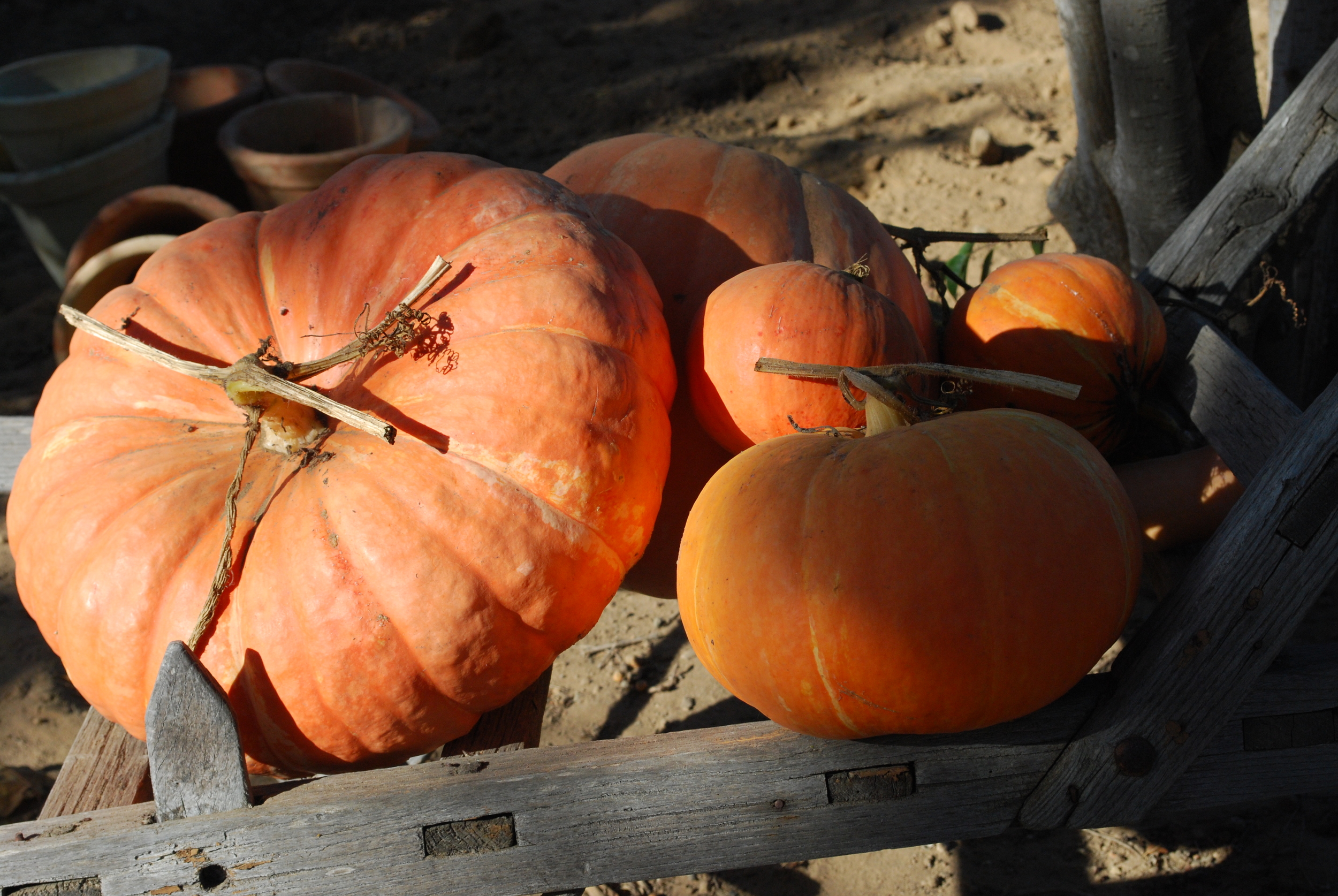
Home-Grown Pumpkins in Morning Sun Last month I spoke about Charles B. Ledgerwood's "Southern California Vegetable Planting Calendar" for May. These are his suggestions for the month of June. For the best planting months, the names are capitalized.

BEANS, beets, carrots, CANTALOUPE, CORN, CUCUMBER, LIMA BEANS, OKRA, parsley, PEPPER, PUMPKIN, radish, NZ SPINACH, SQUASH, swiss chard, tomato, jicama, watermelon, eggplant, and sunflower.

It is hard to think about pumpkins and fall right now when we have the whole summer in front of us. Yet, this is the time to start your pumpkins from seed. One of my favorite pumpkins to grow is the Cinderella pumpkin, linked to the enchanting fairy-tale, Cinderella, with her beautiful pumpkin-shaped carriage.

The Cinderella pumpkin is a beautiful rich orange-hued color with deep ridges, and a slightly flattened shape.  Plant seeds in mounds 5-8' apart, mixed with ample compost material. Plant five seeds, 2" deep, to a mound, and thin to 1-3, if needed. Allow ample space for your pumpkin vines to stretch out and grow. Place straw or a thin piece of wood under each pumpkin as it grows. Each vine yields 5-8 pumpkins. Water the equivalent of 1" per week. Best to water deeply, rather than lightly at frequent intervals.

Harvest at about 95 days. Leave at least a 2" or more stem when harvesting the pumpkin from its vine. Mature pumpkins may be carved, used in a variety of fall recipes, and as romantic fairy-tale fall decorations. Please share if you grow pumpkins every year. Please comment on which pumpkins are your favorite.

VintageGardenGal Tidbit Thyme.... Weidner's Gardens is pouring a new cement path this June 12 & 19, and invites you to join in all of the fun and activities.

The Farmstead Restaurant

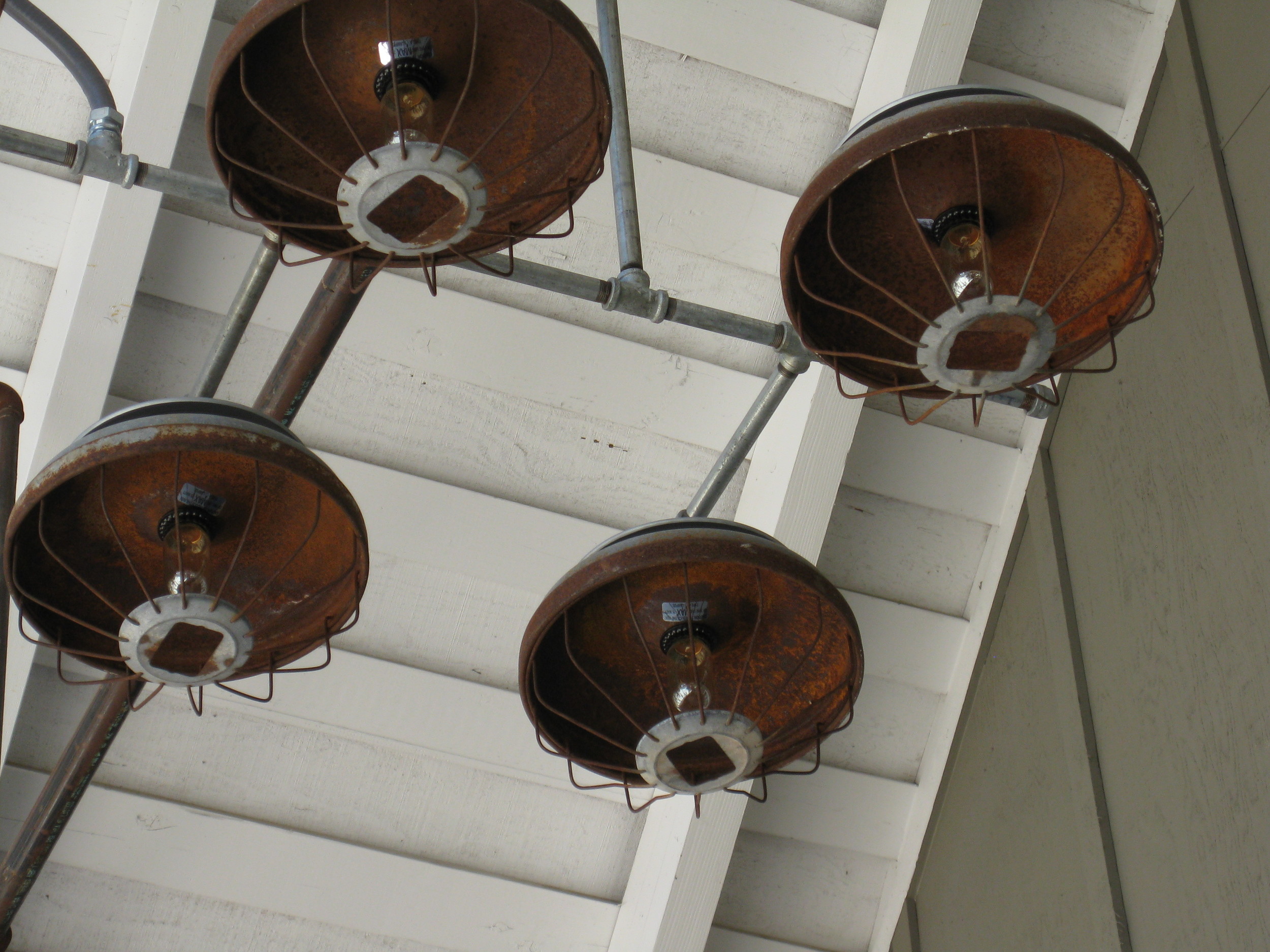
Vintage Chicken Feeder Light Fixture I want to share with you some of the exceptional places that I come across from time to time. These places are gems and not to be missed if you are in the area, or they could even be a destination. Most have a "garden thread" to them. "Places To Know" can be retail, restaurants, nurseries, and other. Whatever the place, expect the unusual. This is a first in a new category, "Places To Know"....

On a recent insider's trip to Napa with my garden gal's, The Farmstead Restaurant was a fabulous stop and restaurant on our itinerary. It is located at 738 Main Street in St. Helena, California 94574, (tel) 877-NAPA-OIL, or just south of St. Helena on the famous Highway 29 in Napa Valley.

The restaurant is in a former nursery barn, transformed into a 110-seat restaurant featuring a farm-to-table menu, comprised of seasonal local, sustainable, and organic ingredients. It is a lively and social atmosphere. It was packed with diners the night we were there. Entering the restaurant, an outside light fixture created with vintage chicken feeders luminously greets you. I often use chicken feeders in vintage container design, but I have never thought about turning them into hanging lights. More unusual chandelier lighting hangs in the center of the restaurant made from re-purposed vintage-salvaged hay hooks from the owner's family historic ranch.

If you come for lunch at the Farmstead Restaurant, you might enjoy  intimate outdoor dining lined with living espaliered fruit trees, and an inviting nursery and demonstrating gardens, literally steps from your dining table. There is also on the grounds a wine and olive oil tasting room, too.

Espaliered Fruit Trees Perimeter Outdoor Dining Area

The Farmstead Restaurant is one part of a shining example of a vertical integration of a modern, organic, sustainable family farm which comprises Long Meadow Ranch. Long Meadow Ranch is owned by the dedicated Hall family. Their motto is "Excellence Through Responsible Farming." Long Meadow is a 650 acre historic ranch nestled high above Napa Valley in the Mayacamas Mountains. This property has old olive groves and vineyards originally planted in the 1870's. Thorough their sustainable philosophy and organic practices, Long Meadow Ranch make their own extra-virgin oil oil, world-class wines, raise their own grass-fed beef, grow their own heirloom vegetables, produce organic eggs, and more.

Long Meadow Ranch also includes LMR Rutherford Gardens, another historic property on the Napa Valley floor, and not far from The Farmstead Restaurant. Organic seasonal produce is grown for the the restaurant and the Friday St. Helen Farmer's Market. Soon, a farm stand featuring LMR's own produce, flowers, and eggs will be available each morning at The Farmstead Restaurant.

If you are visiting Napa Valley, I highly recommend stopping in for lunch or dinner at The Farmstead Restaurant. The food is delicious, the wines are lovely, and the atmosphere is inviting. Please comment if you are familiar with The Farmstead Restaurant and Long Meadow Ranch.

Turning The Corner...

Displaying  Stucco Color Samples If you have ever been through a home remodel, you may well know the pace picks up in a "fast and furious" way as the remodel end is in sight. Important decisions come faster. The layers of remodel continue to build on top of one another in a logical and methodical way. In the above photo, my husband John, and I, are "turning the corner" on our remodel, selecting our stucco color for our home, barn, and courtyard. We know we are on the home stretch towards completion and move-in day.

We eventually choose the bottom sample stucco color (after much "hemming and hawing") and are very happy with it. Now the tile roof can be laid. Our long ipe outside deck can begin. Our courtyard and sides can be graded. The list goes on.

Like an orchestra, whose pieces or ensemble sections make a whole. The conductor is our contractor, Robert McCarron. He keeps the time and rhythm of his different subcontractors in sync, and in seemingly effortlessly direction towards the grand finale. We have onsite paint contractors, stone contractors, concrete contractors, garage door contractors, tile contractors, plumbing contractor, and more. On a recent morning I counted fifteen cars and trucks parked on our easement and with permission, spilling over to my neighbor's drive way.

Our hands-on architect, Bill Bocken, William Bocken Architecture Interior Design, is never too far away from this gregarious ensemble, too. He has made sure we are in perfect pitch throughout this whole process. As homeowners we are there everyday involved with decisions, information, and our added two cents.

After eight months of this incredible transformation process, we are turning the corner, and coming down the home stretch of our remodel. Please comment on your own remodel experience.

VintageGardenGal Tidbit Thyme...

My good friend, Julie Mautner, from "The Provence Post" has written recently about Provence at the Chelsea Flower Show this year, Provence Prevails at Chelsea. It's fabulous.

May is for Matilija Poppy

Happy Matilija Poppy One of my favorite shrubs is the  perennial garden beauty, Matilija Poppy, Romneya coulteri. It blooms in May and seems to "smile sunshine" with its huge whimsical "fried egg-like" flowers sitting atop gray-green lobed foliage. It is wise to have ample room for Matilija Poppy in your garden as it can reach 6-8' tall, and spread easily if unchecked by rhizomes over a large area. When it blooms in my garden, I'm reminded it is late spring and the onset of summer is fast approaching.

The Matilija Poppy is native to coastal ranges and valleys of Southern California and into Baja California. It likes full sun and survives on scant to moderate watering.  This shrub can tolerate many types of soils. The Matilija Poppy thrives in zones 4-12, 14-24. Matilija Poppies are simple maintenance, needing a pruning close to the ground in late summer to early fall, and restraint  from summer watering to keep its growth curbed. Slowly they begin to grow through the fall and winter, and suddenly in May, burst into bloom with their gigantic flowers.

Best places to plant your Matilija Poppy in your garden or property is as a structure and backdrop shrub, along a fence line, along roadsides, and when planting a large border or natural area. Ironically, it is a little tricky to start them initially in your garden, but once established they easily can take over. In fact, it took me three times, before I successfully established my Matilija Poppies. Start your Matilija Poppy from 1 gallon size plants from your local nursery, or from rooted suckers on spreading roots from a friend's garden. If you have Matilija Poppies growing in your garden, you will gladly want to share them with your friends.

Matilija Poppy's flowers are big, bold, and full of character in your garden. Matilija Poppies can be used as as a cut flower, too.  As a cut flower, be aware that it has a tendency to drop dust from its golden stamens and  an occasional white petal.

Please share if you are familiar with the Matilija Poppy.  If you grow them in your garden, please share how you curb their enthusiastic runners.

VintageGardenGal Tidbit Thyme....

Remember to send in a photo of your chicken coop this month to, bonnie@vintagegardengal.com. Submit your winning chicken coop photo this month, May 2010, and be a part of  VintageGardenGal's premier backyard "Chicken Coop Photo Contest." Winners will be announced in June 2010, and their photos shared on VintageGardenGal.

Vegetable Edibles to Plant in May

What's in Your Garden in May? Seed enthusiast Charles B. Ledgerwood (1906-1999) had a bulk seed business for over 50 years in Southern California, in the seaside village of Carlsbad. His home and store front were literally "a stone's throw" from the ocean. He sold his seeds out of vintage 60 year old bread boxes in a one room store attached to the front of his home. Gardeners and farmers from all over Southern California, frequented his small stucco store with a simple "Seeds" sign above the door.

He loved his seeds, and loved to share his knowledge of seeds, growing practices, and tips with everyone. Tacked high above his shelves was the prophetic quote, "All the flowers of all the tomorrows are in the seeds of today." Charles B. Ledgerwood lived well into his nineties, but didn't sell or leave his seed business to family. However, his seeds and vintage bread boxes live on in full glory at The Urban Seed, Home & Garden, an incredible creative garden shop located in Fiesta de Reyes, Old Town, San Diego. Friendly owners, Maurice Taitano and Michael Bliss, sell seeds and much more for your home and garden. It is worth a trip.

As a guide for all of us in Southern California, Charles B. Ledgerwood created a Southern California Vegetable Planting Month-by-Month Calendar. Here are his vegetable edibles planting suggestions for the month of May. Best planting names are capitalized.

BEANS, BEETS, CARROTS, CANTELOUPE, CORN, CUCUMBERS, EGGPLANT, LIMAS, OKRA, parsley, PEPPER, PUMPKIN, RADISH, NEW ZEALAND SPINACH, SQUASH, SUNFLOWER, TOMATO, JICAMA, WATERMELON, and SWISS CHARD.

Please share what you are growing in your garden now.  Please comment if you are familiar with Charles B. Ledgerwood and his seed business, of years past.

Chicken Coop Photo Contest

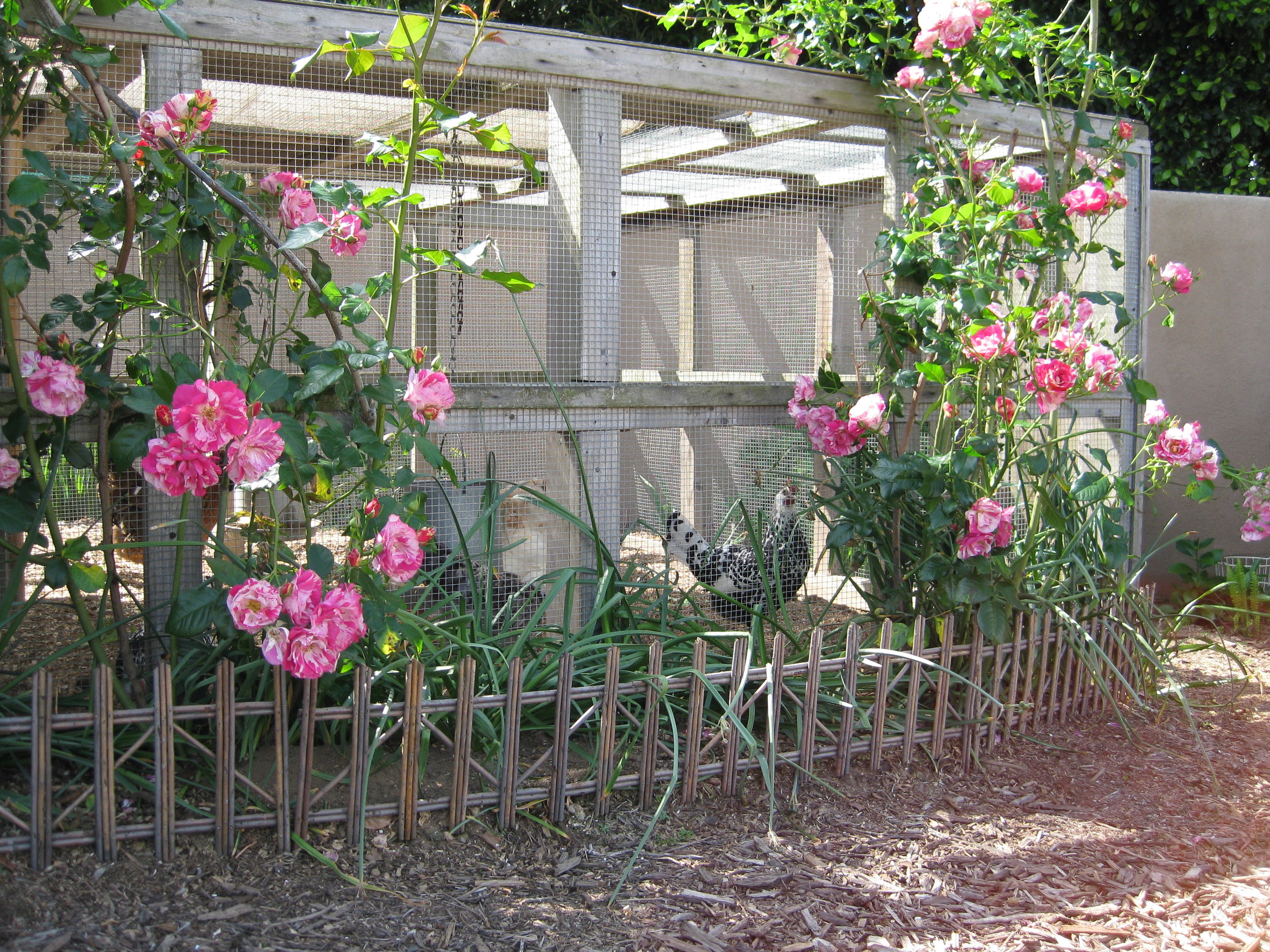
Outside Pen at Coop de Manion Announcing VintageGardenGal's premier "Chicken Coop Photo Contest." I hear from some many of you around the world regarding your chickens and coops, I'd like to see them! Spring has got to be the best time of year to show off your chicken coop, so I thought it would be fun to have a photo contest.

I believe that chicken coops are an extension of our garden. Are you concerned about where your food comes from?  Do you enjoy fresh food, steps away from your kitchen? Having backyard chickens is a fun step in a nice direction.

What kind of chicken coop do you have? Did you inherit it when you bought your present home and property? Is it designed out of flea market finds? Did you buy a chicken coop kit? Did your dad build it for you? Did you have an existing barn or shed on your property that you modified? How many chickens do you have?

How is it decorated? How does your chicken coop integrate with your garden or property? What is important to you about your chicken coop? What do you love about having chickens in your backyard?

Submit your winning chicken coop photo to bonnie@vintagegardengal.com within the month of May 2010. Along with your photo, send a brief explanation of what motivated you to have chickens, how you created your chicken coop, how your chicken coop ties in with your garden or property, any chicken coop details you would like to share, and generally where-in-the-world you are located. One winner and two runner-ups will be announced in June 2010. Their brief story and photos will be shared on VintageGardenGal.

VintageGardenGal will return next week.