Fall Hostess Gift or Party Favor

Fall Hostess Gift or Party Favor Chances are if you are not cooking this Thanksgiving, you've been invited to share Thanksgiving with family or friends. With the special holiday just days away, it is not too late to put together a small thoughtful gift for the hostess or host.
Chances are the hostess or host who has invited you, is an enthusiastic cook, and enjoys sharing their feast of delectable dishes.

Chances are you might really "wow" them bringing them a simple gift of a well-chosen spice. Chances are your might be invited back real soon.

Start with a small brand new cellophane bag, you can get them at craft stores. Fill the bottom with colored raffia or tissue paper. Choose an outstanding spice, and tie up your bag with a fun fall ribbon. It's a simple gesture, and a gift which captures the spirit of "being thankful."

Choose spices that might be slightly uncommon. A few of my favorites are Ceylon "True" Cinnamon, Coarse Grey Sea Salt, Madras Curry Powder, and Smoked Paprika. You can find special spices at Sur la Table, Home Goods, Marshall's, and even the Dollar Stores.

This gift doubles as a great fall party favor, too. It is simple to do, easy on the budget, sends your guests home with a little memento, and a "thank you" for coming.

Do you have hostess gift ideas to share? Please comment on your favorite spices?

How To Grow Perfect Paperwhites

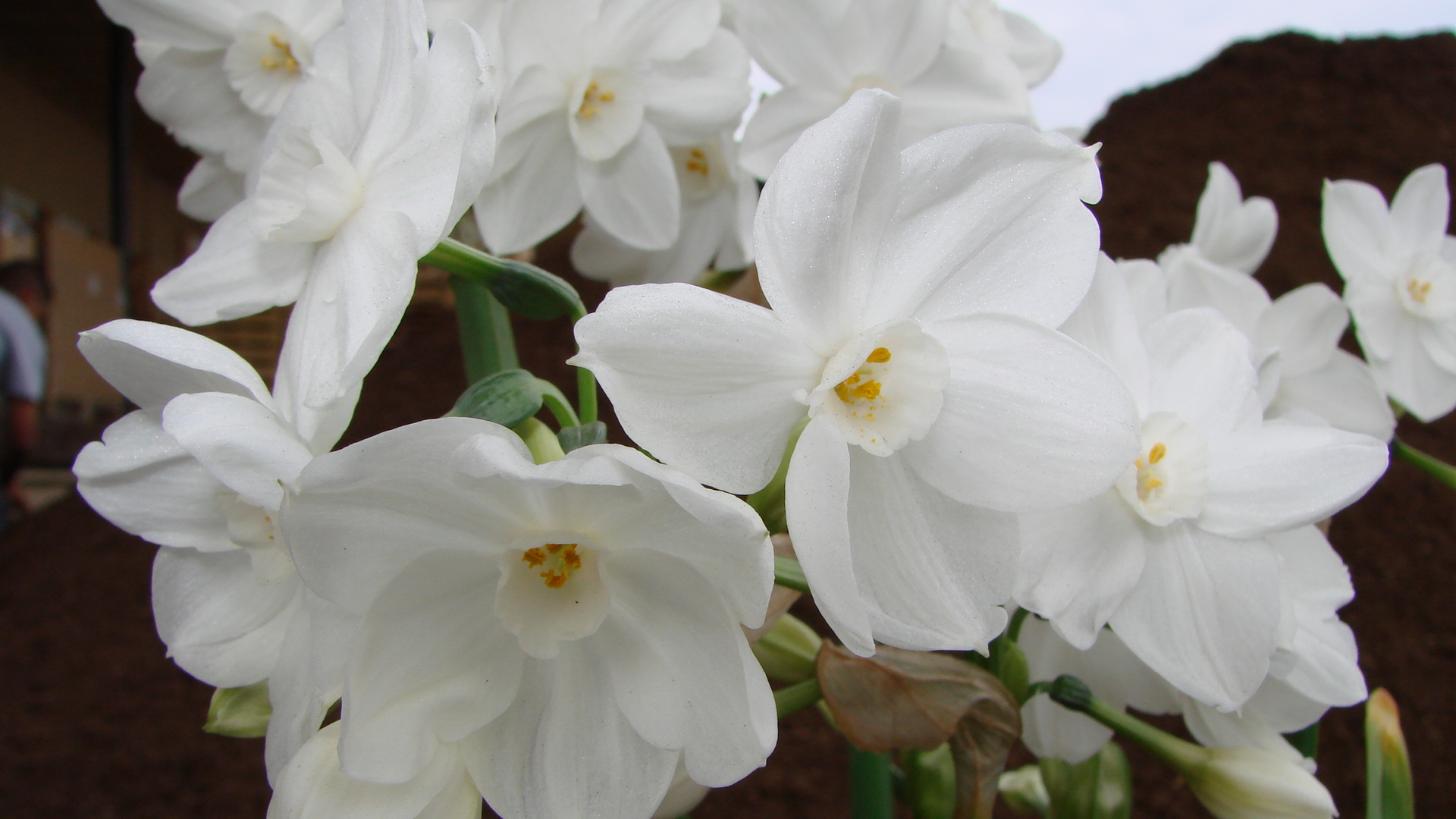
Perfect Paperwhites, Photo Courtesy of Easy To Grow Bulbs For perfect paperwhites for the holidays, I asked the friendly bulb specialist, Easy To Grow Bulbs, for their expert advice. Easy To Grow Bulbs is a mail-order company which specializes in "bigger, better bulbs for warm weather gardens." I thank Kathleen McCarthy, Head of Customer Service, for graciously writing and navigating us through "How To Grow Perfect Paperwhites."

For those familiar with growing paperwhites, the benefits enjoyed are many. Fresh, fragrant flowers are easily and quickly grown indoors for the holidays and to brighten the grey days of winter. In mild winter climates they make terrific additions to the garden bed after the blooms are finished -- returning to bloom every spring, deterring gophers and deer all the while. Truly a wonderful addition to holiday décor, gift-giving, and as an early breath of spring.

Paperwhites have in the past, been just a bit short of a perfect experience, however. While many love the fragrance they offer, some find it entirely too much of a good thing, and long for varieties with a lighter scent. And just about everyone has had their paperwhites grow too tall with the stems and leaves flopping over. Whether this has happened occasionally, or every time you have grown paperwhites, you probably found creative ways to support them, wishing they would just stay straight and strong on their own. Now there are solutions to both of these issues – paperwhites can now be perfect.

For classic paperwhites with a less potent fragrance, I suggest the Inball paperwhite variety, http://www.easytogrowbulbs.com/index.asp?PageAction=Custom&ID=169 With large, plentiful white blooms, Inball has the same musky fragrance as a typical paperwhite – just a lot less of it. If you think of a regular paperwhite as having a “gallon of fragrance,” Inball has just about a “cup” of that same fragrance.

Another less potent fragrance variety is the Wintersun paperwhite. It has a much lighter scent that must be appreciated with your face quite close to the blooms. With its pale yellow petals and prominent golden cups it is perfect for both Thanksgiving feasts, and as indoor sunshine for the long, grey days of January and February. Plant paperwhites at 2-3 week intervals to enjoy months of flowers and fragrance!

Tired of paperwhites flopping over just as they are ready to bloom. The reason – and solution -- is simple. Paperwhites prefer to grow in full, day-long sunshine. So, when grown indoors in dim light, they stretch, reaching for the sun they know must be up there somewhere. Where they stretch, they get weak, where they get weak, they flop over. No need to build a solarium to enjoy these beauties at their best, though!

Discovered by a professor of horticulture at Cornell University, the addition of a small amount of alcohol to their water keeps them straight and strong. It simply makes them unable to stretch, so they remain short and upright. Whether using hard liquor or rubbing alcohol, be sure to read the linked article to determine the proper dilution rate. Mix up a quart or so to use for weeks as your paperwhites need their water replenished. As an added benefit, the alcohol keeps the water algae free and crystal clear – an important consideration when growing paperwhites in pebbles and water. For more details on why paperwhites flop and how to stop it, go to https://www.easytogrowbulbs.com/index.asp?PageAction=Custom&ID=116. This really works!

Having growing, blooming plants in your home is a joy, and easy to achieve with paperwhites. Have fun, be creative; and regardless of the weather outside, enjoy a breath of spring!

For more information on paperwhites and warm weather bulbs, visit Easy To Grow Bulbs.

Pat Welsh's New Organic Gardening Book Released

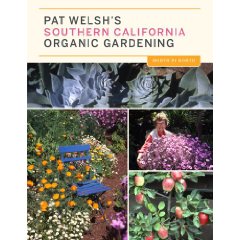
Pat Welsh's Newly Released Book For those of you who have been anxiously awaiting Pat Welsh's new organic gardening book, it is on sale now at amazon, Pat Welsh's Southern California Organic Gardening (3rd Edition): Month by Month According to Pat, amazon pre-orders are shipping now.

This is Pat's third edition of her Southern California, Month-By-Month Gardening book. I know first hand she has updated and rewritten tirelessly her classic book to incorporate organic gardening and organic practices for the avid Southern California gardener today. Pat Welsh is a garden guru. This is a great holiday gift for you, and the gardeners in your life.

A Glimpse Into An Artist's Potager

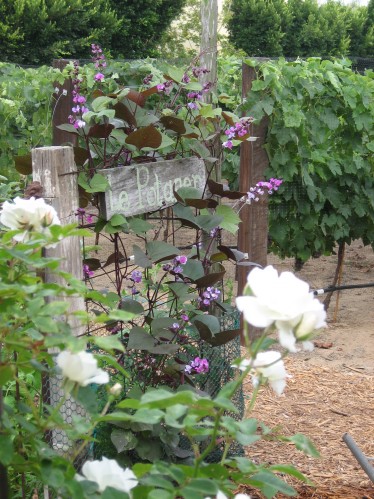
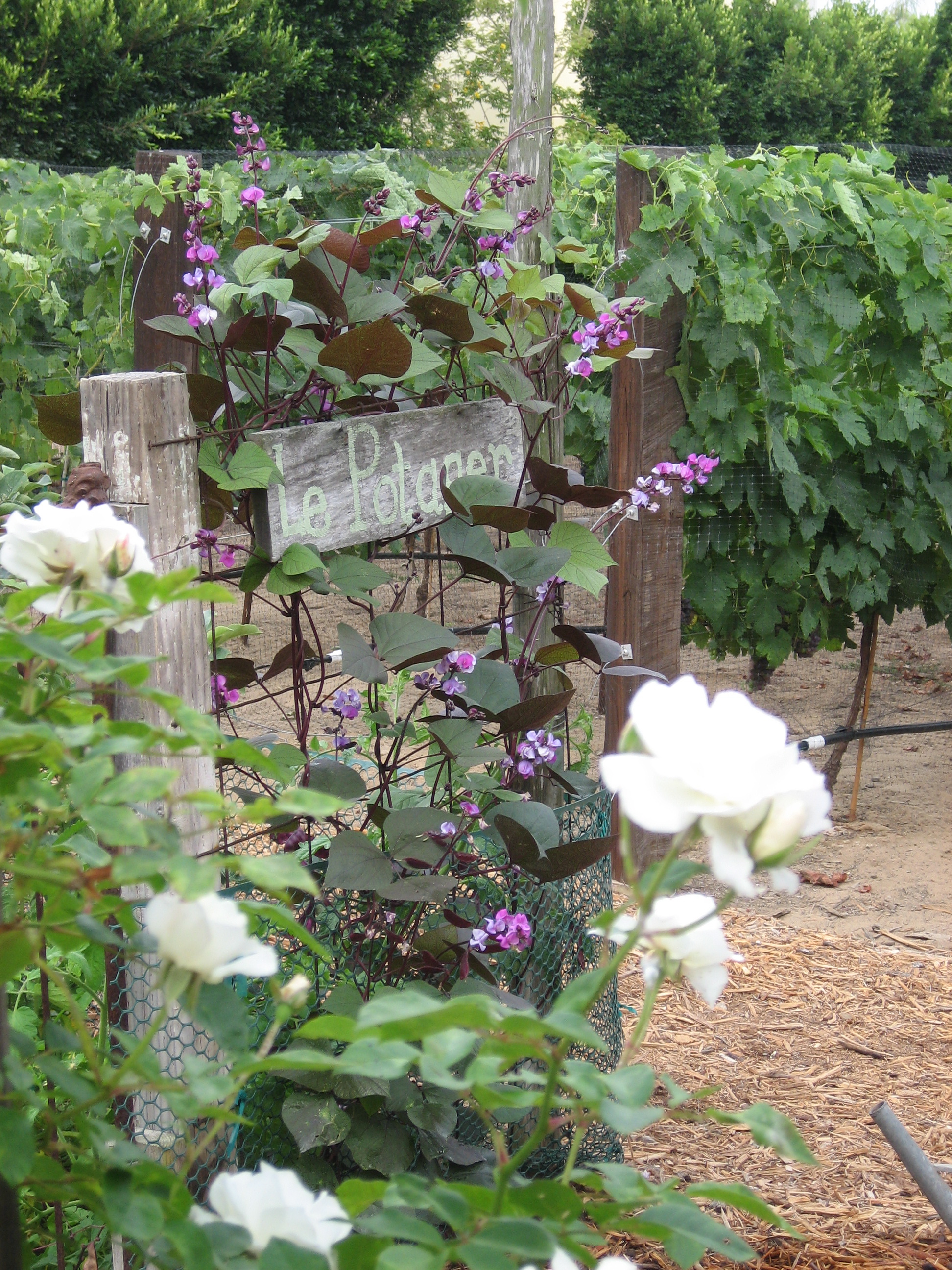
Kathy Lafleur's Potager Remember my dear friend, Kathy Lafleur, who has the incredible mosaic-decorated chicken coop? See VintageGardenGal's related post, Chicken Coop FAQ. Well, she has been working hard on her potager, and has allowed us to catch a glimpse.

If you recall in a previous post,7 Elements of a Potager I emphasized that you must create a potager in your personal style. Kathy has done an amazing job of emphasizing her potager elements in her personal style.

Kathy's entrance into her potager is a newly designed archway "welcoming" you to come in. A work in progress, she has made and grouped clay bluebirds and mirror squares, as her beginning mosaic design. On the opposite side of this arch she has planned a surprise for those entering her potager, two espaliered fig trees, whose structure and design will eventually echo the curved archway.

Look closely through her archway and you can see two tall focal points, the first one, a towering Spanish three-tiered fountain, replacing water with heat-loving spilling succulents. More of Kathy's artistic ceramic birds adorn its top and pay homage to the "goodness of the garden." The second towering focal point is her genius "totem" pole, created from her inspiring collection of European vintage watering cans. A straight rod anchors each watering can, and keeps them precariously in place. Kathy's watering can "totem" pole, is an excellent example of repetition. See VintageGardenGal's related post, "Repetition is Design". The simplest things in repetition can create fabulous design.

The heart and soul of any potager are the plots or raised beds. Kathy has several raised beds painted in a vibrant green, to show off each season's vegetables and flowers. Ample gravel pathways allow easy access and working area for each raised bed. Her entire potager is enclosed by a low clay brick wall, enclosure another important element of the potager.

Kathy Lafleur's potager is so inviting, so artistically well-done, when you are in her potager you don't want to leave. It is as functional as a kitchen garden, as it is artistically beautiful to enjoy. When planning your potager, create it in your personal style.

Have you thought of mixing art with functionality in your potager? Do you have a favorite collection you can create something with?

Feed Your Blueberry Bushes Coffee Grinds

Just-Picked Blueberries In Vintage Berry Basket Home-grown blueberries were recently highlighted in a post written by Sharon Cohoon, Sunset senior garden writer at Sunset's creative garden blog, Fresh Dirt, Fruit For Your Cereal In One Container. Her words reinforced my own experience growing blueberries, and especially for every syrah grape grower, one must not miss the mentioned recipe, "Blueberries in Black Pepper Syrah Syrup."

Blueberries have a lot going for them. The bush itself is extremely attractive and has year-round foliage interest. In the fall, some blueberry bush varieties turn autumn hues. Its berries are hailed as a super antioxidant food, which destroy harmful free radicals in your body. Blueberries are delicious, beautiful, and versatile in our diet. Blueberries are great in your cereal for breakfast, as Sharon Cohoon mentions, add flavor to breakfast breads and muffins, add surprise in summer salads, and are a crowd pleaser in desserts such as cobblers, crisps, and home-made ice cream.

Here are some economizing tips that have helped me grow happy blueberry bushes. Plant your blueberry bushes in a large container. Look for halved used wine barrels on sale. When planting, be sure and use a large portion of peat moss in each container. Make sure your blueberry bushes are in a sunny area, and give them moderate water.

Plant at least two different types of blueberry varieties, specific to your climate zone, for a better abundant crop over all. Look for possible bare root blueberry varieties available for sale during the winter season. I currently have Oneal and Misty varieties.

Blueberry bushes are acid-loving plants. Until recently, I would add cottonseed meal to my blueberry bushes for acidity, but now I regularly sprinkle used coffee grinds for the same purpose, at the base of my bushes and mixed thoroughly into the soil. Just be careful not to over do it. This was a hot tip from a blueberry specialist at the local farmer's market.

Are you growing blueberry bushes now? Please share with us what variety has worked best for you? Please comment on your personal tips for growing blueberry bushes.

Happy Home-Grown Pumpkins

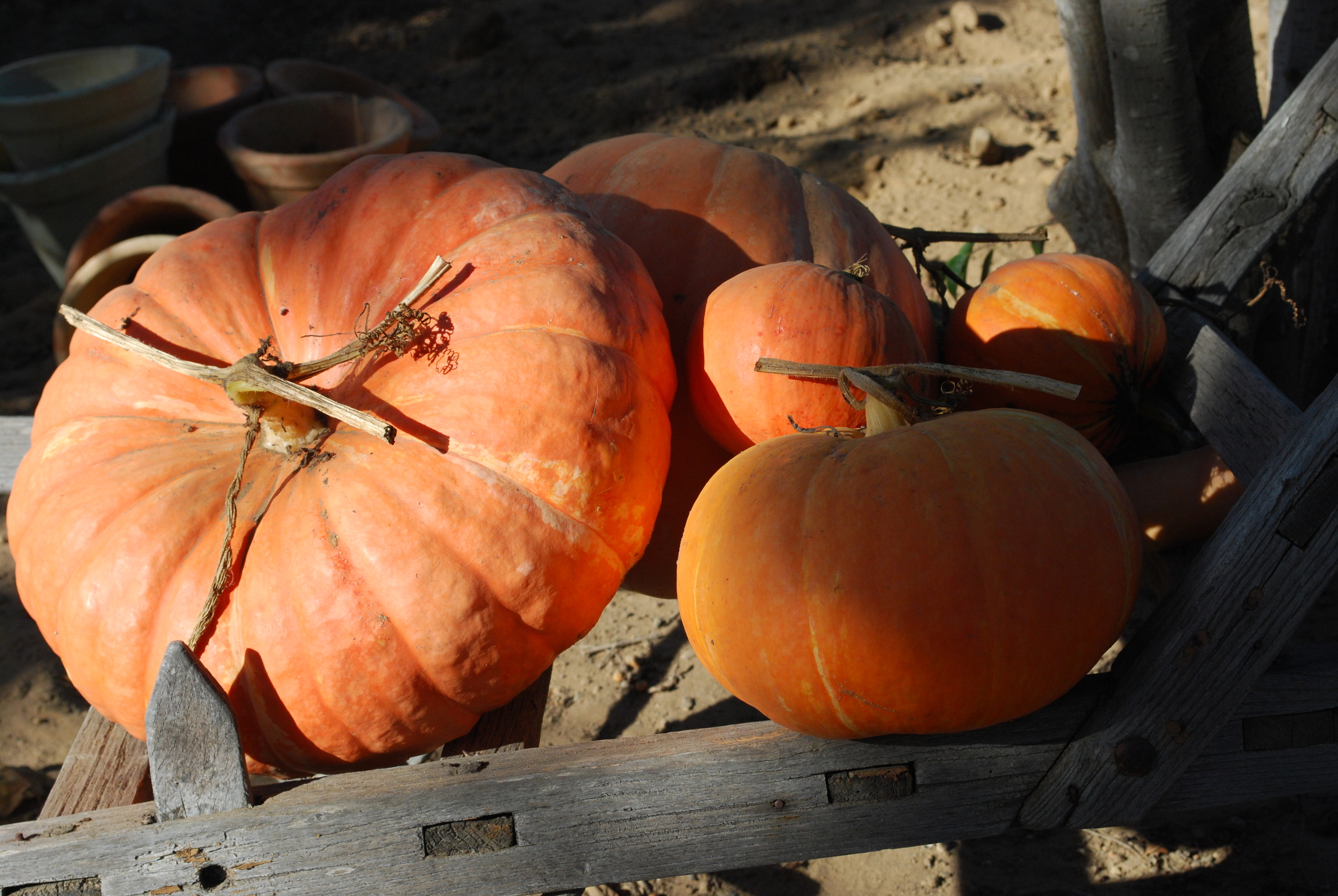
Home-Grown Pumpkins Awakening To  A New Day These pumpkins were started by seed back in June in my potager. By fall, they are mature and ready for harvest, marking the symbolic end of the fall potager. It is much more economical and fun to grow your pumpkin varieties by seed. Save seeds from your favorite pumpkins, dry them, and store away till next year.

Experiment and grow a variety of pumpkins next year in your potager. There are specialized pumpkins for eating, decorating, carving, and especially miniature, as well as massive pumpkins that children love.

For all of you pumpkin fanatics, in 2004 Amy Goldman, author, and Victor Schrager, photographer, wrote this comprehensive "must buy" book, The Compleat Squash: A Passionate Grower's Guide to Pumpkins, Squashes, and Gourds. In the back of her book, Amy shares with her readers an incredible selection of squash-based recipes. One of my all-time favorite soups, is her Southwestern Winter Squash Chowder.

Southwestern Winter Squash Chowder Serves 8. Amy writes, "You'll never miss having clams in this thick, hearty, and pungent chowder. To reduce the calorie count, use milk in place of half-and-half and eliminate the cheese." I say, if you're making this soup once or twice a fall season, "go for the works."

2 tablespoons olive oil 2 tablespoons unsalted butter 3 cups coarsely chopped onions 1 large red bell pepper, finely chopped 1 large green bell pepper, finely chopped 2 tablespoons seeded and minced jalapeno pepper 1/2 cup all-purpose flour 1 teaspoon kosher salt 1 teaspoon red pepper flakes (optional) 8 cups chicken or vegetable broth 3 cups peeled, seeded, and diced squash, cut into medium dice 2 cups peeled and diced potatoes, cut into medium dice 3 cups fresh or frozen corn kernels 1 1/2 cups half-and-half 2 1/2 cups grated cheddar cheese 1/2 cup chopped fresh coriander, for garnish Croutons

Heat the oil and butter in a large, heavy-bottomed stockpot over medium high heat. Add the onions and peppers and saute until the onions are transparent, about 5 minutes. Add the flour, salt, and red pepper flakes and stir until blended. Stir in the broth, squash, and potatoes. Bring to a boil and then reduce the heat to low and simmer, covered, until the potatoes and squash are tender, about 20 minutes.

Add the corn, half-and-half, and cheddar cheese to the chowder and stir them in; cook for a few minutes until the cheese has melted. Adjust the seasonings to taste, garnish, and serve with croutons.

Enjoy!

Do you grow your own pumpkins? Please share your favorite type of pumpkin? Please comment on your favorite pumpkin/squash recipe.

Beginning Of A Home Remodel

Domaine de Manion Remodel Autumn is one of my favorite seasons of the year. Normally, I would be sharing so many tips, photos, and ideas with you this season. However, we have embarked on a home remodel this past month which has been many years in the planning, and has already to proved to be an adventure. Since this project is expected to take a year, I thought I would share with you some of the highlights of this remodel as we go along. Don't worry, my roots for this blog are still in the garden.

Our remodel vision was to create a home which was more comfortable, more energy efficient, an enhancement of our views, and to integrate our home and garden more fully. It's a little bit scary. It's a little bit fun. It's a little bit unknown. Please follow along with us, my husband and me, on our journey as our Domaine de Manion remodel unfolds. Yes, our "Hollywood girls" and "French girls", aka our beloved hens, are fine and are enjoying all the new freshly turned dirt and excitement.

Our spanish style home was originally built in 1930, and was one of only three homes back then in the area, all the way to the Pacific Ocean a mile away. Our home sits a top a gentle rising coastal ridge about 300 feet above sea level. A massive mature Italian Stone Pine and Torrey Pine tree dominate our home and property, and act as subtle protectors. We're saving our charming home and pushing out on its west side and south side. We're building a stand alone "barn" which among other uses, will have a wine-making room.

I keep saying to myself, to embrace the journey as much as the destination.

Have you gone through a home remodel? Do you have any tips to share? Please comment on your remodel experience.

7 Elements Of A Potager

A Potager Changes With Each Season There are many different sizes and styles for a potager, or year-round kitchen garden. In fact, it is important to create a potager in your own personal style. Generally, a potager is a small plot, large enough to feed a family with daily fresh vegetables, accented by fruit and flowers.

Choose your site wisely. A potager is a permanent year-round growing plot which is functional, as well as beautiful. As the months roll into years, you will spend a lot of rewarding time in your potager. Enhance your personal potager by where you locate it, what you grow, how you enclose it, how you adorn it, and how you manage it.

There are many wonderful elements which embody a potager such as enclosure, pathways, borders, structure, order, chaos, beauty, small trees, garden ornaments, the intertwining of function and beauty, and the romantic mixing of vegetables and flowers rotating through their seasons.

Elements That Define A Potager

1)A potager is usually defined by some type of enclosure. Enclosure can be defined as walls, fences, thick hedges. Some of these enclosures can be a working surface for your potager, for espaliered fruit trees, support for tall plantings, and heat retention. Enclosure protects from competing critters and forces such as wind.

2)Pathways are important to divide your plots, create travel pathways, and working space to care for your potager. Pathways may be made of materials such as coarse mulch, gravel, bricks, cement, or even bare soil.

3)Borders can be of a permanent design, for instance growing a low boxwood hedge, a "wood box" edge, or a stone border. Borders may also echo seasonal plantings such as a marigold border, or ornamental cabbage. Like borders will create a formal design in their repetition.

4)Structure is the bones of your potager. Structure can be vertical in the shape of an arbor, small trees, a garden ornament. Structure is also walls, gates, and even terraces. Structure adds interest, and further defines the personal style of your potager.

5)Order versus chaos. You might prefer a very formal potager, set out with boxwood borders, and neatly confined rows of planting. Your potager might start out with order, and as it grows becomes chaos, or a more romantic mixture of vegetables and flowers. Or your plantings from each seasonal beginning may by more informal, such as planting wildflower seeds.

6)Center a focal point in your potager such as a small tree, garden ornament, urn, statuary. In my potager I have planted a bay laurel tree trimmed into a two-ball topiary. A focal point might also be an impressive artichoke plant, which renews itself year and year. More examples of possible focal points are a sundial, bird bath, obelisk, or a planted arbor.

7)Place a convenient tool shed or small building where you can keep all your tools, seeds, perhaps a potting shed, and your other potager resources at hand.

Divide your potager into plots, or if you have raised beds, begin dedicating each plot or raised bed with specific seasonal vegetables you would like to grow. Remember to plant your tallest plants to the north of your potager or in the back plots of your potager.

You can start your potager with any season. Whatever season you start with plant about 2/3 of your potager, and leave 1/3 free to be planted later. For example, create a 9' x 12' plot. Divide your plots in to four rows of three plots each. Begin your potager by planting 9 of your plots, leave three of them empty. Another example, if you have 4 existing raised beds, plant 3 with seasonal vegetables, and leave 1 free to start planting when appropriate for the next season.

Eventually, your potager will slowly move into the next season, as your vegetables mature, are harvested, each plot is tilled, and replanted for the next season. Remember to keep a portion of your potager empty in anticipation of the next planting season. It will take a while to get the "ebb and flow" of it. Eventually, your potager will become fluid.

Everyone has their own timing with the four seasons and climate-specific vegetables, fruits, flowers, and herbs they can grow. Adapt your plantings to your own seasons, and your own preferences. Classic perennial favorite herbs for a potager include rosemary, thyme, oregano, marjoram, and tarragon. Other classic plantings for a potager might include strawberries, melons, annual herbs, espaliered fruit trees, and then of course, the rainbow of seasonal vegetables.

Do you have a potager now? How do you plant and manage it? What is unique about your potager?