High Spirits On Harvest Day

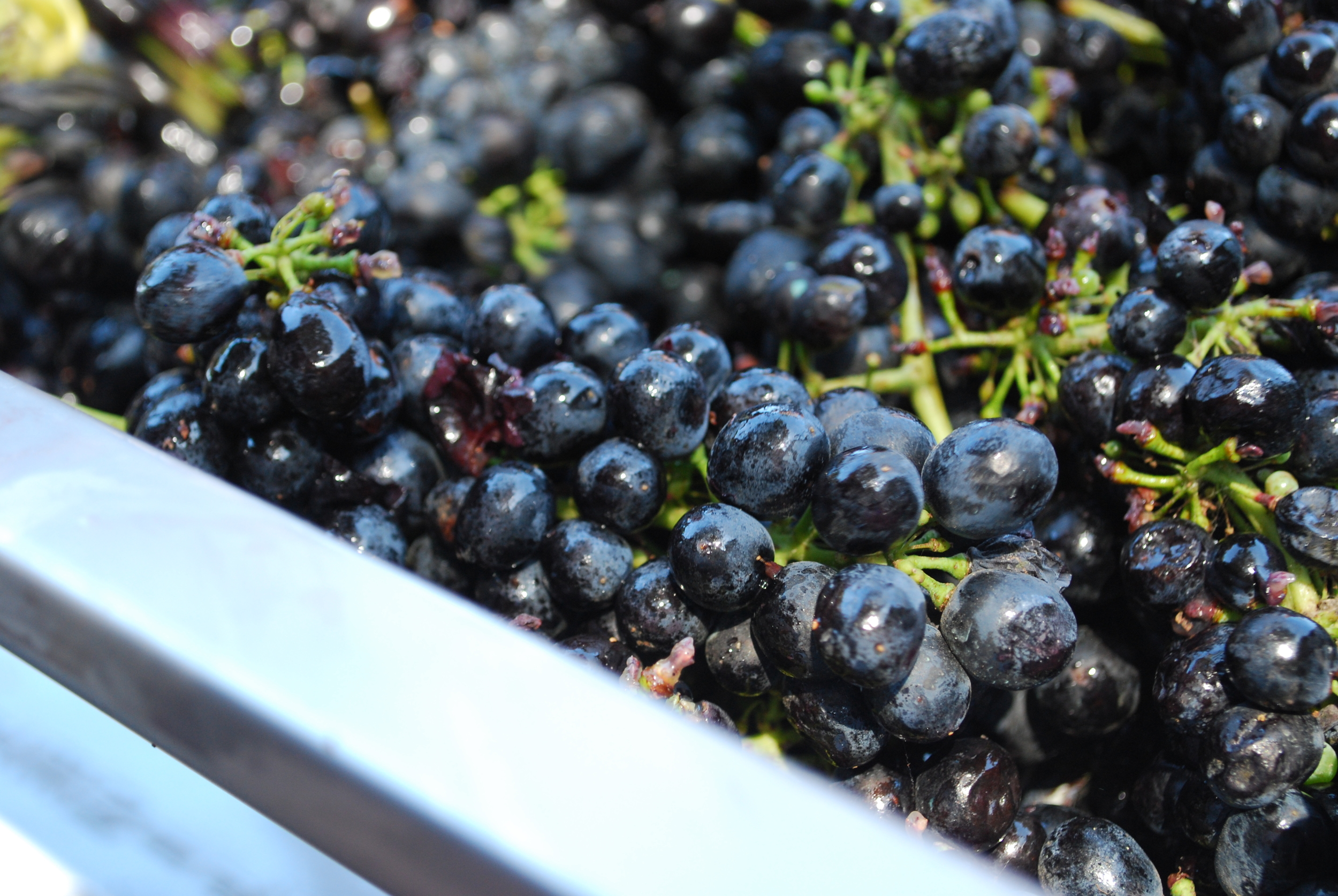
Just-Harvested Grapes Going Into Auger It is an accumulation of hours and days spent tending the vineyard. It is thousands and thousands of footsteps taken through the rows of vines with care. It is the weather and how it behaved throughout the year. It is the vines, and how themselves continue to grow and mature. It is how the grape clusters formed and dangled effortlessly from the vine. It is the end of our fourth growing season, and beginning of our second harvest. Every year is different, and what makes every vintage its own personality. It is our 2009 vintage. Consequently, there are high spirits on harvest day.

With an army of enthusiastic volunteers, armed with garden clippers, we all assemble to get hands-on instructions, and hear a blessing for this harvest. Last year's "Harvest Blessing" brought us great grape-growing weather, and beautiful grape clusters. In the photo above, our just-harvested grapes look so beautiful and luscious, you just know they taste delectable and are going to become a very drinkable and desirable wine.

We suggest to our volunteers to find a row partner, and harvest a row together. In 5 gallon clean buckets the grape clusters are carefully clipped off of the vines and dropped into the buckets. When the bucket is full, the bucket is brought up to the sorting table and crusher/destemmer area. Grape clusters are spread out on a large table and carefully checked for an undesirable grapes or clusters. The sorted grapes are then collected in a 40 lb lug, and dumped into the crusher/destemmer and augured to gently seperate the green stems and break open the grapes. This process creates a thick mixture of grape skins, seeds, and now juice.

This mixture is then poured into food grade plastic barrels, and cooled down with dry ice to mid 50 degrees F. The next day, it is brought back to room temperature, and the desired yeast is added to start the fermentation process.

Once all of the grapes have been processed, all of your equipment must be thoroughly cleaned, rinsed, and sanitized for their next use. This is one of the cardinal rules of wine making, always thoroughly clean and sanitize your grape processing equipment immediately after use.

With the grapes mixture carefully taken care of for the day, the "harvest feast" can begin in earnest, and everyone can rejoice in the newly harvested grapes which will become "vintage 2009". It is a time of celebration and high spirits.
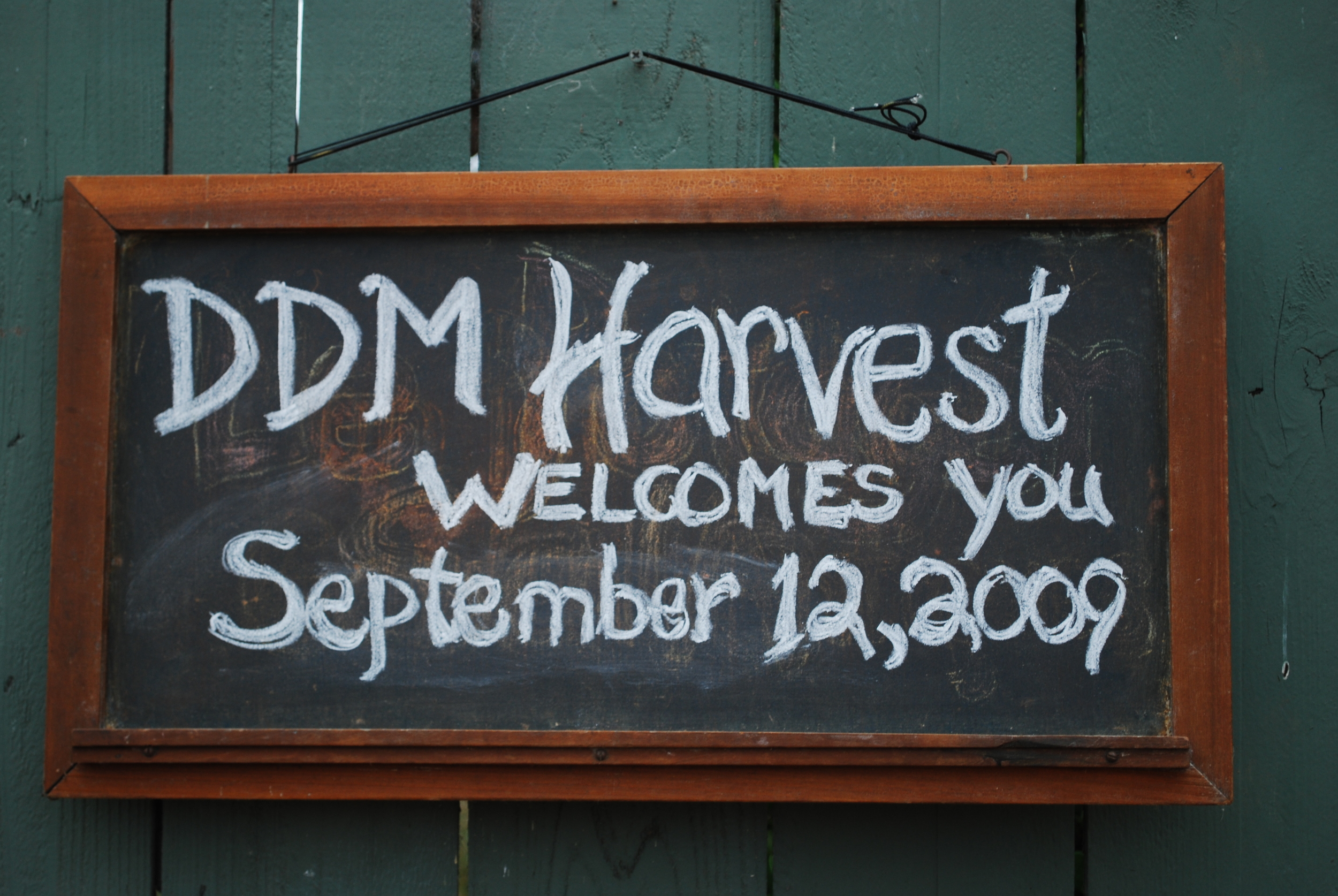
Harvest Welcome

Have you ever been to a vineyard harvest, and vineyard feast? Do you ever think about all that went into the making of a wine, when sipping wine from your glass?

Chickens And Children

Children Are Fascinated With Chickens There is something about chickens which just fascinate children. Whenever we have children visiting, it is always the chickens and chicken coop they want to venture to first. Maybe, it is because they don't have the opportunity to see chickens, other then in a book, or at the zoo. Maybe it is because chickens are relatively small in size, generally not aggressive, communicate in "coos and clucks", can be hand-fed treats, and often are as curious about children as children are about them.
If you have children, and you are thinking of getting chickens, I would encourage you. First, make sure you are zoned correctly for chickens. Second, research what breeds of chickens make the best pets. Third, know your children would treat your new hens as pets and with loving care.

When I say chickens, I really mean hens, and not roosters. Roosters can be aggressive, and are not for children, or some adults for that matter. Although roosters can be quite beautiful and magnificent in plumage, there is their daybreak cockle-doddle-do, sharp leg spurs, and aggressive territorial nature. Generally speaking, roosters are not for children.

I think chickens and children are a natural mix, because chickens can introduce them to, and teach them many beginning life lessons.

1) Hens can teach children about discipline and routine. Hens are living creatures, and must be cared for every morning and night. Hens must have feed and clean water every day. Their manure must be cleaned out and properly managed. In winter, and in bad weather, they must be protected from the cold, wet, drafts, and dampness. Chickens entertain themselves easily, and can thrive in a safe protected environment. They can not however, be neglected.

2) Hens can teach children beginnings about where their food comes from. They might actually observe a hen laying an egg, and what she goes through to lay that egg for them. Children may have the experience of holding a just-laid egg, still warm from a hen's body. A child might have the duty of collecting eggs every day as one of their chores.

3) Hens can teach children love. Hens if handled kindly from an early age can easily bond and become very tame and affectionate with whomever they see all the time, and who takes care of them. If allowed to roam out in your garden, chances are they will follow your children around in your yard, wanting to be close to them, too.

4) Hens can teach children about distinct personalities and traits, that become more pronounced over time. Let your children name their hens, and follow their personalities and observe their traits. We as people are not all the same, and neither are chickens.

5) Hens can teach enterprising children the basics of business. Children can catch on to how much it costs to keep their hens, deducting those costs from their egg sales. Who wouldn't want to buy fresh, oh-so-tasty organic eggs from your entrepreneurial son or daughter in the neighborhood.

6) Hens can be a special time that you and your children share and spend together taking care of them. Watch how your children interact with the hens. Hens are so entertaining and fun. Hens are more entertaining than TV or video games.

Show your children the best way to pick up your hens, and practice this till your children are comfortable. Never pick up a hen from her neck, wings, feet, or legs. Bend down, put both hands firmly, but not squeezing, over the side of her main body, keeping her wings close to her body and unable to flap. Pick her up gently, and hold her close to your body, and under your arm. When putting her down, keep her wings still against her body, and gently lower her to the ground. Never drop her. Hens are hardy, but also fragile. If unsure how your child or children will react with hens, always supervise them.

Depending on the age of your children, you might want to start out simply with letting your children pet your hens, feel their soft feathers, and possibly hand-feed treats of lettuce. Let your children visit them everyday. Gradually as your children get a little older, and more comfortable with your hens, introduce other aspects of taking care of them.

Generally speaking the smaller simple-feathered Bantam breeds are a nice size for small children. I always have enjoyed the Buff Orpington, Wyndotte breeds, which fall under the heavy-weight homesteader breeds. Although docile and easy going, these breeds might be too heavy for children to pick up. Some of the fancier designer chicken breeds are more skittish, and have more upkeep with keeping their feathers and plumage clean. Read up on chicken breeds with detailed descriptions of life spans, general traits, and you will find the best breed for you and your children. It is a personal preference.

Do you have chickens for your children now? What breed of hens do you have? Do you think having hens has been a valuable experience for your children?

How To Fan Espalier A Fruit Tree

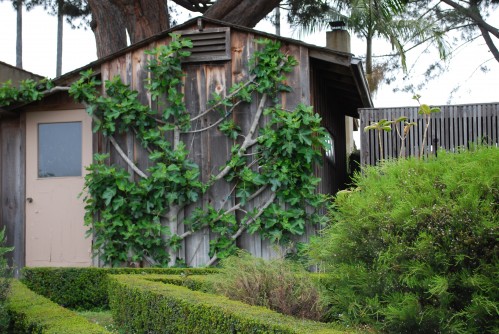
Black Jack Fig Tree Awakening In Spring There is a lot of interest in espaliered trees right now. It is an art form, visually attractive, and espaliered trees lend themselves easily to small spaces with high fruit yield. For espalier basics, including how to plant your tree initially and espalier patterns, see related post, The Art of Espalier Fruit Trees.
I have this wonderful shed in my middle garden that faces west, which I thought would be great to espalier a tree on. I chose a fig tree because they can cover a large area, and architecturally their branches, leaves, and fruit are so appealing.

Winter time, in Southern California, offers the best selection of dormant fruit trees, and is the best time to plant them. I started with a bare root Black Jack fig tree, which was about the size of a standard broom handle. It did have buds forming on its trunk, and that is what you look for. The buds on a dormant fruit tree trunk are the potential cordons or arms that grow out horizontally, and become your pattern.

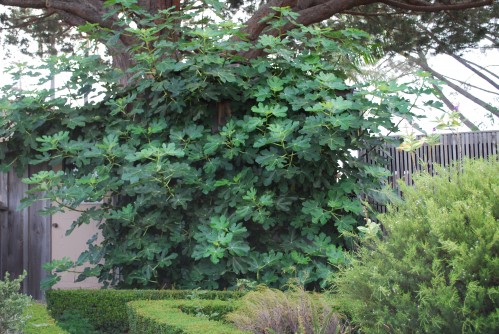
With an espaliered fruit tree, you are going to need the support of a building or a wall of some kind. Mature fruit trees laden with fruit have some weight to them. See photo below.

How To Create A Fan Espalier Pattern For A Fruit Tree 1) Find your location. It should be a sunny west or south facing spot, year round.

2) Research your ideal fruit tree for your particular spot. The fan espalier pattern is an easy pattern to follow, and can cover a large surface. Some fruit trees lend themselves better to certain patterns than others. Popular fruit trees which are well suited for a fan espalier and informal fan espalier pattern are currant, gooseberry, fig, loquat, peach, nectarine, oriental persimmon, pineapple guava, and pomegranate.

3) Materials Needed: 12 to 14 gauge wire, 9/16″ double-pointed staples for wood fencing, wall mounts for masonry and corresponding equipment for stucco/concrete walls, bare root fruit tree preferably with ample buds on its trunk, compost, shovel, sharp clippers, green garden tape, chalk or marker, wire clippers, pliers and tape measure.

4) Chalk on your building or fence where your bare root fruit tree is going to be located. Measure in 18" increments, starting from the soil level, where each horizontal gauge wiring will go. Implement the gauge wiring horizontally across the width of your building or fence area in the 18" spacing increments. The gauge wiring is secured with 9/16" staples, if it is a wood structure. Now you have your support wiring in place. Plant your fruit tree at your chalked spot.

5) A fan espalier pattern is a basic pattern. On both sides the cordons grow from the fruit tree trunk, and angle upward and outward in a fan shape. Fruit tree buds emerge as shoots which are green, pliable, and delicate. As the fig tree buds begin to grow into shoots and eventually cordons, gently secure them with a bamboo stake and green tape against your building. Using green tape, make sure your bamboo stakes are also secured to the gauge wiring for support. This will train your cordons to stay in place.

6) In the photo above, you can see I persuaded my fig tree to grow above the shed door, too. Eventually, your fruit tree will mature, and become its own support. You can remove the bamboo training stakes and green tape, but keep the wire gauge in place.

Black Jack Fig Tree In Fall Full Glory

7) The photo immediately above, captures the same mature fig tree in full growth in the fall, and laden with ripening figs. I prefer to let my fig tree "go wild", and not prune it back till it is dormant, and leaves have fallen off in the winter. If you wish to see more of your espalier pattern, then you must prune your fruit tree in the summer, and as necessary.

A fig tree has wonderful large leaves that cover quickly your whole espalier pattern in the course of the year. If you planted another type of fruit tree, chances are the leaves would not be as large, and your pattern would be more visible without a lot of pruning. With espalier patterns in general, pruning is a necessary part of keeping the pattern. If you have a smaller building or fence to espalier on, and a different type of fruit tree, you could space your gauge wiring at 12" increments.

To get started, start with a fruit tree that you like, grows well in a fan espalier pattern, and is ideal for your location. Follow the basic espalier fan pattern above. Have patience as your fruit tree begins to grow. It can take a few years to create your mature pattern.

Do you have an espaliered fruit tree in your garden? What kind of fruit tree is it? What pattern is it? Did you espalier it, or did you buy it espaliered? Where did you see your first espaliered fruit tree?

Welcome To My Garden

Welcome To My Garden September 4, 2009 marks the one year anniversary of VintageGardenGal, a garden lifestyle blog. Many thanks to those who have visited in the past year, your wonderful comments, and enthusiasm. May those who are drawn to this blog, continue to find valuable information, creative ideas, musings, inspiration to dream, and most important, welcome more garden into your lives.

A garden is a sanctuary, it is reflective of the person that cares for it. Make sure your garden is "welcoming" to you, your family, your friends, and invited guests. You want your garden to convey a cheery happiness, and an underlying message that it is well taken care of. Here are a few simple suggestions to make a garden welcoming.

Explore color and plant combinations that are visually beautiful, and maybe a surprise to the eye. One of my favorite books for plant combinations, colors, and inspiration to buy for your home library is Shocking Beauty by Thomas Hobbs.

Create a special spot or garden room that is accessed by a meandering path to a bench under a shady tree. It can be a special spot to rest and gather one's thoughts, even meditate. It can be a spot to entertain and share a glass of lemonade.

Surprise those making footsteps in your garden with a weathered adorable vintage gnome peeking out from under your favorite shrub, or a beautiful garden ornament in a sun-laced clearing. These pieces can be subtle, yet yield a smile.

Scour flea markets and garage sales for time-worn wood buckets or wicker baskets to place in strategic places in the garden to toss a rogue weed or anything deemed for garbage. These pieces will blend in with your garden, and help you to keep your garden tidy.

Think of birds, butterflies, and wildlife in your garden. If your garden is full of songbirds, busy hummingbirds, fluttering butterflies, ladybugs, for instance, it enhances your garden and your time in the garden that much more. Design your garden with plants that attract wildlife. Place birdhouses in your garden. Keep fabulous bird baths, they are garden ornaments in themselves. Keep them clean and full of fresh water. If you have a lot of wildlife in your garden, chances are your garden is healthy and welcoming.

These are a few suggestions that I use in my garden. A welcome garden is a happy garden. What makes your garden welcoming?

Summer Economizing Tips For Roses

Tournament of Roses, Grandiflora Tree Roses How many of you have heard of Heirloom Roses? They are a year-round mail order rose grower, 25 miles outside of Portland, Oregon in the pristine Willamette Valley. Their roses are virus-free and grown on their own root. Not only do they have a thick "picture perfect" rose catalog available for sale, they showcase 1,500 rose varieties at their on site display gardens. Worth a visit if you are in the area. Last June on a "garden touring" trip to Portland, my friends and I had the opportunity to stop at Heirloom Roses for a visit and spontaneous tour by their "chief rose grower". Besides the lovely tour, she shared with us a few summer tips for roses.

One of the best tips she mentioned, and one I had never heard before was, feed alfalfa to your roses in the summer for a boost. Head over to your local feed store, rather than favorite garden center, and buy a 10lb or 25lb bag of rabbit pellet food, depending on how many rose bushes you have.

The main ingredient in rabbit food is alfalfa, and it is a lot cheaper to feed the base of your roses with 1-2 handfuls of rabbit food, than purchasing alfalfa meal supplement. As alfalfa breaks down it creates an organic fatty alcohol called triacontanol. Roses in particular, respond very favorably to triacontanol by forming new basal breaks and ensuing new growth.

Be sure and work in the rabbit food thoroughly around the base of your rose. You don't want to tempt the rabbits in your garden with your roses. Follow up by watering thoroughly, and observe how your roses respond. Alfalfa will give your roses a nice natural boost, and another mass flowering through the summer. I tried it, and it and my roses responded beautifully.

In my research to confirm the benefits of alfalfa for roses, I read where rabbit food is not recommended for roses because of its high sugar content. There is a pricing delta between "alfalfa for gardeners" and "alfalfa for rabbits". Returning to my bag of rabbit food for a closer look, I found alfalfa listed as the first ingredient, and amongst 33 other listed ingredients, cane molasses and corn syrup were listed last, so I wasn't convinced that sugar was present in a large amount. If you purchase rabbit pellet food, take a quick look at the list of ingredients. Alfalfa should be first, and some form of sugar if listed at all, towards the end.

Another tip to share with you, is look for "end of summer" rose discount specials. Nurseries and retailers are eager to pass savings on to consumers, and often have wonderful prices to move inventory. Keep your eye open for these specials. Plant your new roses at the end of summer, beginning of fall, and be one step ahead of the winter "bare root rose season" for one-half to two-thirds of normal pricing.

Do you have any summer rose tips to share? What are your favorite roses in your garden, and why?

Let Your Sunflowers Go To Seed

Drop Dead Red Sunflowers This is a new category first called "Garden Economizing", which will offer you wonderful economic and often ecological tips to save you money in your garden, yet enhancing your garden.
Do you grow sunflowers in the summer for flower arrangements? For a dramatic look in the garden? To feed the birds? Yes, sunflowers can become a living bird feeder in your garden....and for a seed packet price.

Two summers ago, I bought the seed packet Drop Dead Red Sunflowers from the Botanical Interests seed company, out of Broomfield, Colorado. See "Meet A Magnificent Mustard", at VintageGardenGal for a previous mention of Botanical Interests seed company. It is a big seed packet for $5.49, net weight 4 grams. Normally, I don't spend that much on seed packets, but their illustration and description lured me in. These "Drop Dead Red Sunflowers" are a beautiful array of various reds, burgundy, and yellow 4'-5' tall sunflowers. Perfect for fall.

I planted my entire "Drop Dead Red Sunflower" seed packet last summer, and they were beautiful in bloom. I let them dry, and go to seed. This spring, some of last year's "Drop Dead Red Sunflowers", reseeded once again, and began another growing season. I was thrilled. After enjoying their long-lasting blooms, I again let these sunflowers dry, and go to seed. This summer, I was rewarded with numerous eye-catching goldfinch every morning feasting in their usual manner, upside down on the bobbing sunflowers.

So for my $5.95 seed packet investment, I have had two growing seasons of sunflowers, and counting, and enough free wonderful natural sunflower seed for my delightful goldfinches to enjoy for a couple of weeks. It is important to note, that In your zone, in your garden, you will attract native wildlife birds to your garden that might not necessarily be goldfinches.

I also hang a year-round goldfinch feeder in our plum tree, for the pure enjoyment of watching these fascinating birds. I regularly fill it up with nyjer seed, a favorite goldfinch seed. Keeping our goldfinch feeder filled can add up, so it helps to supplement their food source with goregous sunflowers grown in the garden.

Add your thoughts, do you grow something special for your wildlife birds to enjoy? Do you have bird feeders in your garden? Do you think letting some of your plants go to seed for the birds, attracts unusual birds to your garden?

Italian Grilled Panzanella Salad

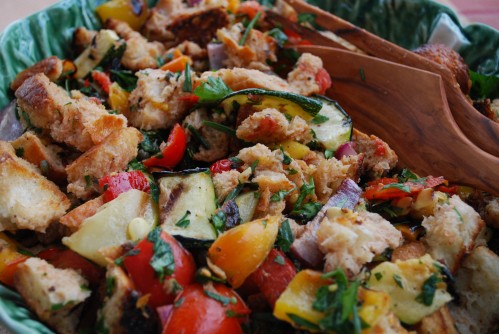
Grilled Panzanella Salad This classic Italian summer panzanella salad oozes with fresh flavors of summer, and takes advantage of your ability to jump in the garden and harvest bell peppers, heirloom tomatoes, fresh assorted herbs, and the last of your summer squash. I usually see panzanella salad with tomatoes, crusty bread, and mozzarella cheese, but like the twist of these added grilled summer vegetables.
I do think this is a very special salad, and one that is a crowd pleaser. There is some preparation time involved with quite a bit of chopping, grilling, and assembling. All of it, well worth it in my opinion.

I found this recipe at Epicurious.com, from Bon Appetit Magazine, August 2005, Grilled Panzanella Salad With Bell Peppers, Summer Squash, and Tomatoes. Although this recipe includes recommended Italian white wine pairings. I think a nice Sangiovese wine would be enjoyable, as well.

What recipes do you make with your summer vegetables? Have you made Italian panzanella salad before?

Syrah Grape Shows Its True Color

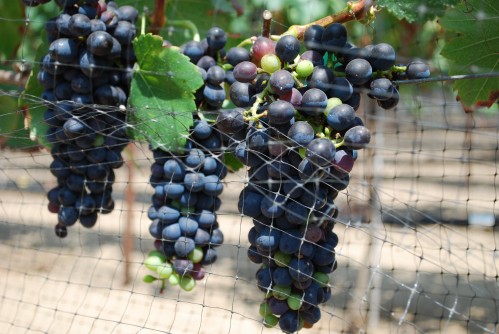
Ripening Of The Grapes Here at Domaine de Manion, our backyard syrah vineyard, it is late summer and our syrah grapes are showing their true color. Our syrah grapevines have a full vegetative leaf canopy, perfectly formed grape clusters dangle from their shoots, and now the veraison process begins. Veraison is the phenomenon of grapes transitioning in their development from hard to soft in touch, and their color transitions from green to their harvest color, depending on the grape varietal. Syrah, our vineyard grape varietal, is a very dark, inky black color when ripe and at harvest time. In the above photo you can see the color transition happening among the individual grapes.

In this process, the grape's sugar level will slowly begin to rise. Regular testing of your grape sugar content with a refractometer helps monitor your harvest time frame.

When grapes transition from green to their varietal harvest color of yellow, pink, red, or black, it is a signal to birds and wildlife, a food source is available and ripening. Netting your grapevines is invaluable in protecting your grapes from birds, raccoons, deer, and wildlife in general. Even our beloved chickens love the ripening grape clusters, jumping nearly a foot to reach the clusters, if they are not netted.

Our netting system is simple. Measure out netting the entire length of each of your grapevine row, and allow 3' on each end to secure the netting ends. Throw the entire netting over both sides of your grapevine row, and clip at bottom with wooden clothespins at spaced intervals. These nets can be used year after year, if rolled up and secured away in a safe place until needed the following year. Netting your backyard vineyard ensures your entire year's efforts and crop will not be lost. Netting is particularly important to the backyard vineyard, which is generally isolated, versus commercial vineyards where there are acres and acres of growing grapes.

It is an exciting time of year, harvest is in a matter of weeks. Do you have a backyard vineyard? Do you net your grapes from wildlife?