Posts in Provence
A Secret Garden in Provence

Chateau Roussan, A Secret Garden Please give a warm welcome to our second special guest writer, James Clay, in this "Encore Provence" series. Originally from Hampshire, England, James Clay is a world traveller and what I call a renaissance man.  James fortuitously settled in Provence over twenty years ago.  He calls home, a one hectare of garden Eden he has lovingly created over time,  just outside the town of St. Remy de Provence.

James is an incredible artist, sculptor, writer, and accomplished gardener. His Provence garden is filled with fruit, palm, pine and olive trees, plus many varieties of rare bamboo, flowering plants and shrubs. James also writes the witty column "Cocktail Drinkers Guide to Gardening" each month on Julie Mautner's, The Provence Post.

Today, James Clay shares with us his discovery of, in his words "the most romantic garden in Provence." Chateau de Roussan, has been lovingly restored by its long time owners, and has been recently transformed into an extraordinary hotel...VintageGardenGal

I found my ‘secret garden’ just down the road, in fact a short bicycle ride away. Years ago, I was cycling home from the village and thought it would be an interesting idea to try to find other ways back so, with this in mind, I turned down the next lane and continued due west. Rounding a corner, not much further along, I had to stop so I could take in the beauty of all that was before me. As in some Arcadian landscape painting of the 17th century, there was a shepherd guarding his flock of sheep which were grazing in a large meadow; an avenue of ancient, stately plane trees were reflected in a bassin in which a pair of swans were gliding among the shadows; and there set back, almost unseen, stood a glorious Chateau. This was one of those moments in life of sheer contentment.
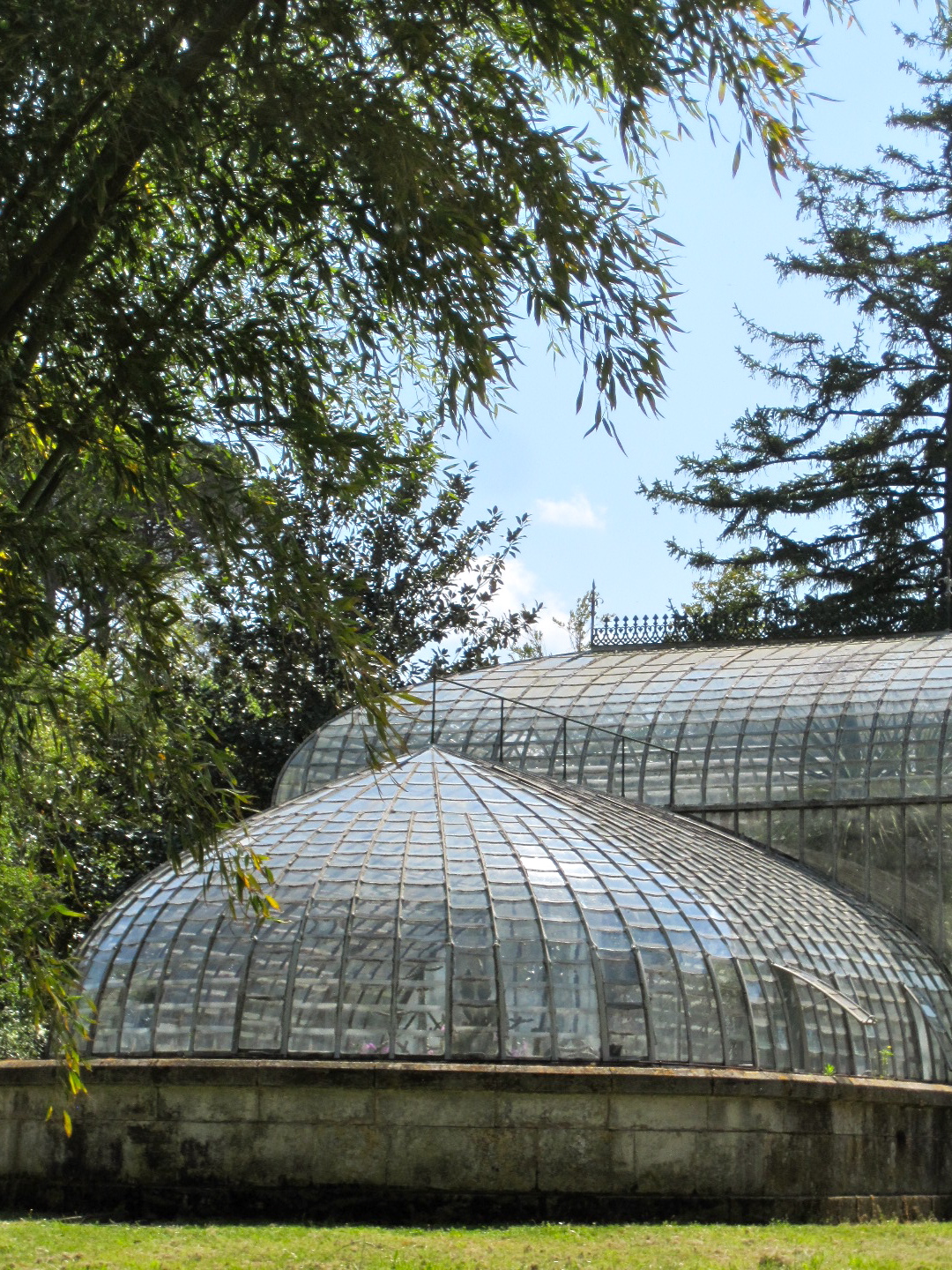
Glass House at Chateau de Roussan

No doubt about it, I had to investigate. Abandoning my bike, I headed off on foot toward the bassin to get a closer view of the Chateau and its surrounding park. I could make out some massive bamboos in the distance and a structure that the sunlight seemed to dance around and through. Following one of the streams that fed the bassin, I made my way eventually between the bamboos and entered into my very own 'secret garden' and there in front of me stood an old abandoned glass house with many of its panes smashed or missing, the sunlight darting and dazzling as it played on the fractured glass. Pushing open the rusty, hinged door, I stepped inside and instantly felt the heat roll over me. Some cacti had decided to make a break for it and were heading off out through the broken roof. I was reminded of a song written by Gilbert and Sullivan where the lines run,

'There's a fascination frantic In a ruin that's romantic.'

In the song the ruin is one of Gilbert’s elderly, ugly ladies but here it was the building that appeared to ask, “Do you think I am sufficiently decayed?”

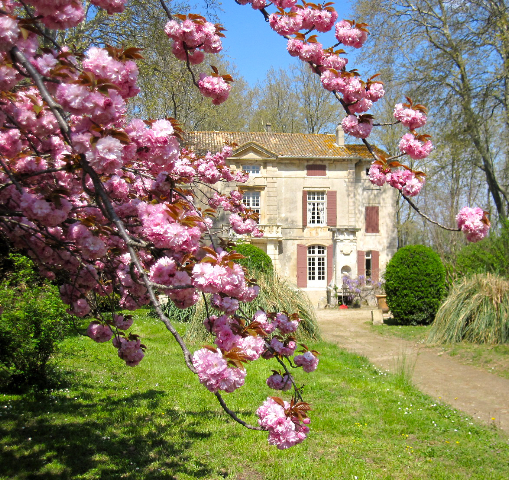
Outside again, I could hear water gushing away and made toward it, passing through more giant bamboo. I came upon another bassin, this time stone-edged with crumbling statues placed around it. Carp were cutting through the water at speed in every direction as if wanting to say to me “Look at us! Aren't we the fastest, smartest fish ever?” Beyond the bassin, at the end of an overgrown path, lay the Chateau, so complete in its surroundings that it appeared to have grown there rather than to have been built. Mellow stone, roman tiles, peeling ox blood red painted shutters, the main door of wood in golden rich yellows through ochre. One could only imagine all the people over the centuries that had passed through it. To the left of the door, up high on the wall, is a sundial, below which is carved the motto/phrase 'HORAS NON NUMERO NISI SERENAS'. In English it may be translated as 'I count only the serene hours.' Now there is food for thought!
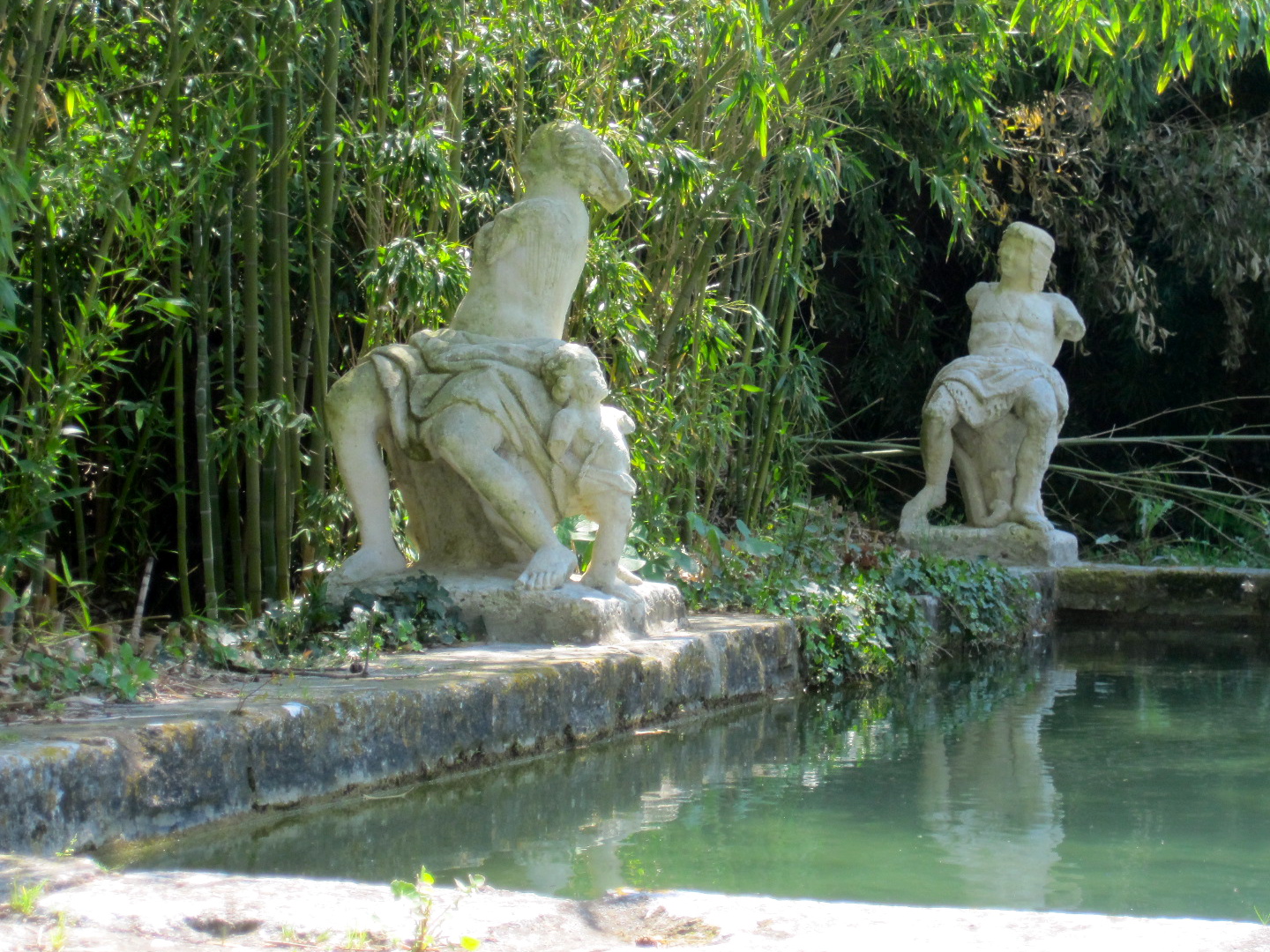
Enchanting Pool at Chateau de Roussan

It's almost twenty years since I discovered my own 'secret garden' and the pure delight of finding it remains with me to this day as it will until I shuffle off this mortal coil! (Hopefully to Acardia but somehow I doubt it).

As with everything, nothing stays the same. In this case, I have only good news to report--the Chateau de Roussan was recently reclaimed by its original owners (of many years standing) who have lavished time, care and good taste in 'conserving' their beautiful home and gardens. Its doors are now open to us if we care to go and stay. Yes, it may be a hotel but, believe me, it is a very special one.

For more info on the newly opened Chateau de Roussan, please visit www.chateauderoussan.com. Telephone from US: (011) 33 4 90 90 79 00. Telephone from France: 04 90 90 79 00.

Chicken with Black Figs and Lavender

Fresh Garlic at L'Isle-sur-la-Sorgue Market

Half of the fun in Provence is enjoying the incredible local food and wine. Fresh seasonal foods are as visually beautiful to look at as they are delightful to taste. In fact, fresh fruit and vegetables at Provence markets approach art form.
Special guest writer, Julie Mautner recently wrote about many ways of cooking with lavender. Below, she shares with us one of her favorite lavender recipes, Chickens with Black Figs and Lavender, created by Chef Linda Gilbert.
Food and travel writer Julie Mautner has lived in St. Remy de Provence on and off for more than ten years. Prior to running off to the South of France, she was the executive editor of Food Arts Magazine in New York for ten years. Today she freelances for food and travel magazines, and sites in the US and UK. Julie's popular blog, The Provence Post is a written pulse on Provence. Her first book, The Food Network South Beach Wine & Food Festival Cookbook, will be published by Clarkson Potter in November 2010...VintageGardenGal
Chicken with Black Figs and Lavender
Serves 4 generously.  By Chef Linda Gilbert, Broadway Catering and Events.

Caterer and cooking teacher Linda Gilbert, loves this rich, comforting dish on a chilly autumn evening. For both the figs and lavender, she says using either fresh or dried form is fine.

3- 1/2 lbs chicken, cut into pieces
2  tablespoons olive oil
2 onions, diced
1 teaspoon salt
1/4 teaspoon pepper
1 teaspoon thyme leaves
3/4 cup red wine
3/4 cup fresh black figs, stems removed, quartered, or 6 oz dried
3 cups chicken stock
2 teaspoons garlic
1-1/2 teaspoon fresh lavender buds, or 1 teaspoon dry, reserving 1/4 tsp for garnish.

Saute the chicken in 1 tablespoon of the oil until golden on the outside. Remove from the pan and set aside. Without cleaning the pan, add the other tablespoon of oil and saute the onions, stirring frequently to prevent burning. When onions are lightly browned, add the remaining ingredients. Stir to combine. Add the chicken cook slowly until done, about 15 minutes. Transfer chicken to serving platter. Turn up the heat and reduce the sauce until it is thick. Pour over the chicken and serve immediately. Bon Appetit!

Broadway Catering Events
601 Broadway, Sonoma, CA  95476
(tel) (707) 938-0301
Provence on a Plate

Dried Lavender on Market Day Special guest writer, Julie Mautner, shares with us her thoughts on cooking with lavender, assisted by a generous dollop from some of her favorite chefs. For those of you who miss Provence, or simply must feed your inner Provence fix,  you will be charmed by her travel and food blog out of Provence, The Provence Post.

Julie Mautner has lived in St. Remy de Provence on and off for more than ten years. Prior to running off to the South of France, she was the executive editor of Food Arts Magazine in New York for ten years. Today she freelances for food and travel magazines and sites in the US and the UK. Her first book, The Food Network South Beach Wine & Food Festival Cookbook, will be published by Clarkson Potter in November 2010....VintageGardenGal

Here in the South of France, lavender looms large. You see it everywhere in summer and you smell it in the breeze. If it weren’t for lavender, the postcard and poster people might very well go broke. It's the rare gift shop that doesn’t sell lavender sachets or soap or sweets or something.

Provence produces nearly 80 percent of the world's lavender and the famously alluring flower blankets the countryside every June and July. Harvesting continues through September and is mostly mechanized although, in some areas, lavender is still cut by hand and collected in cloth sacks slung over the back. Today, about 20,000 acres of lavender flourishes annually in Provence, although most of it is reserved for the making of cosmetics and perfumes.

The early Romans and Greeks bathed in lavender-scented water and, to this day, most people associate the flowery scent with soap. The word lavender, in fact, comes from the Latin "lavare," meaning to wash. But lavender has always had its place in the kitchen as well. In the days before vanilla became available and affordable, cooks used a variety of different fruit and flower flavors. Lavender, for its part,  was popular in teas, cakes, meat dishes, quick breads, biscuits and beverages. All lavenders are members of the Lamiaceae family, to which most culinary herbs (including mint, basil, oregano and sage) also belong.  While English Lavender (Lavendula officinalis or angustifolia) is most commonly used for perfume and soap, it's usually French Lavender (Lavandula dentata) that's found in the kitchen.

Cook with lavender as you would with most herbs: go lightly at first, then add more as needed. The darker the blossom, the more intense the flavor.

“Use restraint,” cautions Joe Simone, chef/owner of The Sunnyside Restaurant in Warren, Rhode Island, just outside Providence. “Lavender is extremely potent. Using too much will make whatever you cook taste like your grandmother's lingerie drawer.”

“I love lavender and used to grow a bumper crop back when I still had a garden,” says Nick Malgieri, director of baking programs at the Institute of Culinary Education in New York. “It has always been a small element in herbes de provence and I think this is the key to using it in cooking and baking - a pinch or two along with other aromatic flavors, rather than a full-on assault of lavender alone.” Indeed the most common use of lavender flowers is in the seasoning mixture called herbes de Provence. To this blend of thyme, savory, basil and fennel, lavender adds a perfumey and slightly musky taste, along with a hint of citrus, which makes it ideal for use with fish, grilled meats and stews. Chefs also use it in red sauces for pasta or pizza, and it makes a good garnish on salads and entrees.

Throughout Provence, you'll come across lavender on many restaurant menus, in dishes both savory and sweet. At L'Hostellerie du Val de Sault, chef/owner Yves Gattechaut loves the taste of lavender with lamb. One dish he loves is a lamb carpaccio with homemade lavender vinegar, served with beignets d'herbe. He also makes lamb cutlets topped with a sauce that's been subtly tinged with lavender. "If you visit this region in summer," Gattechaut says, "you can't possibly ignore the color and smell of lavender. It is blue and gold everywhere you look...it's absolutely inspiring."

In the village of St.-Remy, at the restaurant La Serre, chef Serge Gille-Naves serves monk fish in a daube or a fricasee, lightly perfumed with lavender, or he'll wrap the fish in parchment and bake it along with lavender, lemon and butter. Using a recipe developed by his grandfather, the famed patissier Gaston Lenotre, Gilles-Naves adds lavender to his pain d'epice, along with anise and orange, to give it a depth of flavor not usually found in a simple spice cake.

Lavender has found favor with American chefs as well. Chef Joe Simone likes to drop a few grains of it into his marinades and dry rubs, and he uses it for "pickling" certain vegetables. (For instance, he’ll marinate paper-thin slices of fennel in simple syrup and rice wine vinegar, with just a touch of lavender.)

In North Miami, Allen Susser of Chef Allen’s loves to serve lamb with a fennel-and-lavender crust. To make the crust, he toasts the fennel seeds, along with cumin and black peppercorns, and then crushes them when cool, along with lavender and a little fresh garlic. “The aromatics complement each other,” Susser says. “The lavender adds a rich, flowery depth to the earthy anise flavor of the fennel.”

At the Milwaukee Country Club, chef Olivier Bidard loves the subtle taste of lavender with fish and seafood, but stresses that it's important to use a sweet, meaty fish. With fresh sea scallops or arctic charr, for instance, Bidard will make a beurre blanc-type sauce using white wine, shallots, butter, a dash of lemon and lightly blanched fresh lavender. (Dried lavender is fine too.)  "The taste and smell of lavender with fish always reminds me of summer at home in France," he says.

Desserts, however, are where lavender is most lovely. A lavender-tinged creme anglais is delicious, hot or cold, over cake, fruit or any other dessert. Add a pinch of lavender to sugar cookies or a simple frosted cake, or use it to flavor ice cream. Patricia Wells' offers up a divine lavender honey ice cream in her book At Home in Provence, while Amanda Hesser suggests a simple lavender sorbet, inspired by Jean-Michel Bouvier, chef/owner of L'Essential in Chambery, France, in The Cook and The Gardener.

“Lavender’s aromatic strength pairs well with lemon zest and vanilla in anything custardy,” offers Nick Malgieri. “And a small amount added to cracked black pepper and orange zest for poached pears would be perfect.”

Indeed lavender pairs well with fruit, especially raspberries and blueberries. Joe Simone loves to toast angel food cake and serve it with a syrup of summer berries and lavender.

Simply take a bowl of fresh berries, adds a little superfine sugar, a pinch of lavender and a dash of orange blossom or rose water, then refrigerate for a few hours. (Orange blossom water and rose water can be found at gourmet groceries and Middle Eastern markets.)  Then slice the cake, broils it until golden and serve topped with the berry syrup.

While Simone prefers to buy his lavender from a local organic farm market and dry it himself, he says a high-quality store-bought product is fine.

“I spent the most marvelous week in Provence a few years ago,” he adds. “And when I’m feeling a bit of withdrawal, I’ll break out the lavender in my kitchen. All those amazing tastes and smells just come rushing right back to me.”

Please share if you cook with lavender. Please share  your experience with lavender in Provence.

If It's Not One Thing, It's Your Mums

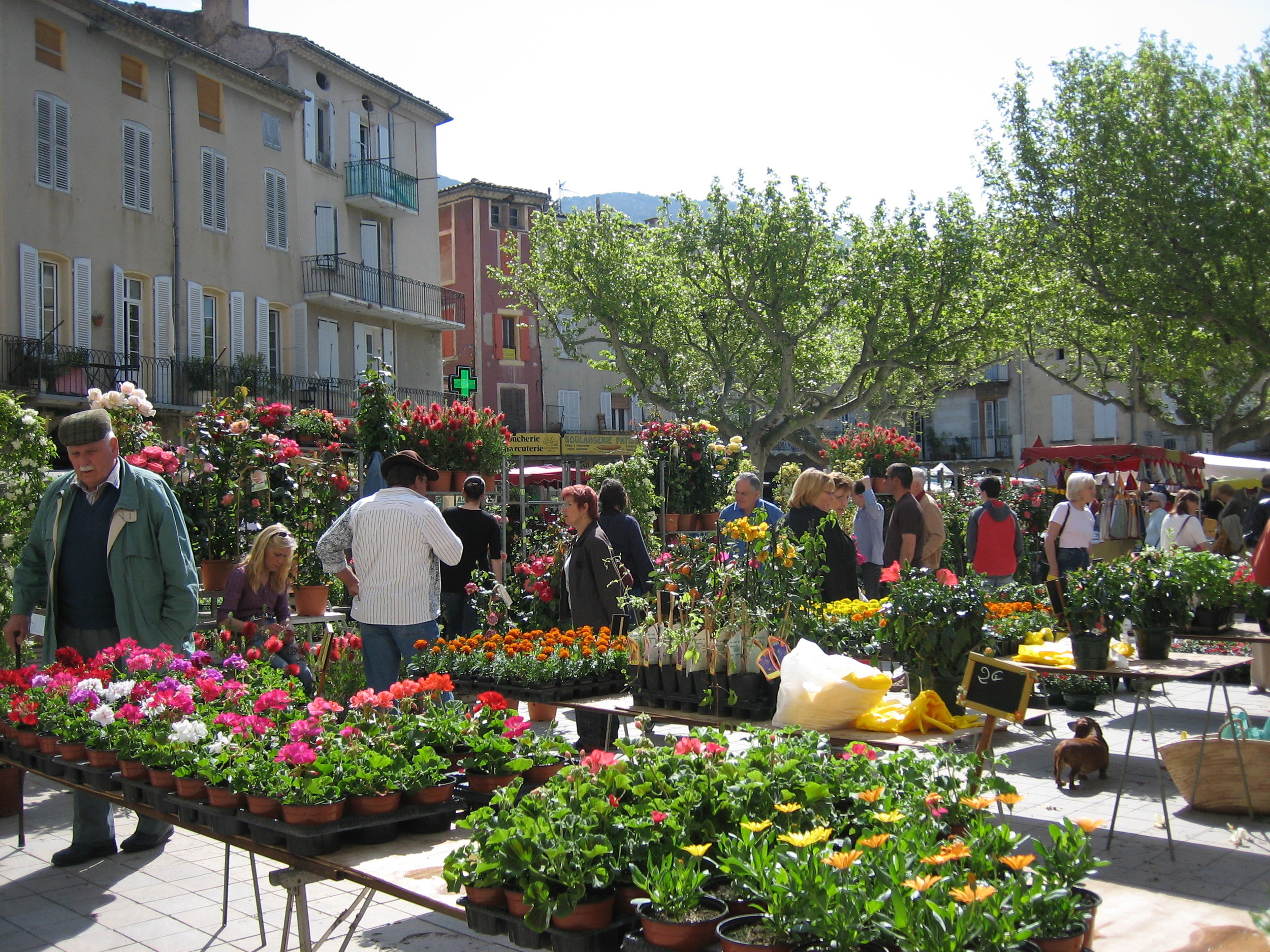
Market Day Flowers in Provence

Please give a warm welcome to special guest writer, Julie Mautner. Julie  Mautner is an American food, wine and travel writer living most of the year in the South of France. She was a founding editor of Food Arts Magazine in New York and was executive editor for ten years.

Resigning in 1998 to freelance, Julie has produced hundreds of articles for top magazines and websites including Travel & Leisure, Bon Appetit, Food & Wine, Gourmet, Epicurious.com, Conde Nast Traveller UK, Elle Décor UK, Financial Times, New York Magazine and House Beautiful. She also handles a wide range of writing, marketing and culinary projects for international cruise, hotel and restaurant clients.

Since 2008, Julie has been publishing a popular blog about France called The Provence Post. Her first book, The Food Network South Beach Wine & Food Festival Cookbook (co-authored with Lee Schrager), will be published by Random House/Clarkson Potter in November 2010....VintageGardenGal.

All of a sudden, the stores were filled with mums. Every market, every roadside stand, every huge supermarche parking lot--overflowing with mums. Fat, healthy, brilliant mums, just 35 francs per pot (roughly $5 at the time). It was early November and my little front yard was calling out for color.

Having left New York for Provence, France, just four months before, I was over-the-moon ecstatic about having a house. And not just any house but a house in Provence, with shutters and a tile roof and terra cotta floors and wood beams. With neighbors who rap at the gate, bringing bowls of homegrown grapes. And best of all, for the first time in my life, a garden.

So I called the family’s guru of greenery, my dad in Wisconsin, to talk about mums. Though not a mum fan himself, Dad got behind my plan in a big way. “If that’s what the stores are selling,” he said, “then it’s a good plant for the season. They’re cheap. Put a bunch in and see how they do.”

Just to be sure, I called my friend Carol, another American living in St. Remy. Was this the right time to plant mums? Would they make it through the winter? How deep should I plant them, how long would they bloom, how much water did they need? Off we went to the garden center, and after much deliberation--such beautiful colors, such variety!-- we settled on three rosy pinks and three striking whites. Into the ground they went. Monsieur and Madame Blanche smiled as they strolled past and other neighbors paused to chat. I couldn’t understand a word of what was said, but was touched by their smiling show of support. I had a house. I had a garden. This ridiculous escapade of mine—quitting my really nice job, subletting my Upper West Side apartment and running off to the South of France--might just actually turn out ok!

The next day, I found my new friend Philippe standing in my yard, staring at my new garden. And smiling. Literally, Philippe was just standing and staring and smiling.  I’d already grown accustomed to his teasing about my American-in-France faux pas, but for the life of me, I couldn’t figure out what was so damn funny about mums.

“Did you notice that the stores had mums for just three days?” he asked, “and that they disappeared as quickly as they’d arrived?” I confirmed that I had found that odd, and that I was thrilled to have slithered through that narrow window of horticultural opportunity just in the nick of time.

“Yesterday was Toussaint,” Philippe explained. “You call it Memorial Day.”

Mums, it seems, are the traditional French flower for graves. All those lovely mums had made their way from the supermarket shelves to the cemeteries in and around St. Remy. Save for the six in my garden, of course.

“You might as well hang out a sign,” giggled Philippe. “Americans Live Here!”

That first winter in Provence was particularly mild and my mums, however inappropriate, thrived. I decided that the garden would be a memorial to those I’ve loved and lost: my grandmothers Mary and Bertha, my grandfather Harry, my oldest brother Bill. All were buried in the family plot, 4,500 miles away, but my little patch of mums somehow made me feel their presence—and smile.

When the famous mistral blew down from the mountains and took St. Remy in its grip, my mums held their ground. My shutters slapped my solid stone walls and soon the pretty plants disappeared under a mountain of crunchy leaves. Then it snowed, and I left the country for a time, and that was pretty much the end of the mums. When I returned in spring, I planted lavender, rosemary, solanum, plumbago and other other politically correct plants. Now my garden looks just like everyone else’s. I blend.

But every year when Toussaint rolls around and the stores fill up with mums, it’s hard not to grab a couple pots in the most vivid colors possible. They look so fresh and healthy and bright and all for just €5 pr €6 per pot….

Please share your comments.

Encore Provence!

What's Not to Love About Provence? Every spring I notice a certain "special buzz" around my Provence posts here at VintageGardenGal. I'm not exactly sure why. Is it an upcoming once-in-a-lifetime trip to Provence? Is it the sensational association with Provence and spring gardens? Could it be the urge to immerse oneself in the romantic French countryside? Ah, maybe it is because Provence calls us all for different reasons.

It has been two years since my husband, John and I, were last in Provence and we dearly miss it. What's not to love about Provence. Its simplicity is pure beauty. It teaches you to expect the unexpected. Its charm  wins you over for a lifetime.

Provence is one of the great garden destinations of the world. It is a special place where the beauty of its natural landscape has magically mingled with civilizations for centuries, and the beauty keeps on radiating. One of my favorite quotes on Provence is from Lawrence Durrell back in 1959. He said it much more elegantly, "Some spots are the cradle of genius. Provence is one."

Last year I wrote a series about Provence, sharing with you some of my favorite things about Provence. The gardens. The landscapes. The villages. The people. The restaurants. The Roman ruins. The cafes. The fields of poppies. The magic!

This month I have a special treat for you. Out of Provence, two very special guest writers will weave their words on poetic Provence for you in another "Provence Series." Just imagine, you can sit back in your comfortable over-stuffed armchair, computer at hand, and we'll all travel to Provence together.

Please share what draws you to Provence. Please comment on your favorite things about Provence.

Provence: Special Restaurants

Salut Provence!  Outdoor Terrace at Les Abeilles I've been lost in writing about Provence for nearly a month. If that is not proof enough of how special Provence is to me. I have so many more postcards to send you from Provence, but my own garden, in my own Mediterranean climate is beckoning me home.
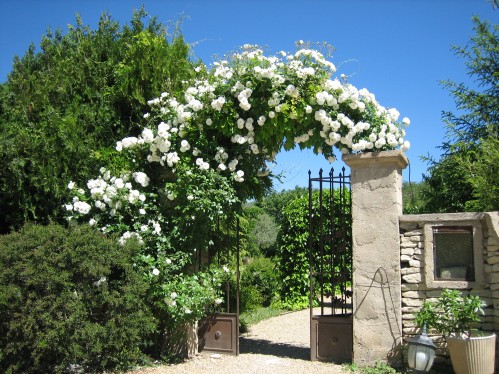
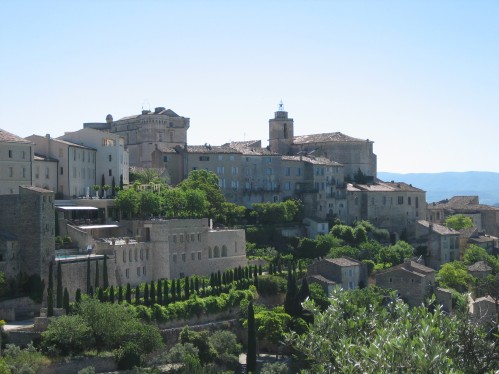
I'm going to end "Postcards from Provence" mentioning two very special restaurants in Provence that completed our visit. It is hard not to get a truly delicious meal any where in Provence. All of the bistros and restaurants are just divine. You can't go wrong. The menu and ambience's of Les Abeilles restaurant in Sablet, and Le Mas de Tourteron restaurant outside of Gordes, are however, special dining experiences.

Les Abeilles Les Abeilles in Sablet, centrally located to many places of interest like the famous village of Gigondas and its hearty Rhone wine, as well as Mount Ventoux, one of the highest peaks in the area, and famed as a route often on the cycling Tour de France. Les Abeilles is also a small hotel, restaurant, and bar. We stumbled upon this gem towards the end of our visit, and couldn't ask for a better dining experience. Chef Johanes and his wife Marlies, make sure everyone has a wonderful dining experience and visit.

Our dinner at Les Abeilles was something like being in the midst of an ongoing "three-act play". I have never had that dining experience before. Each table in the tiny restaurant had its cast of characters and drama. Although my husband and I were into our own dinner and dining experience, we couldn't help but observe the other tables and their perspective dramas unfolding. Maybe there is a play to write, about this dining experience in my future.

Besides having a wonderful dinner, we happened to meet a new lifetime friend that night, just part of the ambiance of the evening. A young German doctor, who is also a serious bike rider, and enthusiastically rides Mount Ventoux, whenever his vacation time permits. Restaurant Les Abeilles, 4, rue de Vasion, 844110 Sablet, (tel) (0)4.9012.38.96, Les Abeillles.

Entrance to Le Mas de Tourteron, Gordes

Le Mas de Tourteron Le Mas de Tourteron, like the Bistro du Paradou, was also a restaurant we had tried to dine at on our first trip to Provence, and eventually succeeded in having a Sunday lunch there, our second visit.

Le Mas de Tourteron is a very unique and romantic restaurant, owned by self-taught chef, Elizabeth Bourgeois, and her sommelier husband. It is a lovingly restored centuries-old mas, (farmhouse), which also use to be the site of an old silk cocoon farm.

Elizabeth is near legendary for her farm recipes, and has a large kitchen garden. Le Mas de Tourteron has its own garden setting, and just exudes romance. My husband and I were celebrating an early anniversary Sunday lunch, but I could imagine someone's very special evening, and "being proposed to" here.

Inside the restaurant, Elizabeth's antique and vintage bird cage collection hung throughout on its stone walls, woos diners with charm. Le Mas de Tourteron is very special, and very pricey. I suggest reservations, as days and hours vary slightly throughout the year. For a treat, dine at Le Mas de Tourteron, chemin de St.-Blaise, Gordes, (tel) (0)4-90-72-00-16, Le Mas de Tourteron.

Salut Provence! Your magic, beauty, and charm simply astounds me! I hope to return, once again, as soon as I can.

Provence: Rural Countryside & Villages

Lower Rhone Valley and Town of Sablet

Provence is so large and diverse, it really is hard to describe it all. When traveling by car, one is often fooled by the distance and time it takes to get around. Although there are some highways, a lot of the roads, are secondary roads which meander and wind through the small villages, towns, and countryside. In fact, "the mode" of getting around Provence seems to support the relaxed tempo of life here.

Approaching the Medieval Village of Gordes

In the Luberon region of Provence, the large regional Luberon Park protects the countryside from random development and preserves its wonderful valley floors and rising Luberon foothill views.

The wind can be a factor in Provence. There are actually several winds which occur in this region. The mistral, probably the best known, originates in Siberia and barrels towards Provence through the Cote du Rhone valley, sometimes with violent force and sometimes for days. During a mistral wind, everyone has a favorite legendary "mistral story" to tell.

Overlooking The Village of Bonnieux

Many of the hillside villages are from medieval times, and some started as Roman beginnings, when that was the best way to defend yourself from invaders. Often well-preserved, and with commanding views, these villages have wonderful bistros, weekly markets, honey-stone churches to explore, village tradition, artisan crafts, and lively local culture to take in.

Provence is soothing and peaceful visually. How can you not be moved looking out at its verdant quilted patchwork countryside, gentle rising foothills, valley floors, and vast blue horizon, seemingly untouched for centuries. Incredibly, you can still experience fields of happy sunflowers, acres of scented lavender, flocks of sheep migrating, producing olive groves, and noteworthy vineyards, as part of normal everyday Provencal life.

Springtime in Provence, when these photos were taken, show how simply beautiful the countryside is. Much of the landscape in spring consists of budding vineyards, gnarled mature olive trees, towering cypress, blossoming fruit trees, climbing roses, blooming wisteria, and the dramatic red poppy in mass.

Have you been to Provence in the spring? What is your favorite memory?

Provence: Beautiful Plane Trees

Plane Trees In Cucuron

One does not travel and explore Provence, especially if you are a gardener, without noticing its beautiful and awed plane trees. Plane trees are found everywhere in Provence. They line its country roads, often approaching and leaving a town or village. They are a focal point in many a family's courtyard, providing umbrella-like shade, and a spot to place an inviting outdoor table. They are often strategically planted in village centers and town squares. They can create a majestic and impressive grand boulevard style in their maturity and beautiful foliage.

Plane trees are the type of tree, in maturity, that create their own environment. They can reach 100 feet tall or more. Plane trees can be shaped and groomed into a variety of shapes, and provide welcome shade, especially in the warmer months of the year. Plane trees were planted prolifically, because they were a durable tree to population pollution, grew quickly, provided excellent shade, looked beautiful, required little water, and could be planted in poor soil.

Provence plane trees are a hybrid of the Asian and American sycamore trees. They were created, quite by accident out of Oxford, England in the 16th century. In the 19th century, plane trees were imported to Southern France, and planted extensively. Napoleon was responsible for extensive planting of plane trees throughout Southern France, for the purpose of keeping his marching army cool, under their great green canopies.

Tops of Plane Trees In Gigondas

Wouldn't it be wonderful to live in a region, like Provence, where plane trees are so prolific, so enduring, and so much a part of the charming character of the countryside. Plane trees are yet another reason, why the Provence countryside is so endearing.