Feed Your Blueberry Bushes Coffee Grinds

Just-Picked Blueberries In Vintage Berry Basket Home-grown blueberries were recently highlighted in a post written by Sharon Cohoon, Sunset senior garden writer at Sunset's creative garden blog, Fresh Dirt, Fruit For Your Cereal In One Container. Her words reinforced my own experience growing blueberries, and especially for every syrah grape grower, one must not miss the mentioned recipe, "Blueberries in Black Pepper Syrah Syrup."

Blueberries have a lot going for them. The bush itself is extremely attractive and has year-round foliage interest. In the fall, some blueberry bush varieties turn autumn hues. Its berries are hailed as a super antioxidant food, which destroy harmful free radicals in your body. Blueberries are delicious, beautiful, and versatile in our diet. Blueberries are great in your cereal for breakfast, as Sharon Cohoon mentions, add flavor to breakfast breads and muffins, add surprise in summer salads, and are a crowd pleaser in desserts such as cobblers, crisps, and home-made ice cream.

Here are some economizing tips that have helped me grow happy blueberry bushes. Plant your blueberry bushes in a large container. Look for halved used wine barrels on sale. When planting, be sure and use a large portion of peat moss in each container. Make sure your blueberry bushes are in a sunny area, and give them moderate water.

Plant at least two different types of blueberry varieties, specific to your climate zone, for a better abundant crop over all. Look for possible bare root blueberry varieties available for sale during the winter season. I currently have Oneal and Misty varieties.

Blueberry bushes are acid-loving plants. Until recently, I would add cottonseed meal to my blueberry bushes for acidity, but now I regularly sprinkle used coffee grinds for the same purpose, at the base of my bushes and mixed thoroughly into the soil. Just be careful not to over do it. This was a hot tip from a blueberry specialist at the local farmer's market.

Are you growing blueberry bushes now? Please share with us what variety has worked best for you? Please comment on your personal tips for growing blueberry bushes.

Happy Home-Grown Pumpkins

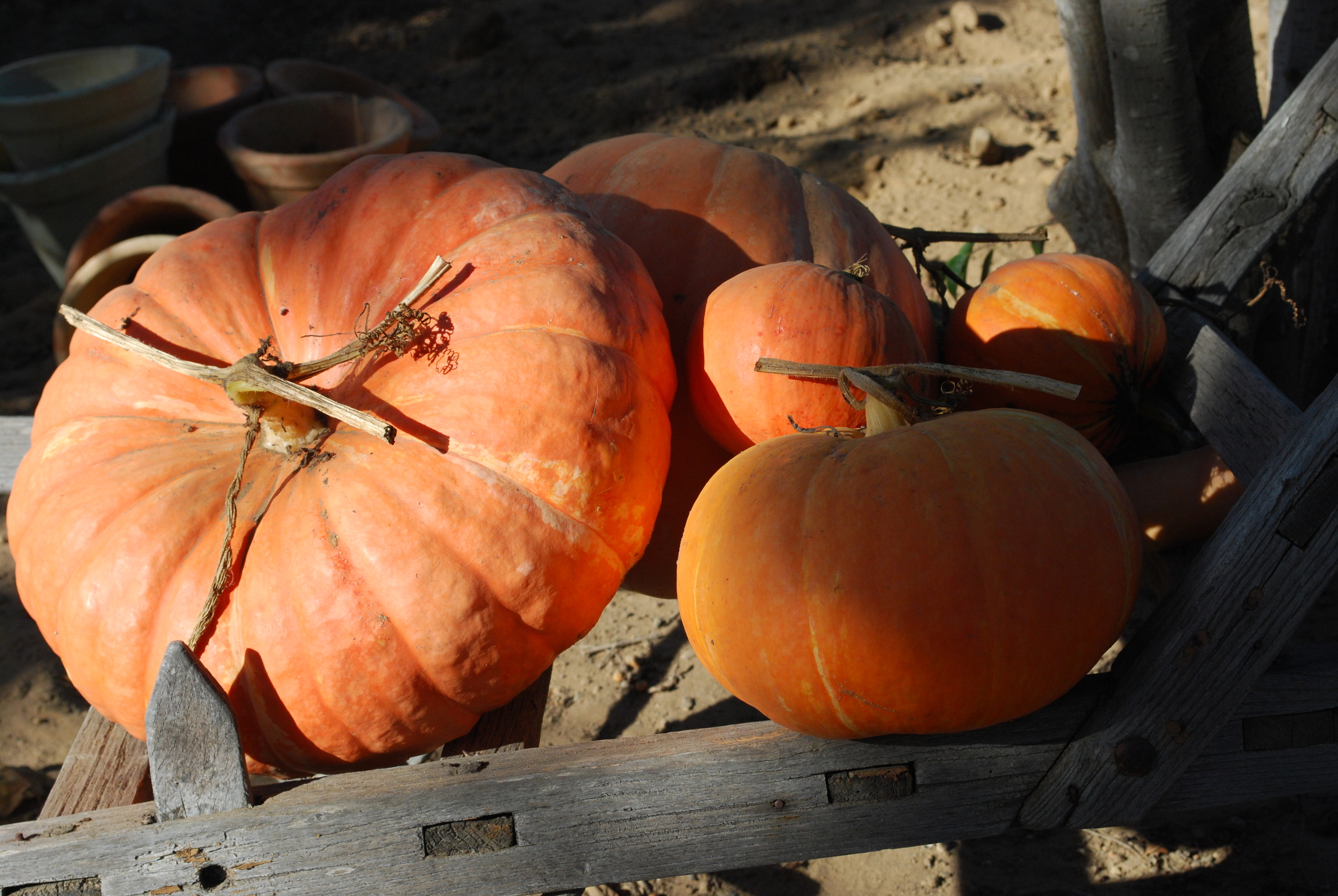
Home-Grown Pumpkins Awakening To  A New Day These pumpkins were started by seed back in June in my potager. By fall, they are mature and ready for harvest, marking the symbolic end of the fall potager. It is much more economical and fun to grow your pumpkin varieties by seed. Save seeds from your favorite pumpkins, dry them, and store away till next year.

Experiment and grow a variety of pumpkins next year in your potager. There are specialized pumpkins for eating, decorating, carving, and especially miniature, as well as massive pumpkins that children love.

For all of you pumpkin fanatics, in 2004 Amy Goldman, author, and Victor Schrager, photographer, wrote this comprehensive "must buy" book, The Compleat Squash: A Passionate Grower's Guide to Pumpkins, Squashes, and Gourds. In the back of her book, Amy shares with her readers an incredible selection of squash-based recipes. One of my all-time favorite soups, is her Southwestern Winter Squash Chowder.

Southwestern Winter Squash Chowder Serves 8. Amy writes, "You'll never miss having clams in this thick, hearty, and pungent chowder. To reduce the calorie count, use milk in place of half-and-half and eliminate the cheese." I say, if you're making this soup once or twice a fall season, "go for the works."

2 tablespoons olive oil 2 tablespoons unsalted butter 3 cups coarsely chopped onions 1 large red bell pepper, finely chopped 1 large green bell pepper, finely chopped 2 tablespoons seeded and minced jalapeno pepper 1/2 cup all-purpose flour 1 teaspoon kosher salt 1 teaspoon red pepper flakes (optional) 8 cups chicken or vegetable broth 3 cups peeled, seeded, and diced squash, cut into medium dice 2 cups peeled and diced potatoes, cut into medium dice 3 cups fresh or frozen corn kernels 1 1/2 cups half-and-half 2 1/2 cups grated cheddar cheese 1/2 cup chopped fresh coriander, for garnish Croutons

Heat the oil and butter in a large, heavy-bottomed stockpot over medium high heat. Add the onions and peppers and saute until the onions are transparent, about 5 minutes. Add the flour, salt, and red pepper flakes and stir until blended. Stir in the broth, squash, and potatoes. Bring to a boil and then reduce the heat to low and simmer, covered, until the potatoes and squash are tender, about 20 minutes.

Add the corn, half-and-half, and cheddar cheese to the chowder and stir them in; cook for a few minutes until the cheese has melted. Adjust the seasonings to taste, garnish, and serve with croutons.

Enjoy!

Do you grow your own pumpkins? Please share your favorite type of pumpkin? Please comment on your favorite pumpkin/squash recipe.

Beginning Of A Home Remodel

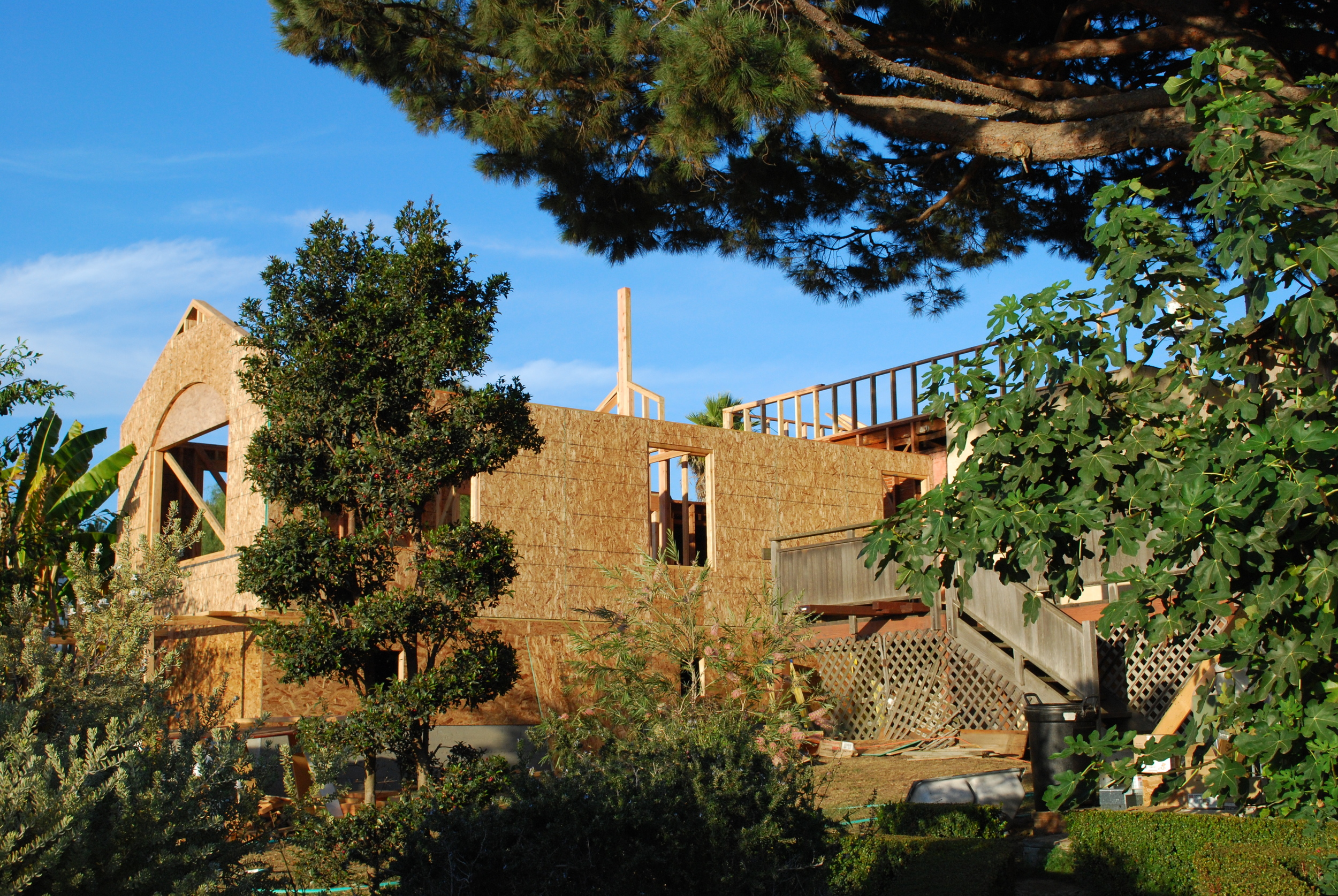
Domaine de Manion Remodel Autumn is one of my favorite seasons of the year. Normally, I would be sharing so many tips, photos, and ideas with you this season. However, we have embarked on a home remodel this past month which has been many years in the planning, and has already to proved to be an adventure. Since this project is expected to take a year, I thought I would share with you some of the highlights of this remodel as we go along. Don't worry, my roots for this blog are still in the garden.

Our remodel vision was to create a home which was more comfortable, more energy efficient, an enhancement of our views, and to integrate our home and garden more fully. It's a little bit scary. It's a little bit fun. It's a little bit unknown. Please follow along with us, my husband and me, on our journey as our Domaine de Manion remodel unfolds. Yes, our "Hollywood girls" and "French girls", aka our beloved hens, are fine and are enjoying all the new freshly turned dirt and excitement.

Our spanish style home was originally built in 1930, and was one of only three homes back then in the area, all the way to the Pacific Ocean a mile away. Our home sits a top a gentle rising coastal ridge about 300 feet above sea level. A massive mature Italian Stone Pine and Torrey Pine tree dominate our home and property, and act as subtle protectors. We're saving our charming home and pushing out on its west side and south side. We're building a stand alone "barn" which among other uses, will have a wine-making room.

I keep saying to myself, to embrace the journey as much as the destination.

Have you gone through a home remodel? Do you have any tips to share? Please comment on your remodel experience.

7 Elements Of A Potager

A Potager Changes With Each Season There are many different sizes and styles for a potager, or year-round kitchen garden. In fact, it is important to create a potager in your own personal style. Generally, a potager is a small plot, large enough to feed a family with daily fresh vegetables, accented by fruit and flowers.

Choose your site wisely. A potager is a permanent year-round growing plot which is functional, as well as beautiful. As the months roll into years, you will spend a lot of rewarding time in your potager. Enhance your personal potager by where you locate it, what you grow, how you enclose it, how you adorn it, and how you manage it.

There are many wonderful elements which embody a potager such as enclosure, pathways, borders, structure, order, chaos, beauty, small trees, garden ornaments, the intertwining of function and beauty, and the romantic mixing of vegetables and flowers rotating through their seasons.

Elements That Define A Potager

1)A potager is usually defined by some type of enclosure. Enclosure can be defined as walls, fences, thick hedges. Some of these enclosures can be a working surface for your potager, for espaliered fruit trees, support for tall plantings, and heat retention. Enclosure protects from competing critters and forces such as wind.

2)Pathways are important to divide your plots, create travel pathways, and working space to care for your potager. Pathways may be made of materials such as coarse mulch, gravel, bricks, cement, or even bare soil.

3)Borders can be of a permanent design, for instance growing a low boxwood hedge, a "wood box" edge, or a stone border. Borders may also echo seasonal plantings such as a marigold border, or ornamental cabbage. Like borders will create a formal design in their repetition.

4)Structure is the bones of your potager. Structure can be vertical in the shape of an arbor, small trees, a garden ornament. Structure is also walls, gates, and even terraces. Structure adds interest, and further defines the personal style of your potager.

5)Order versus chaos. You might prefer a very formal potager, set out with boxwood borders, and neatly confined rows of planting. Your potager might start out with order, and as it grows becomes chaos, or a more romantic mixture of vegetables and flowers. Or your plantings from each seasonal beginning may by more informal, such as planting wildflower seeds.

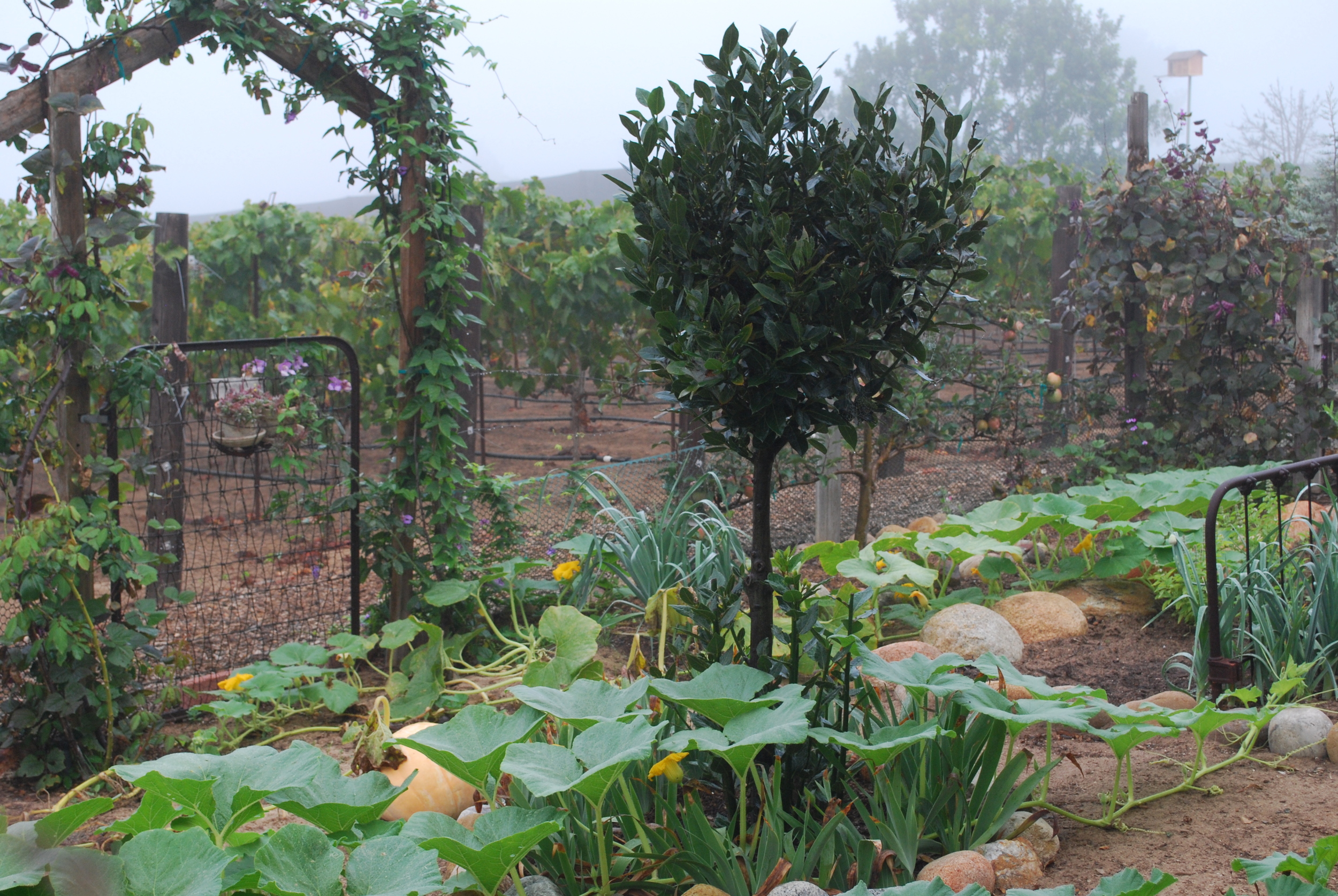
6)Center a focal point in your potager such as a small tree, garden ornament, urn, statuary. In my potager I have planted a bay laurel tree trimmed into a two-ball topiary. A focal point might also be an impressive artichoke plant, which renews itself year and year. More examples of possible focal points are a sundial, bird bath, obelisk, or a planted arbor.

7)Place a convenient tool shed or small building where you can keep all your tools, seeds, perhaps a potting shed, and your other potager resources at hand.

Divide your potager into plots, or if you have raised beds, begin dedicating each plot or raised bed with specific seasonal vegetables you would like to grow. Remember to plant your tallest plants to the north of your potager or in the back plots of your potager.

You can start your potager with any season. Whatever season you start with plant about 2/3 of your potager, and leave 1/3 free to be planted later. For example, create a 9' x 12' plot. Divide your plots in to four rows of three plots each. Begin your potager by planting 9 of your plots, leave three of them empty. Another example, if you have 4 existing raised beds, plant 3 with seasonal vegetables, and leave 1 free to start planting when appropriate for the next season.

Eventually, your potager will slowly move into the next season, as your vegetables mature, are harvested, each plot is tilled, and replanted for the next season. Remember to keep a portion of your potager empty in anticipation of the next planting season. It will take a while to get the "ebb and flow" of it. Eventually, your potager will become fluid.

Everyone has their own timing with the four seasons and climate-specific vegetables, fruits, flowers, and herbs they can grow. Adapt your plantings to your own seasons, and your own preferences. Classic perennial favorite herbs for a potager include rosemary, thyme, oregano, marjoram, and tarragon. Other classic plantings for a potager might include strawberries, melons, annual herbs, espaliered fruit trees, and then of course, the rainbow of seasonal vegetables.

Do you have a potager now? How do you plant and manage it? What is unique about your potager?

Grow Your Vegetables Year-Round

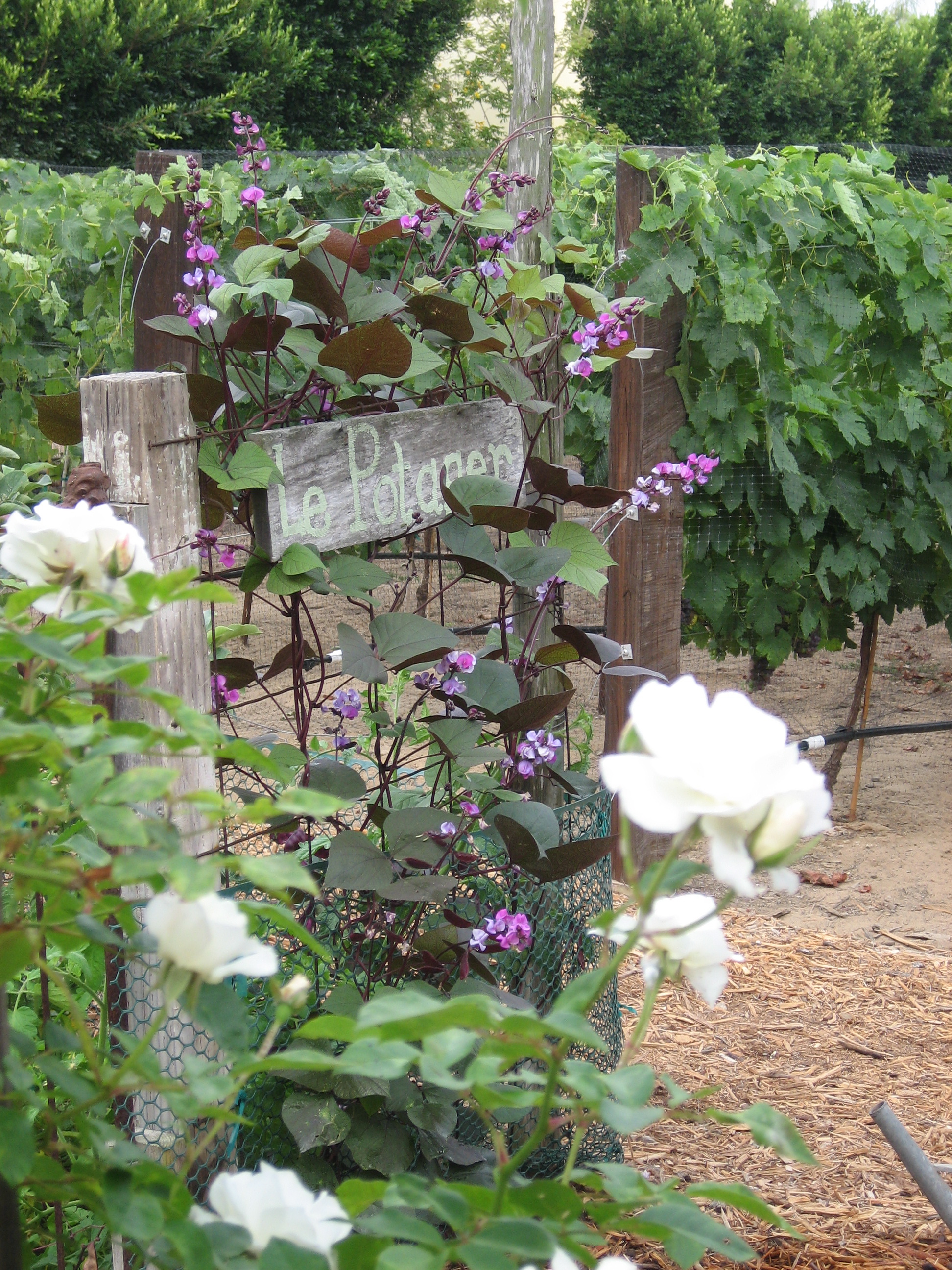
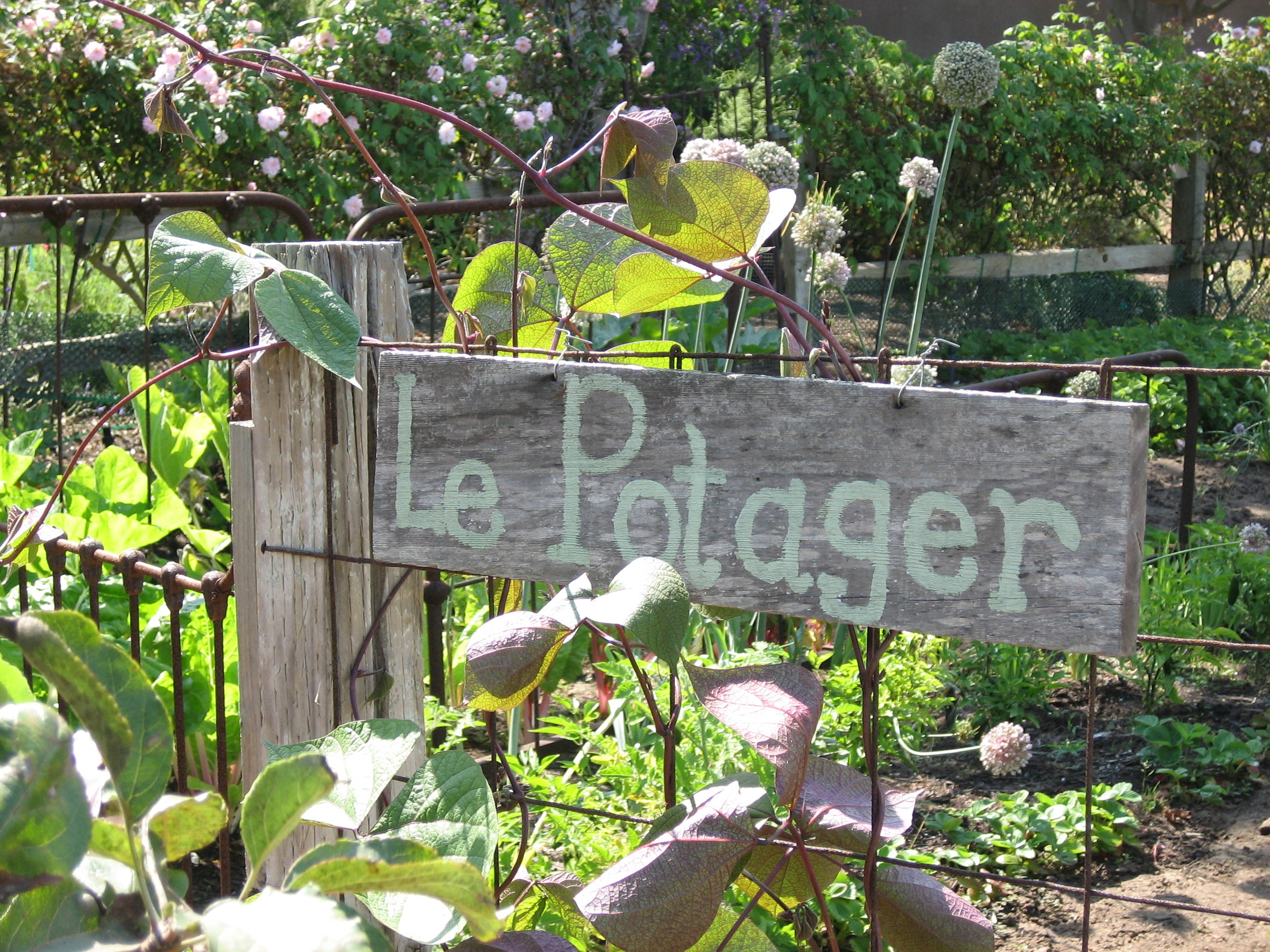
The Humble Potager Do you wish you could extend the "fresh vegetable concept" of summer throughout the year by growing your vegetables year-round. Well, you can, and it is much easier than you think. It is an age-old concept borrowed from the French, called the "potager" or literally translated "soup garden".

In France, a potager may be very formal and considered a jewel on an estate or situated on the succinctly elaborate grounds of a chateau. A potager may also be very humble, next to a small farmhouse in the countryside, by railroad tacks in the suburbs, or in urban plots outside a nearby town. Wherever they are located or however they are designed, they have been a foundation for French food culture, and the French tradition of eating seasonal fresh foods.

A potager is a French-style kitchen garden composed mainly of seasonal vegetables and herbs. A potager may also include a few fruit trees, and even seasonal flowers. The sole purpose of a potager is to provide a year-round supply of fresh daily produce for a family or a small group of people. It is usually a small and manageable plot of 10' x 10', or 9' x 12' in size.

A potager is divided up into plots that are individually managed and rotated as the seasons unfold each year. It requires some planning, management, knowledge of your specific growing seasons, and knowledge of what you are growing, on your part to be successful with a potager.

In America, generally speaking, our traditional backyard vegetable garden consists of planting the garden in the spring, reaping fresh produce over the summer, and sometimes utilizing the abundance of the harvest by freezing or preserving for use over the winter, or for another time.

Americans, unlike the French and other Europeans, do not normally have a vegetable garden year-round. This might be changing now. One of the hottest food trends today is "growing your own vegetables". Gardeners such as yourself, want to keep the "fresh produce concept" alive after the summer has waned. We all know that fresh strawberries out of a morning garden for breakfast, or fresh green beans harvested still warm from the sun, are a delight to the senses and incomparable.

We are also being influenced by active local organic farms supplying restaurants and farmer's markets with new and exciting types of produce to explore and enjoy. Their underlying message is "eat locally".

This is an introduction to the concept of the "potager". Follow along as I discuss further the elements of the potager, how to implement a potager, how to manage, and what you might want to plant throughout the four seasons in your potager. For a related post on vegetable gardening basics at VintageGardenGal see, 7 Basic Steps of Successful Vegetable Gardening.

Do you have a potager now? Where did you first see a potager? What is your motivation for vegetable gardening year-round?

Seek Containers With A Past

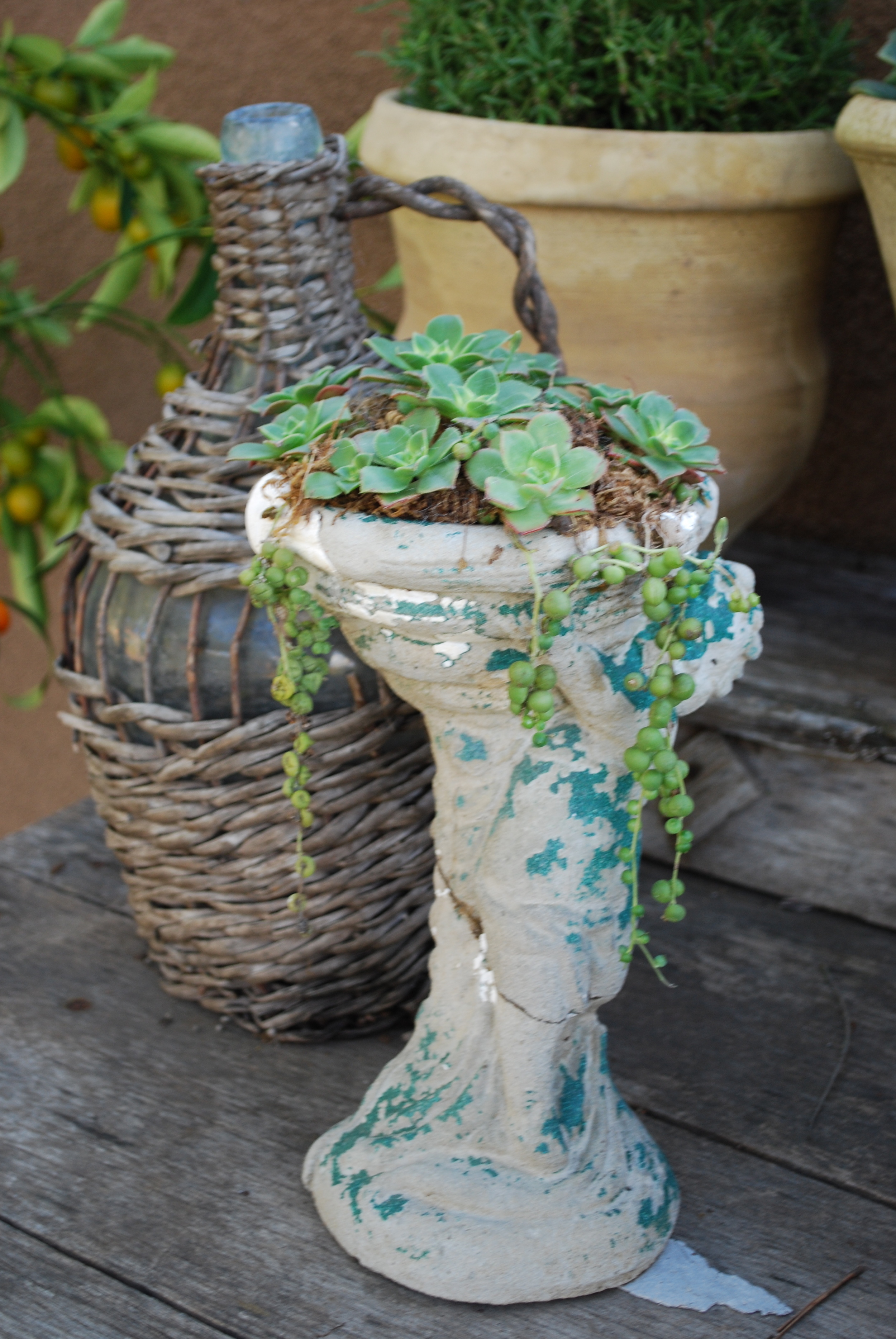
Vintage Cherub Planter Charms I love finding great vintage containers with a past. They have a history, the intrigue of previous owners, time-worn patina, and usually multiple imperfections. All of which create an incredible charm and uniqueness.

One of my favorite pieces in my garden is this tiny charming cherub statuary, diligently overseeing her thriving succulent planting of echeveria and string of pearls. She might also hold a candle glowing with a soft romantic light, or some sweetly-scented dried lavender. I have a lot of cherubs in my garden, for a touch of femininity, and maybe to evoke a certain mystique.

This sweet little cherub was once a fecund green, now muted and disappearing in places. She was broken at one time, and someone cared enough to mend her. I purchased her back east, so she has journeyed far. She definitely has a past, and now she has a present and an ongoing future.

Don't overlook these types of vintage container treasures as they can add oodles to your garden charm with their simplicity and sheer survival. Best places to find these vintage container treasures, is often where it is most reasonable. Seek out your local flea markets, thrift stores, garage sales, alley dumpsters (no kidding), barn sales, and favorite garden antique shops.

Please comment if you have a vintage container treasure that makes a statement in your garden? You believe that one person's discard, can be another persons' treasure?

Bay Laurel Tree

Early Morning In Potager, Bay Laurel Tree Centerpiece Everyone should have a Bay Laurel Tree in your garden, if you are in zones 5-9, and 12-24. There are as many uses for this tree and its green glossy aromatic leaves, as its many names. The names Bay/Sweet Bay/Laurel, Laurus nobilis are all the same tree. Sweet Bay is currently enjoying recognition as the 2009 Herb of the Year, as chosen by, The International Herb Association.

The Bay Laurel Tree is a Mediterranean evergreen shrub or tree. It is a slow grower but eventually can reach 12-40 feet in height. Fortunately, it responds well to trimming and can be shaped into a desirable topiary form. A few years ago in my potager, or kitchen garden I planted a Bay Laurel Tree in the center and as a focal point. I have shaped it into a sphere on top, and am presently shaping a smaller lower sphere closer to the ground. Bay Laurel trees take full sun or partial shade and appreciate moderate water.

Bay Laurel leaves are really desirable for decorative use in a wreath or crown, and as a culinary use in many types of recipes, and the well-known "bouquet garni". It also has household, cosmetic, aromatic, and medicinal uses.

"Bouquet Garni" is a french term for a bouquet of fresh herbs, tied together with kitchen string, and generally allowed to dry before steeping in stews, soups, sauces, stock, marinades, and the like. Typically, fresh herbs are rolled together using parsley, thyme, and flanked by bay leaves.

Karen England, Edgehill Herb Farm, is a recognized herb expert, garden speaker, and teacher of herb-related cooking classes in the San Diego area. She spoke to The San Diego Horticulture Society this past summer on Bay Laurel, and in a hand-out shared these adapted instructions for creating a bay wreath.

Make Your Own Laurel Bay Wreath Supplies Needed: Fresh bay branches, wreath form, paddle wire (available at craft stores), clippers, and optional ribbon.

Directions: With clippers, cut bay branches into lots of approximately of 3-4" sprigs. Using the wire, attach securely the sprigs to the wreath form. How much bay you will need depends on the type and size of the form you have chosen. Hanging Tip: Dry the finished wreath flat on a table for a week or so before hanging. This will prevent your wreath from drooping and drying lopsided.

Use: These completed wreaths can be hung as a decoration in a room or on a door, used for culinary purposes dried, or even as a fresh "laurel crown" on your head, just in time for Halloween. You could also make a garland swag of Bay Laurel using a length of stiff straight wire.

Please note, all laurels except the Bay/Sweet Bay/Laurel are poisonous. Make sure you identify the correct Bay Laurel Tree.

Please add your thoughts on Bay Laurel? Do you have a tree in your garden? What are your favorite uses? Have you ever seen a freshly made verdant bay wreath?

Highlighting Pelargonium "Limelight"

Springtime Pelargonium Limelight We are well into our wonderful fall splendor with its warm glowing autumn hues, so why am I mentioning the springtime Pelargonium "Limelight"? Because it is a must-have perennial in your garden. I thought if I highlighted it in the fall, it might afford you some time to find it, plant it, and enjoy it this upcoming spring.

Please forgive me as I really don't have a source for you either. You will have to diligently search the Internet for possible mail-order nurseries who might carry it or maybe request it at your favorite local nursery. My Pelargonium "Limelight" was a gift from a friend, in the form of a dainty small cutting. Aren't those the best kind of gifts? So put this one on your plant "wish list", and keep your eye out for it.

Pelargonium "Limelight" is a perennial which absolutely glows in the spring with its beautiful chartreuse foliage and dainty pink flowers. It is a pelargonium that is well-suited for zones 8, 9-11, and will grow in partial shade to sunny spots with moderate watering. I really think it thrives best in shady spots. If you are looking for the chartreuse foliage color in a very sunny spot, I suggest you look at the wonderful Euphorbia plant varieties. Pelargonium "Limelight" does have a tendency to want to climb slightly 1' to 3', as it grows and matures. I have it growing at the base of one of my arbors which is in a shaded, supported, and protected spot. Pelargonium "Limelight" gets the attention it deserves, as you pass through my arbor.

A few springs ago, I had the pleasure of a visiting local garden club, and everyone wanted to know the name of this perennial, Pelargonium "Limelight". Are you familiar with Pelargonium "Limelight", and have it growing in your garden now? Do you have trouble finding showy plants for your shady areas? Do you share with your friends "garden cutting" gifts?