Grey Honey Myrtle Tree

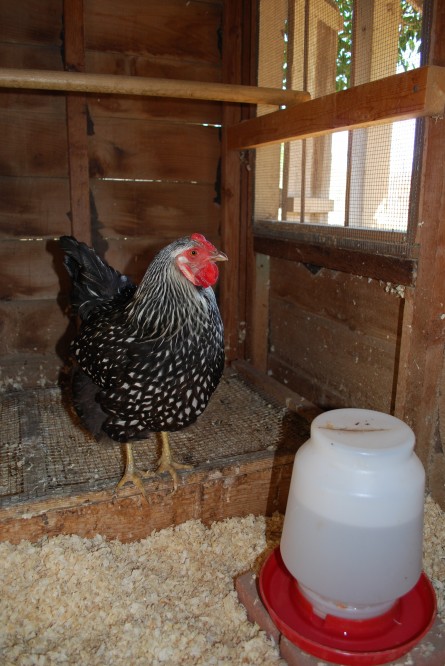
Close-Up of Blooming Grey Honey Myrtle Tree I wanted to write about the Grey Honey Myrtle tree, because it is one of my stellar nursery choices, of the last two years. You know the ones. They catch your eye in their generic container. You have an inkling they could look nice in your garden or yard. You take them home, plant them, and you all settle in. Presto, you wonder how you ever lived without them. They do something incredible and unknown to you, such as a totally unanticipated explosion of color. Yes, it is a big deal, because there are many more lackluster nursery choices that seem to fizzle, and all with good intentions. Has this happened to you?

One of my favorite trees, and stellar nursery choice, is the petite but ever so charming, Grey Honey Mrytle tree, Melaleuca incana. This little darling can actually be grown as a shrub up to 9' tall and wide, or shaped into a small graceful tree. It has a very appealing weeping and lacy branch structure with blue-slate needlelike foliage. In early spring, it blooms profusely in a plethora of tiny "cream puff" flowers that beckon birds and bees.

The Grey Honey Myrtle Tree is a native of Australia, and part of the mammoth melaleucas family which has over 140 species. Optimum climate zones vary by species. It is safe to say that this melaleuca does well in zones 8,9, and 12-24. It will thrive in full sun to partial shade, and is drought tolerant when established. It is an easy tree to care for, and can endure poor soil, wind, heat, and low moisture conditions. In my opinion, the Grey Honey Myrtle tree is a moderate to slow grower, although melaleucas are generally thought of as fast growers. Lace pruning is a good idea to enhance its weeping style, and keep it off of the ground.

My Grey Honey Myrtle tree was planted as a screen, close to my fawn-colored brown stucco fence. Its contrasting grey foliage against this backdrop, and backlit with southern sunlight is stunning. This is a beautiful, very striking ornamental tree for your yard or garden. It too, could be a stellar nursery choice for you.

If you live in a Mediterranean climate, these trees (shrubs) should be available at your local nurseries. In the San Diego area, I have seen them for sale at a few places, but most recently at Buena Creek Gardens. They are also available online through various websites.

Meet A Magnificent Mustard

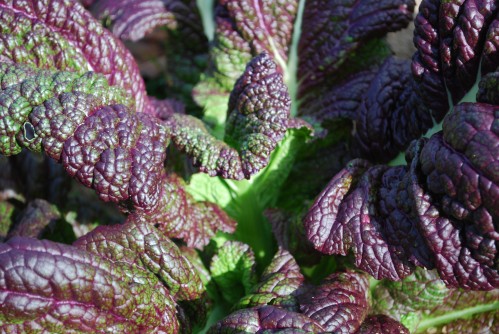
Close Up of Asian Mustard, Red Giant If you like spring greens, you will love to grow and cook with the asian mustard, Red Giant, Brassica juncea. Easily started by seed, it is a cool season annual which is slightly peppery in taste with magnificent green to dark purple textured leaves. Although it is "cold and bolt" tolerant, if allowed to flower, it has incredible yellow flowers that emerge as a tall spike out of its center, as a final encore.

I have to admit I was first drawn to Red Giant mustard for its magnificent beauty. At different times of the day, it even appears to have a copper glow about it. I bought seeds to make a winter to spring border in my kitchen garden, or potager. It is equally striking in a landscape planting, or even paired with the wonderful ornamental cabbage and kale in a cool-weather container design.

A part of the Mustard family, and thought to be originally from India, the asian mustard, Red Giant, is one of the most popular asian mustards. It is quite different in taste and texture from American mustards, you might have grown. It is extremely versatile, when it is harvested, how it is harvested, and how it is prepared. Do you like spring greens, harvest the young whole plants early, at 20 days for your spring lettuce and mesclun mix. Do you like Asian stir fry, take one or two mature leaves at a time for your recipe, and the plant will continue to grow. Try it as a replacement for chard in your bean soups, julienned, or a substitute for spinach in your quiche. It is nutritionally packed with abundant amounts of vitamin A, C, B vitamins, calcium, and more.

Depending on your climate, you can plant it in the fall, spring, or late winter. It prefers full sun, and light moist fertile-mulched soils. Seeds germinate in 1-2 weeks, young plants can be harvested at 20 days, mature plants at 40 days. For a continuous crop, you might want to sow seeds every three weeks in the spring. I find that it "volunteers" easily for me, and my chickens reap those tasty benefits.

At nurseries, I often see asian mustard, Red Giant, in mesclun mixes, rather than sold by itself. There are many seed companies who have it available online. I first purchased my asian mustard, Red Giant, from the fabulous seed company, Botanical Interests, located in Broomfield, Colorado. Their website is www.botanicalinterests.com.

Do you normally grow mustard in your vegetable garden? What is your favorite way of preparing it? Please share your comments.

Grapevines Awakening to Spring

Spring in Our Vineyard Here at Domaine de Manion (DDM), in our backyard vineyard, we finished our spur pruning in February, and knocked down most of the winter weeds. Spur pruning is cutting last year's grapevine canes down to two nodes or buds at each spur, off of the cordons. It is an individual management practice how many spurs you keep on each arm or cordon, but usually you have at least 5-6 spurs, a fist length apart on each cordon. Please note there are different types of pruning techniques used in vineyards throughout the world. We prefer the spur pruning method in our "syrah" vineyard.

In our Southern California climate, at the 33rd parallel, bud burst is usually around the beginning of March. Bud burst is the awakening of the grapevines in spring, marking the end of their winter dormancy. Bud burst usually occurs when mean daily temperatures are 50 degrees F (10 degrees C). Beautiful chartreuse shoots slowly emerge from the tiny buds on the spurs.

Ideally you want shoots from the cordons, growing upward and as vertical as possible, to reach the two sets of upper double wires, which will hold them in place. This is the very popular and common Vertical Shoot Positioning (VSP) System. This VSP trellis system helps with important air flow between the vines and rows, and proper sunlight exposure. There are many other types of trellis systems used in vineyards throughout the world, and in some cases a trellis system is not used at all. Often times, vineyard management is dictated by your geography location and grape varietal you grow.

At DDM we are just starting our "fourth leaf" or fourth season of the vineyard. Our grapevines and cordons are well established. As shoots emerge that are not in a desirable spot, such as on the trunk of a grapevine, shoots pointing down or sideways off of their cordon, are easily "nipped off" with your fingers.

The canopy is the leaf cover above the grapevine and ultimately the green vegetation above each grapevine that the trellis holds in place. Grapevines, shoots, and leaves through careful manipulation, can be managed for the best balance between shoot and fruit growth. Careful pruning, thinning, shoot positioning, and leaf removal are all parts of canopy management used throughout the year to optimize your grapes.

The warmer, longer days of spring urge the grapevine shoots to grow quickly. Soon the directed shoots are swaying in the soft breeze, and the vineyard has undeniably come alive again.

Everyone Loves a "Garden Baby"

Vintage Garden Baby Fountain

I absolutely adore my "garden baby" fountain. Before an estate sale, it had been cherished in someone else's garden for a very long time. In a way, when I purchased my "garden baby", I felt like I was taking guardianship of this precious little concrete soul. To me, a "garden baby" exudes the spirit of a garden in another form other than plants. It captures a kaleidoscope of emotions such as love, purity, bliss, innocence, oneness, and peace.

I started researching "garden babies", and found very little, which added even more to their mystery. Usually found in a statuary or fountain form, why were they so popular at one time? What do they symbolize? What is their meaning in our gardens?

So, I asked two friends who are experts on the subject, and I share with you their insight on "garden babies".

Pat Welsh, an incredible gardener and garden writer for over fifty years in the San Diego area. She writes about "garden babies" from a historical European perspective.

"Statues of babies and children in gardens go back to ancient times. In England, especially, they sometimes have a sorrowful meaning. Since the 19th century, and probably long before that, people made little gardens in memory of babies that had died or were miscarried. Creating such a garden was a way to deal with grief. Sitting in such a garden gave one a place to mourn surrounded by statues of babies and it provided a special place to pray for a baby who had died. People still make these gardens today in memory of babies who died or miscarried.

In the Renaissance plump little boy angels, called putti, became popular. These also were often seen in gardens or as carved decorations on buildings, sometimes just for fun and other times to assuage grief. It made people feel better to think of their own little angel flying around happily in Heaven.

Statues of Greek and Roman gods lend romance to gardens and make us remember the deep mythological roots of garden-design and garden creation. Statues of deer, birds, turtles, rabbits, and other animals bring life to gardens and symbolize closeness to nature. Statues of children in gardens make us think of happy, carefree childhood out in nature. Statues of babies symbolize innocence, joy, and protective love. The mythic idea of a naked baby in a grassy glade or laughing in a fountain makes one think of one's own soft naked skin against the leaves, grass, cooling water on a hot day, and all the other textures in nature. The contrast in textures must have been particularly pleasing during eras, such as the Victorian era or the Elizabethan era, when the upper classes, the people who had gardens, were so covered with many layers of clothing they could never feel the sensual pleasures of being lightly clad or naked out in nature."

Pat Welsh, "The Resident Gardener"-Author-Public Speaker-Garden Consultant, Pat Welsh's Southern California Gardening, A Month-by-Month Guide.

Beau and Nancy Kimball, own the highly respected, Kimball & Bean Architectural & Garden Antiques business, situated on a historic 1830's farm homestead, fifty miles northwest of Chicago, Illinois. Beau writes about "garden babies" from an American architectural perspective.

"I believe that the "garden baby", although born in Europe, is more of an American creation than a European one. Prior to the turn of the 19th century almost all garden sculpture was of a classical Greek or Roman form. Starting with the Columbian Exposition in Chicago 1893 and continuing through the Paris Worlds Fair of 1900, a whole new form of humanistic, less severe sculpture began to take hold in the Paris ateliers of American sculptors like Lorado Taft and Frederick MacMonnies.

Several of their students including Janet Scudder (the "Frog Fountain"), Edith Parsons (the "Frog Baby") and Sylvia Shaw Judson ("Bird Girl" and the "Naughty Faun") became famous by supplying Gatsby age society clients and their estates with fountains and statuary made from carved stone, lead and bronze in this new friendlier form that included pixies, fairies and children.

Unlike the earlier classical sculpture, this humbler form also turned out to be the perfect style for the hundreds of thousands of newly minted suburban gardens of the post WWII building boom - especially when created in the more egalitarian concrete. Almost all of what we see today was produced in the last forty years. I often see it as being described as "1940's", but, it in my experience, it can almost always be documented as post 1960's at the oldest."

Kimball & Bean Architectural and Garden Antiques 3606 South Country Club Road Woodstock, IL 60098 Phone 815-444-9000 Fax 815-444-9002 www.kimballandbean.com

Many thanks to Pat Welsh and Beau Kimball for sharing their expertise and perspectives. "Garden babies" is a fascinating subject. If you have a "garden baby" in your garden, or have additional information to comment about them, please feel free to share.

"Backyard Chicken Coop", Fun

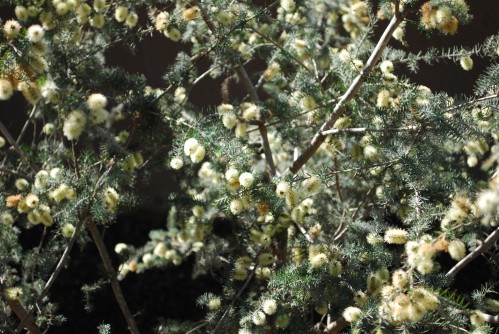
"Hollywood Girls" Just Wanna Have Fun"Hollywood Girls" Just Wanna Have Fun.

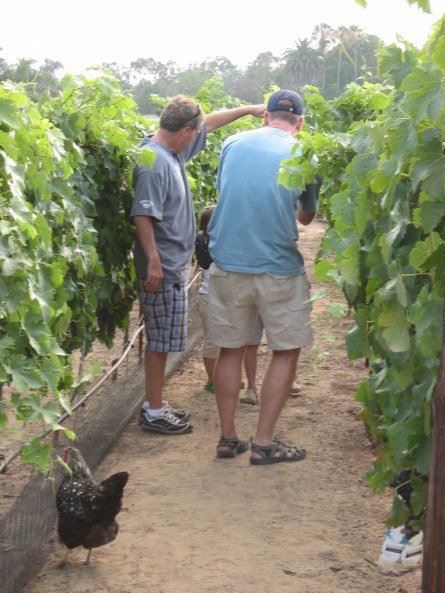
Chickens can be very sociable, and often want to be around all of the activity. In the photo, taken last summer, we are showing friends how to read a refractometer, an instrument grape growers use to test the level of sugar (or brix) in their grapes as harvest time approaches. J.Lo, one of our beloved chickens or "Hollywood Girls", just had to see what all the excitement was about. As I mentioned earlier in the week, chickens require little, but soon become a part of your life.

This past week, maybe I should have called it "Chicken Week", but instead I named this series an anatomy of the "Backyard Chicken Coop". This is by no means my last word on chickens, simply basic components of a chicken coop, and what is required to keep happy healthy chickens.

Once again, commons sense and good management will go a long way in properly caring for chickens. Get into a routine with your chickens. Keep their environment clean. Keep them protected.

In summary, this past week I wrote about the requirements for you and your potential chickens to co-exist in harmony. I outlined space guidelines for building a new chicken coop or modifying an existing structure. I wrote about hen nesting boxes, so important to laying hens and egg production. I covered the necessity of a roosting bar, and manure box in the chicken coop. I shared with you my method of keeping my chicken coop clean. I described the integral "outside pen" and how to keep predators out. I gave you some ideas on how you can customize your chicken coop with decorative details. I also hope that I give you some insight into the "joy" and "fun" of having chickens in your world.

Please feel free to share your chicken stories, creative coops, and chicken experience.

"Backyard Chicken Coop", Decor

Decorate Your Chicken Coop With Fun Once you have your backyard chicken coop in place, you must not forget decor details. It does not matter what kind of chicken coop you have built or modified, you must add a little fun with details. Chicken coops are usually a small charming structure, which lend themselves to fanciful decorative touches in any style you prefer.
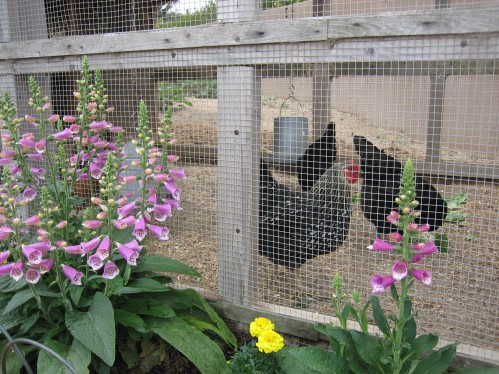
Elements like paint color, flea market finds, pots, signs, tools, barrels, repurposed treasures can all reinforce the style and look you seek for your chicken coop. Just take a moment to reflect that anything you do, add, or expose your chickens to will be safe for them. I do not decorate inside my chicken coop, only the outside.

Our chicken coop is a rustic style, in a country setting. Some of the decorative touches I used early on, and some have evolved over the years. Here are a few of our chicken coop embellishments that add to its charm.

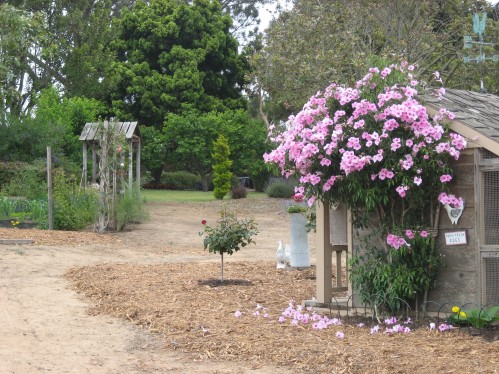
Planted a showy climbing vine, on one side of the chicken coop. This vine is very happy, and has climbed up and over to the front side of the chicken coop. Planting vines and greenery soften your chicken coop, and add to its appeal.

Planted narcissus bulbs which bloom in winter, along side of the outside chicken pen. One year I planted foxgloves which were gorgeous, but eventually realized they were poisonous and not the best near our chickens, or in our garden. I like to have something colorful blooming in that spot for each season.

Mounted a working "Chicken Weathervane" on top of the roof. You can purchase on the internet weathervanes in wonderful designs, which are scaled down in size for small buildings.

Pair of blooming tree roses greet you, in front of the chicken coop front door. One year, one tree rose was a gopher casualty, but I was able to find another one and replace it.

Whimsical "Farm Fresh Eggs" sign, a gift from my brother and his family.

Vintage hen statuary and potted chicken feeder mimic the real life of our chickens behind them.

Foxgloves Are Pretty, But Poisonous If Ingested

If you have other decor ideas for chicken coops, please share in comments.

"Backyard Chicken Coop", Outside Pen

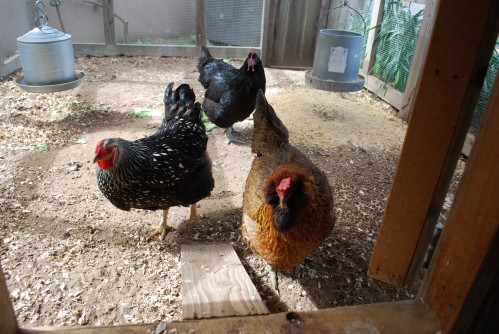
Bird's Eye View of Outside Chicken Pen The "Outside Pen" is an integral part of keeping happy chickens. Our outside pen adjoins seamlessly to the chicken coop, providing our chickens with room to be active. There is an outside door that closes for night time, or if there is stormy weather and you want to keep your chickens in their coop.
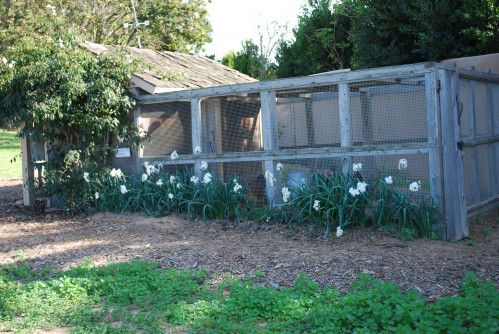
The outside pen is fairly basic. It is an outside area which allows hens to be active, enjoy outdoors, and relax in a totally protective area. A rule of thumb for outside pens is 8'-10' square feet/hen in your design. Hens will gladly use a ramp or ladder to transition from outside pen to chicken coop. Hanging feeders and waters keep feed and water clean.

Our outside pen is made up of 4" by 4" boards anchoring the corners and middle of the pen, and 2" by 4" boards in between, and on top for strength. Posts were buried and set in cement. A "human-size" door was made at the back side corner of pen. The entire sides, back, and top are covered and secured with durable half-inch wire mesh. All wire meshing should be left smooth, and without any sharp points to keep your hens safe. You want to protect your hens from hawks and owls above, and the possibility of raccoons, coyotes, and other predators at ground level.

Durable wire mesh should also be buried at least 12" deep, and toed outward 6" along the perimeter of your entire outside pen. This is done by making a trench first, and then securing wiring. This will help protect your hens and their feed bucket from squirrels, gophers, rats, mice, and snakes, possibly below the ground. For another solution, see my post on "Narcissus Bulbs Naturally Deter Gophers", under Green Tips.

Our outside pen has a wonderful sandy soil floor. Daily manure droppings generally permeate the sandy soil, and daily cleaning is not necessary. If you have a very large flock of chickens, routine clean-up may be necessary. Once a quarter, I re-level the outside pen floor and replenish with fresh sandy topsoil. Sandy soil is agreeable to hens, easy on their feet and to play in. A simple secured shade cloth covering half of the outside top pen, gives our hens an optional shady area.

Side View of Our Outside Chicken Pen

You will find that your hens spend most of their day in their outside pen. For happy hens, make sure your outside pen is safe for them, and a pleasant environment for them to be in.

"Backyard Chicken Coop", Roosting Bar & Manure Box

J.Lo Showing Off Roosting Bar and Manure Box Two more important components of your chicken coop are the "Roosting Bar" and "Manure Box". Housed chickens do not sleep in nesting boxes, or on the floor of their chicken coop, they sleep shoulder to shoulder on an elevated roosting bar at night. This bar actually assimilates a tree limb. Chickens that roam free, such as in Key West, Florida, instinctively know they can better protect themselves from predators up in a tree on a limb at night. The same concept holds true for your backyard flock utilizing their night roosting bar inside their chicken coop.

The roosting bar is a simple solid dowel, about 1.5" in diameter, that is secured in place, usually opposite the side of the nesting boxes. Allow 6"-10" width of roosting bar space per hen. Our roosting bar is positioned 2'8" high from the chicken coop floor. Depending on your chicken coop design, you might want to vary the height up or down a bit. You want it to be comfortable for your hens to perch on. Underneath the roosting bar is the manure box.

The manure box is a beautiful thing. It is situated directly below the roosting bar, filled with bedding, and a moveable screen lid. This screen lid should be made of durable half-inch wire mesh.

Most of your chicken manure droppings will fall to the manure screen lid and box during the night. It is almost like a "cat litter box", but an equivalent concept for chickens. I skim the screen and bedding with manure from the box, and take it to my nearby compost pile, along with my kitchen vegetable scraps. The chicken coop is clean for the day. You can let the manure pile up, but I find it best overall to get it out of the coop and into the compost pile. Every month or so, I take the manure box top screen outside, and really hose it off, brush it down with soap and water and then let it dry throughly before returning it to the chicken coop.

I have seen chicken coop designs that allow you to access the manure box from the outside, with a closable shutter. My preference with manure boxes is to make sure they can be moved and are not stationary. You want to have access to this area, to throughly deep clean it from time to time.

I find that our chickens don't leave many manure droppings in their nesting boxes, or even the floor of their chicken coop. Manure droppings are mainly deposited in the manure box at night, and the outside pen during the day. I rotate my bedding to keep the chicken coop clean. Fresh clean bedding goes to the nesting boxes first, then the chicken coop floor second, and last to the manure box, before I take it out to the compost. By using this method, my bedding is optimized, and I only need to clean the entire chicken coop once a quarter or so.

One last word on the roosting bar. You might have noticed that many of my photos of our "Hollywood Girls" are taken in our gardens or outside of their chicken coop, after I have been preaching about protecting and containing your chickens. First of all, you have to know your chicken flock, and what they will do. Our chickens love to explore our property, and are quite well-behaved. I only let our chickens out, when I am home, and in the garden to keep one eye on them. I never let them out and then run to the grocery store. I always leave the front door of their chicken coop open, so they can come back for water or a little laying mash. With that said, if you let your chickens out in your yard or property, at dusk they will come back to their chicken coop faithfully, and head straight to their roosting bar for the night. Once they are in, make sure to secure them in, by locking their door and windows for the night.