 I have just about eaten all of my tomatoes grown on the vine for this season. It is a short season, but "oh so tasty" a season. Being in Zone 11, tomato growing can be something of a challenge. Each year I seem to get a little better at growing and harvesting the rewards. Every spring I search out new tomato seedlings to try and experiment growing. This year had several stars.
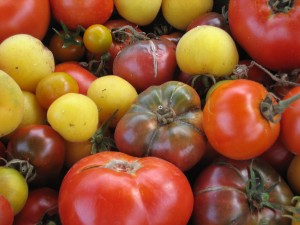
There are tomatoes in just about every rainbow color. I'm drawn to the black and purple, like Black Prince, Black Krim, and Cherokee Purple for their smoky, earthy flavors. I also lean towards the orange and yellow tomatoes...something that will pop out at you in a salad, pizza, or salsa.
One of the biggest surprises, and tomato stars for me this year was "Jubilee". It is a bright orange, fleshy textured fruit that is prolific on the vine. It was the All-American Bronze Medal winner in 1943.
Another star was "Fuzzy Peach", a 100 year old heirloom which actually looks like a lemon-colored peach, and has the fuzzy texture, to bout. When it ripens it has a slight blush pink color. It is a mild tasty tomato, which was delightful when I used it in my homemade salsa. It is about 2 ounces in size, and has outstanding storage ability, too.
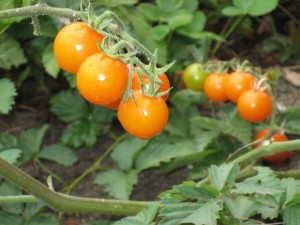
An enduring tomato star is the heirloom cherry tomato, "Sun Gold". It is actually golden orange in color. It is so sweet and unforgettable in taste, it is hard not to eat them all right in the garden. The fruit grows in sprays of 6 to 8 together, so pretty, one can imagine using them as a subject in a painting.
I had never grown the fabulous hybrid tomato, "Celebrity" until this year. I was so surprised at the colossal, beautiful red, firm, flavorful fruit it produced. Colossal, meaning one slice will cover your entire hamburger, and then some. The vine as it grew was very strong and even sprawled up and over the rusted antique iron bed frame I provided for support. With this beauty, I felt that I was officially a successful tomato grower.
Some key tips to growing tomatoes successfully: 1) mulch your soil well before planting, 2) plant in a warm sunny area, 8 hours of sun ideally, and when night temperatures are consistently above 50 degrees, 3) plant your tomato seedling deep-stems will root once planted, 4) water deeply and frequently in the beginning and less as the tomato plant matures, 5) fertilize your seedling plant when first planted, a month or so later, and then on an as needed basis, and 6) rotate your tomato spot in your garden each year if possible.
Finding tomato seedling sources is as much fun as growing them. There is always your favorite local nursery. Other sources I have used in San Diego are: www.summerspastfarms.com, www.tomatomania.com and www.pearsonsgardens.com.

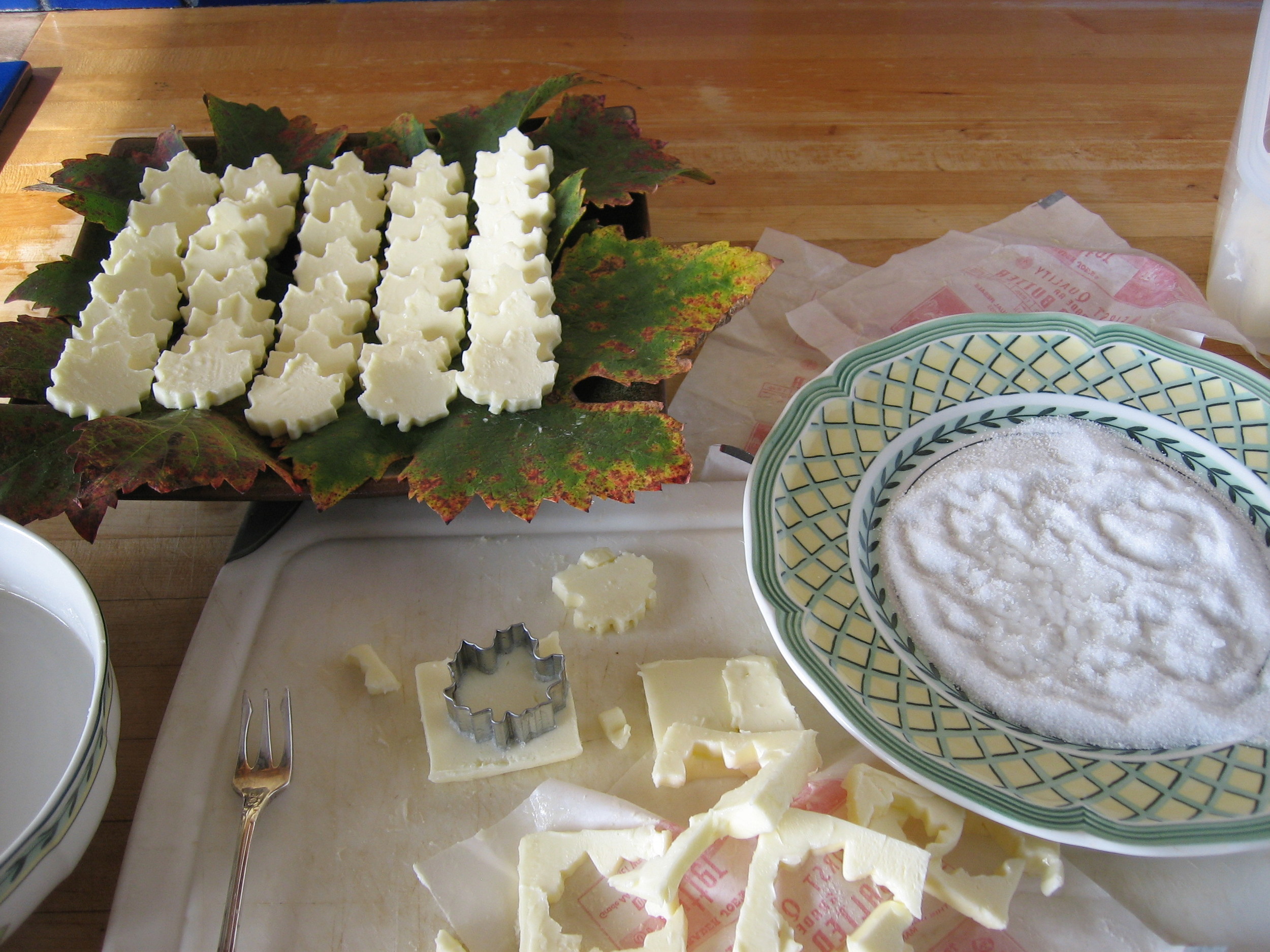 Add a little flair to your special holiday meals with maple leaf-shaped butter. I found a wonderful "maple leaf" cookie cutter set by Fox Run Craftsmen. The smallest size in the set is a perfect size for a butter pat, 1.25". www.foxruncraftsmen.com.