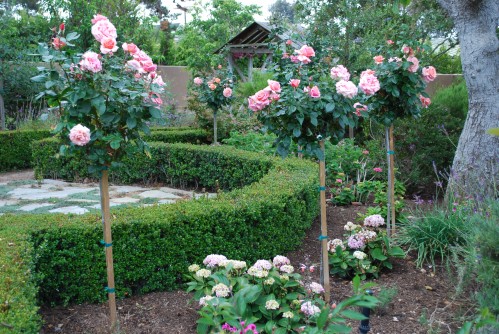
 How many of you have heard of Heirloom Roses? They are a year-round mail order rose grower, 25 miles outside of Portland, Oregon in the pristine Willamette Valley. Their roses are virus-free and grown on their own root. Not only do they have a thick "picture perfect" rose catalog available for sale, they showcase 1,500 rose varieties at their on site display gardens. Worth a visit if you are in the area. Last June on a "garden touring" trip to Portland, my friends and I had the opportunity to stop at Heirloom Roses for a visit and spontaneous tour by their "chief rose grower". Besides the lovely tour, she shared with us a few summer tips for roses.
One of the best tips she mentioned, and one I had never heard before was, feed alfalfa to your roses in the summer for a boost. Head over to your local feed store, rather than favorite garden center, and buy a 10lb or 25lb bag of rabbit pellet food, depending on how many rose bushes you have.
The main ingredient in rabbit food is alfalfa, and it is a lot cheaper to feed the base of your roses with 1-2 handfuls of rabbit food, than purchasing alfalfa meal supplement. As alfalfa breaks down it creates an organic fatty alcohol called triacontanol. Roses in particular, respond very favorably to triacontanol by forming new basal breaks and ensuing new growth.
Be sure and work in the rabbit food thoroughly around the base of your rose. You don't want to tempt the rabbits in your garden with your roses. Follow up by watering thoroughly, and observe how your roses respond. Alfalfa will give your roses a nice natural boost, and another mass flowering through the summer. I tried it, and it and my roses responded beautifully.
In my research to confirm the benefits of alfalfa for roses, I read where rabbit food is not recommended for roses because of its high sugar content. There is a pricing delta between "alfalfa for gardeners" and "alfalfa for rabbits". Returning to my bag of rabbit food for a closer look, I found alfalfa listed as the first ingredient, and amongst 33 other listed ingredients, cane molasses and corn syrup were listed last, so I wasn't convinced that sugar was present in a large amount. If you purchase rabbit pellet food, take a quick look at the list of ingredients. Alfalfa should be first, and some form of sugar if listed at all, towards the end.
Another tip to share with you, is look for "end of summer" rose discount specials. Nurseries and retailers are eager to pass savings on to consumers, and often have wonderful prices to move inventory. Keep your eye open for these specials. Plant your new roses at the end of summer, beginning of fall, and be one step ahead of the winter "bare root rose season" for one-half to two-thirds of normal pricing.
Do you have any summer rose tips to share? What are your favorite roses in your garden, and why?
 This is a new category first called "Garden Economizing", which will offer you wonderful economic and often ecological tips to save you money in your garden, yet enhancing your garden.
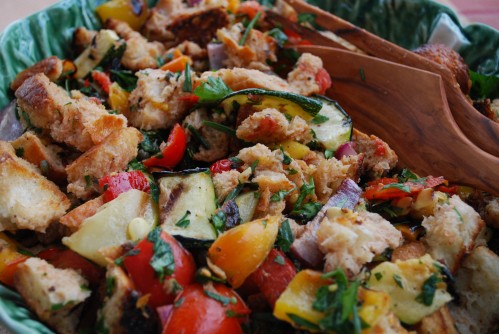 This classic Italian summer panzanella salad oozes with fresh flavors of summer, and takes advantage of your ability to jump in the garden and harvest bell peppers, heirloom tomatoes, fresh assorted herbs, and the last of your summer squash. I usually see panzanella salad with tomatoes, crusty bread, and mozzarella cheese, but like the twist of these added grilled summer vegetables.
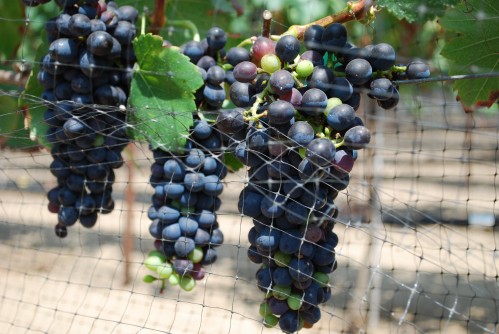 Here at Domaine de Manion, our backyard syrah vineyard, it is late summer and our syrah grapes are showing their true color. Our syrah grapevines have a full vegetative leaf canopy, perfectly formed grape clusters dangle from their shoots, and now the veraison process begins. Veraison is the phenomenon of grapes transitioning in their development from hard to soft in touch, and their color transitions from green to their harvest color, depending on the grape varietal. Syrah, our vineyard grape varietal, is a very dark, inky black color when ripe and at harvest time. In the above photo you can see the color transition happening among the individual grapes.
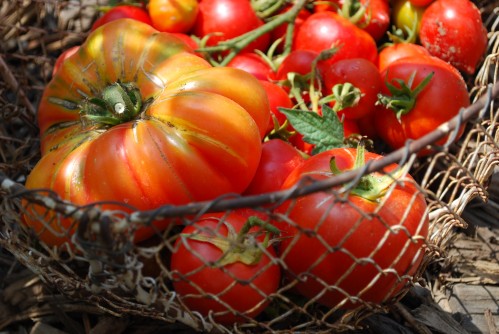 For me, the prize out of our kitchen garden each summer is always heirloom tomatoes. In the spring I plant as many different types as I can, and baby them along through August. I seek out tomato plants I have read about, tomato plants that have funny names, tomato plants that bear certain tomato colors, and even tomato plants with a story behind them.
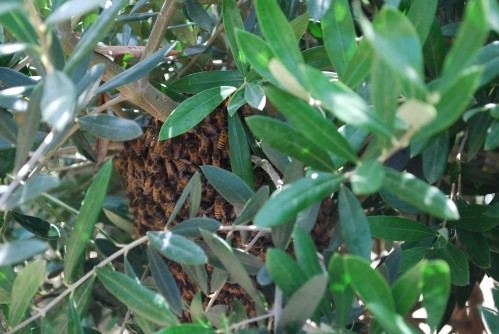 I know that nothing is a coincidence. Just last week I experienced my second honey bee swarming. The first one was in a friend's backyard a few years ago, and the second one was last week, close to our vineyard by the "Little Ollie" olive trees. At first I noticed a tiny dense dark cloud moving above our vineyard, with motion and fervor. Following this sight with my eyes for a while, it dawned on me that it was a swarm of honey bees. Upon further investigation and with the mission to water our "Little Ollie" olive trees, I spotted the swarm, quiet and resting under one of the branches. I wasn't afraid of them, and knew that they would be soon travelling on.
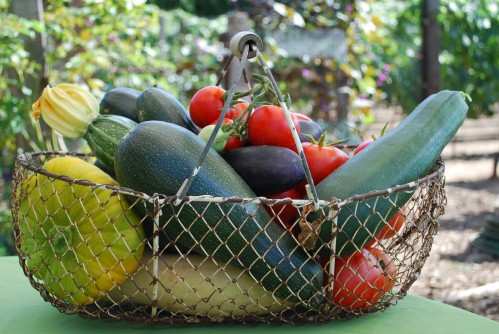 Imagine, it is August, and summer vegetables are at their peak. You are reaping all the benefits of your time invested, and steps taken to ensure a bountiful vegetable harvest. It gives me so much satisfaction to harvest these beautiful and flavorful vegetables.
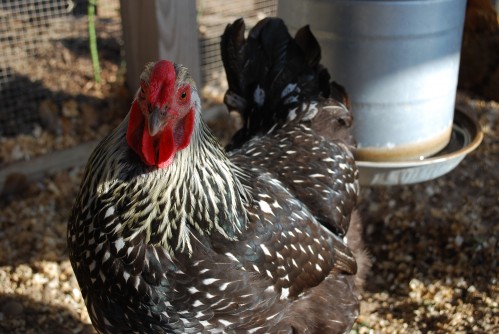 Chickens and backyard chicken coops have got to be one of the hottest trends happening today in the garden, right up there with growing your own vegetables. In case you missed it this week, there was an interesting article in the New York Times about backyard chickens,