 It is an accumulation of hours and days spent tending the vineyard. It is thousands and thousands of footsteps taken through the rows of vines with care. It is the weather and how it behaved throughout the year. It is the vines, and how themselves continue to grow and mature. It is how the grape clusters formed and dangled effortlessly from the vine. It is the end of our fourth growing season, and beginning of our second harvest. Every year is different, and what makes every vintage its own personality. It is our 2009 vintage. Consequently, there are high spirits on harvest day.
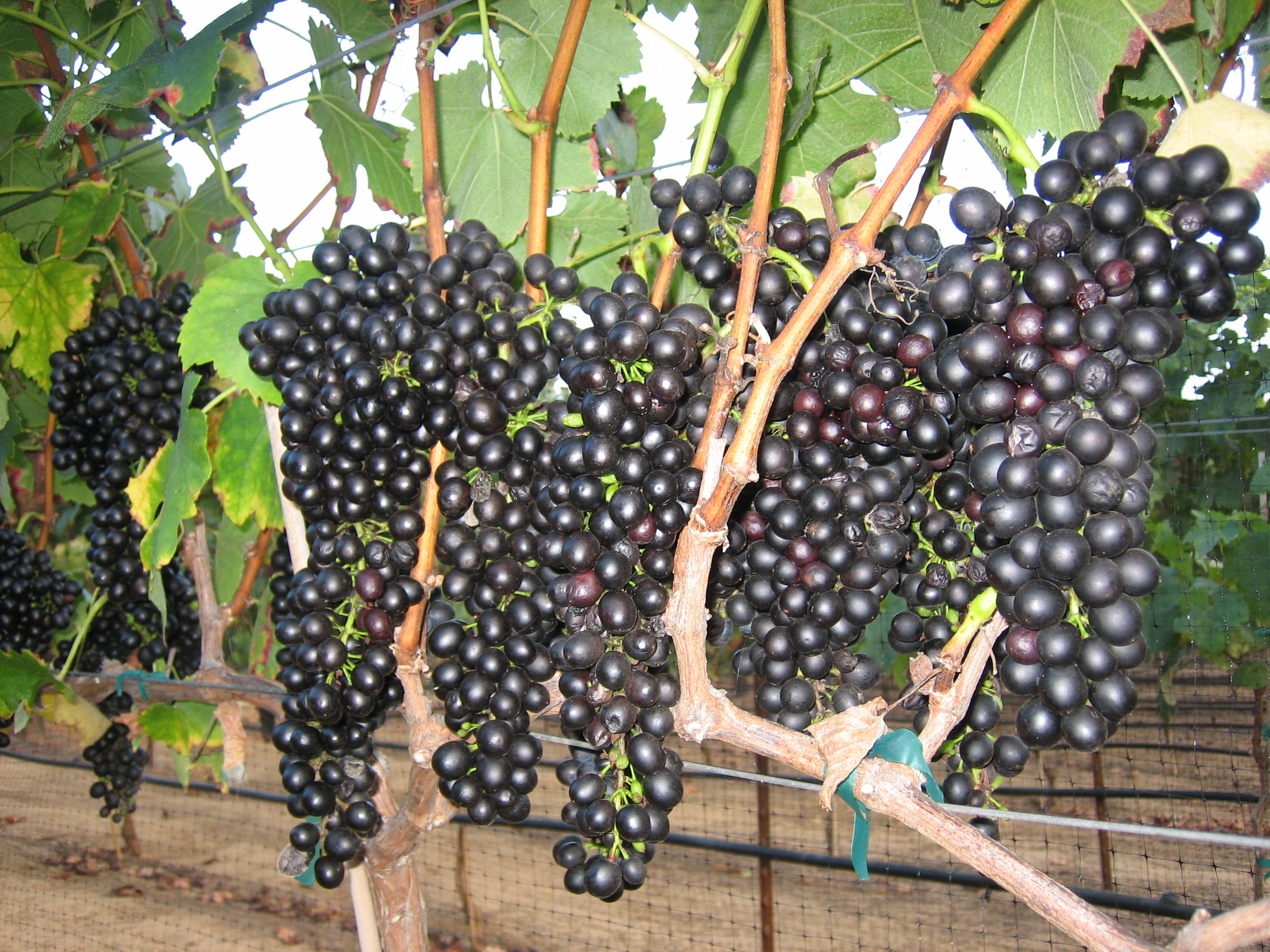
With an army of enthusiastic volunteers, armed with garden clippers, we all assemble to get hands-on instructions, and hear a blessing for this harvest. Last year's "Harvest Blessing" brought us great grape-growing weather, and beautiful grape clusters. In the photo above, our just-harvested grapes look so beautiful and luscious, you just know they taste delectable and are going to become a very drinkable and desirable wine.
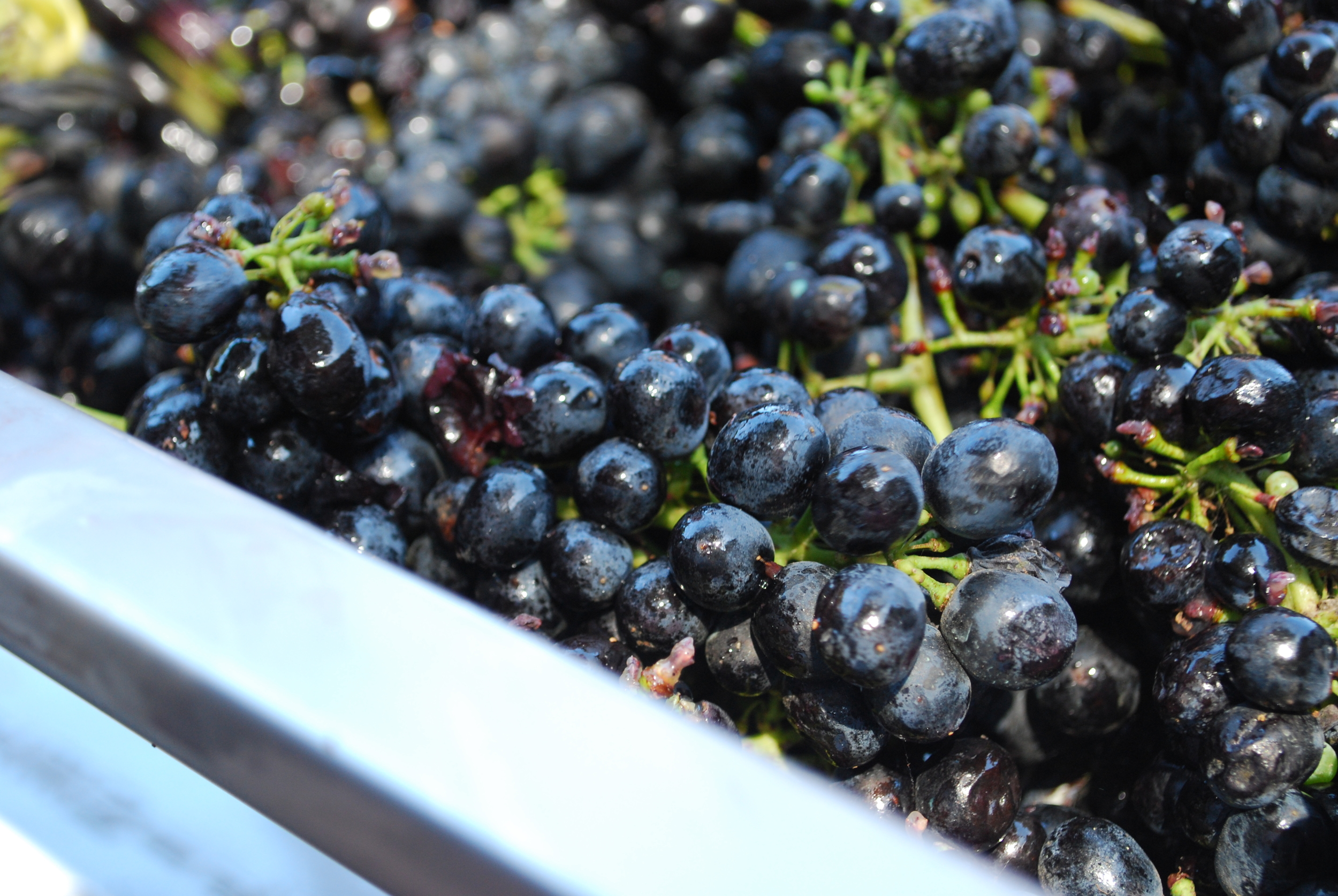
We suggest to our volunteers to find a row partner, and harvest a row together. In 5 gallon clean buckets the grape clusters are carefully clipped off of the vines and dropped into the buckets. When the bucket is full, the bucket is brought up to the sorting table and crusher/destemmer area. Grape clusters are spread out on a large table and carefully checked for an undesirable grapes or clusters. The sorted grapes are then collected in a 40 lb lug, and dumped into the crusher/destemmer and augured to gently seperate the green stems and break open the grapes. This process creates a thick mixture of grape skins, seeds, and now juice.
This mixture is then poured into food grade plastic barrels, and cooled down with dry ice to mid 50 degrees F. The next day, it is brought back to room temperature, and the desired yeast is added to start the fermentation process.
Once all of the grapes have been processed, all of your equipment must be thoroughly cleaned, rinsed, and sanitized for their next use. This is one of the cardinal rules of wine making, always thoroughly clean and sanitize your grape processing equipment immediately after use.
With the grapes mixture carefully taken care of for the day, the "harvest feast" can begin in earnest, and everyone can rejoice in the newly harvested grapes which will become "vintage 2009". It is a time of celebration and high spirits.
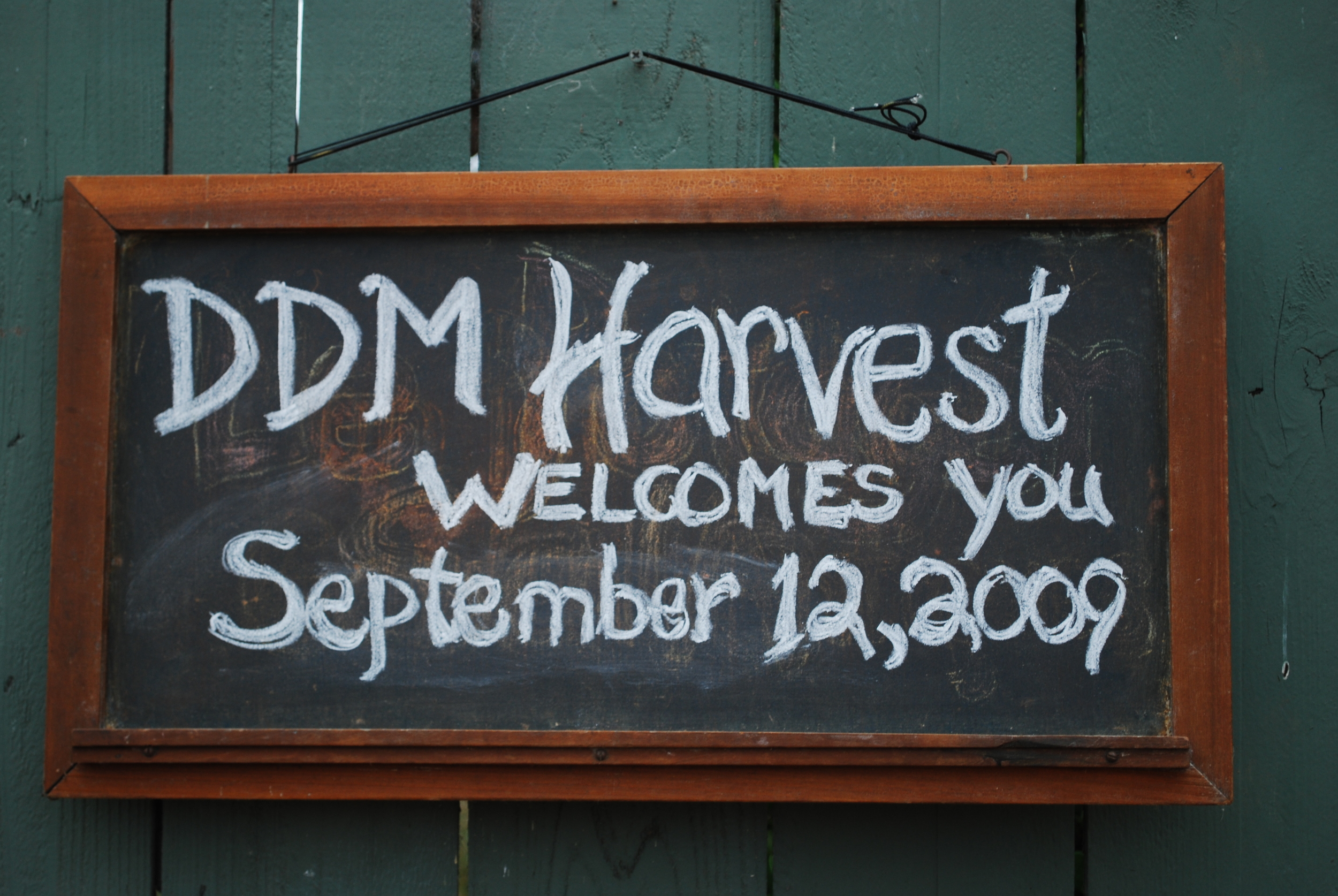
Have you ever been to a vineyard harvest, and vineyard feast? Do you ever think about all that went into the making of a wine, when sipping wine from your glass?
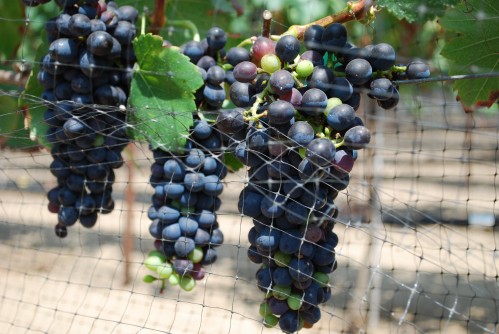 Here at Domaine de Manion, our backyard syrah vineyard, it is late summer and our syrah grapes are showing their true color. Our syrah grapevines have a full vegetative leaf canopy, perfectly formed grape clusters dangle from their shoots, and now the veraison process begins. Veraison is the phenomenon of grapes transitioning in their development from hard to soft in touch, and their color transitions from green to their harvest color, depending on the grape varietal. Syrah, our vineyard grape varietal, is a very dark, inky black color when ripe and at harvest time. In the above photo you can see the color transition happening among the individual grapes.
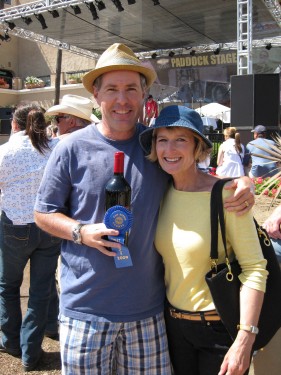 I would encourage all of you to visit your local, regional, or state fair this summer. Fairs are a slice of Americana, a part of our American culture. School is out, and the summer lifestyle has switched into gear. If you have a passion for something, like our wine-making, enter it in the fair, you might be surprised.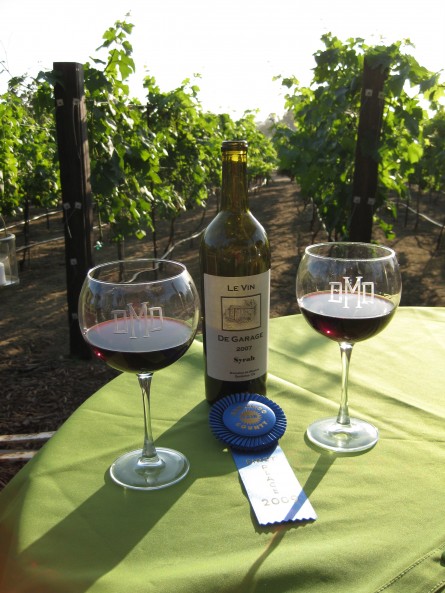
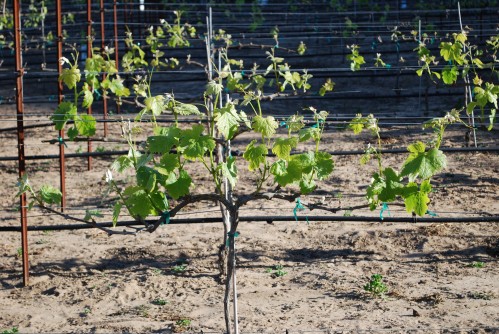 Here at Domaine de Manion (DDM), in our backyard vineyard, we finished our spur pruning in February, and knocked down most of the winter weeds. Spur pruning is cutting last year's grapevine canes down to two nodes or buds at each spur, off of the cordons. It is an individual management practice how many spurs you keep on each arm or cordon, but usually you have at least 5-6 spurs, a fist length apart on each cordon. Please note there are different types of pruning techniques used in vineyards throughout the world. We prefer the spur pruning method in our "syrah" vineyard.
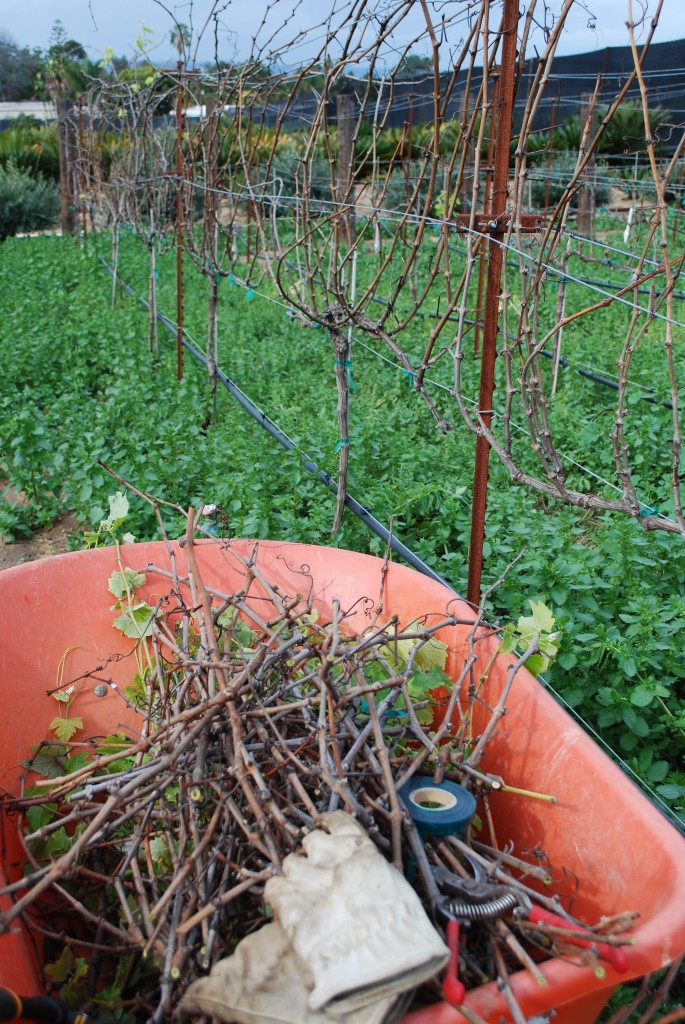 A few months ago, I wrote a post called "Rest, Repose, and Replenish", the dormancy time in a garden during winter. This time of year has a different kind of beauty, and a peaceful mood beckoning everything to slow down and replenish. The same beautiful dormancy happens with a vineyard, too.